





 Portuguese
  English
  Spanish
  3 min of reading
  0 comments


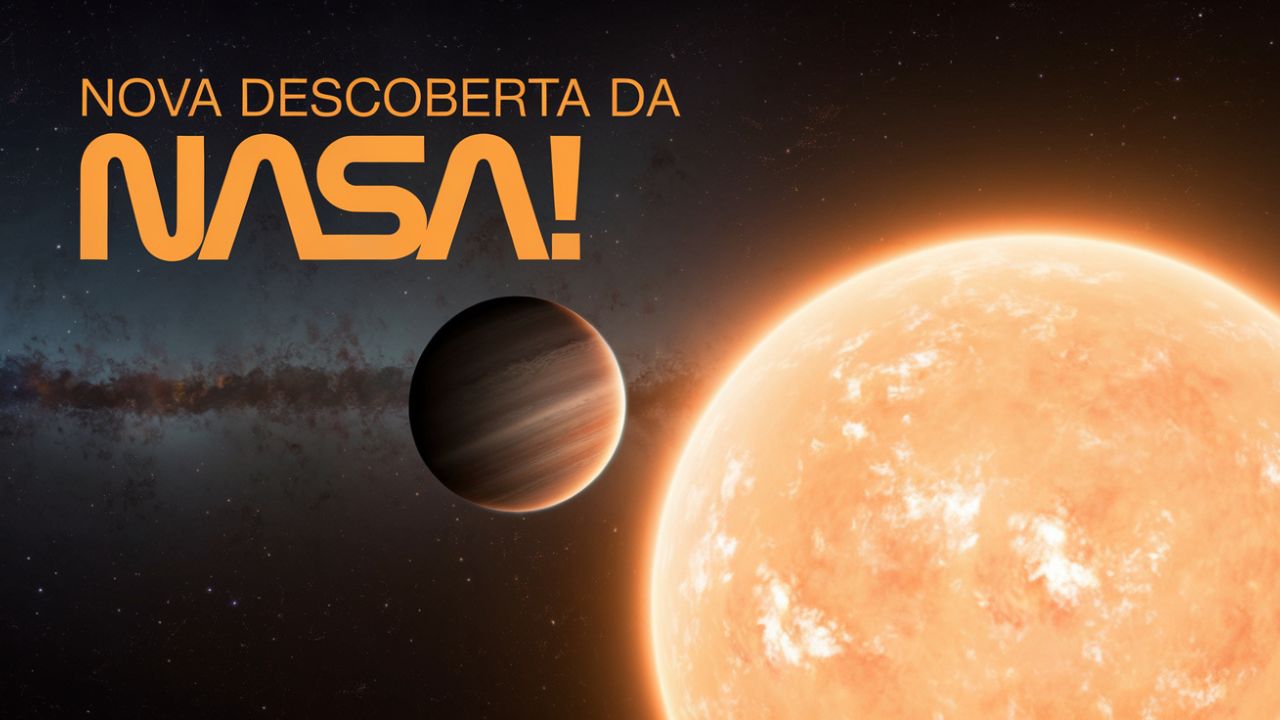
New Hot Neptune Exoplanet Found By NASA With Help From The TESS Telescope. With Just 21 Hours Of Orbit, TOI-3261 b Is One Of The Rarest Planets Ever Discovered And Could Reveal Secrets About Planetary Atmosphere Formation.
Living on a planet where a year passes faster than a day on Earth. This is the reality of TOI-3261 b, a newly discovered exoplanet by NASA that challenges everything we know about the cosmos. With incredibly rare characteristics and an astonishingly short orbit, TOI-3261 b is leaving scientists amazed.
TOI-3261 b: A Rare And Fascinating Exoplanet Discovered By NASA
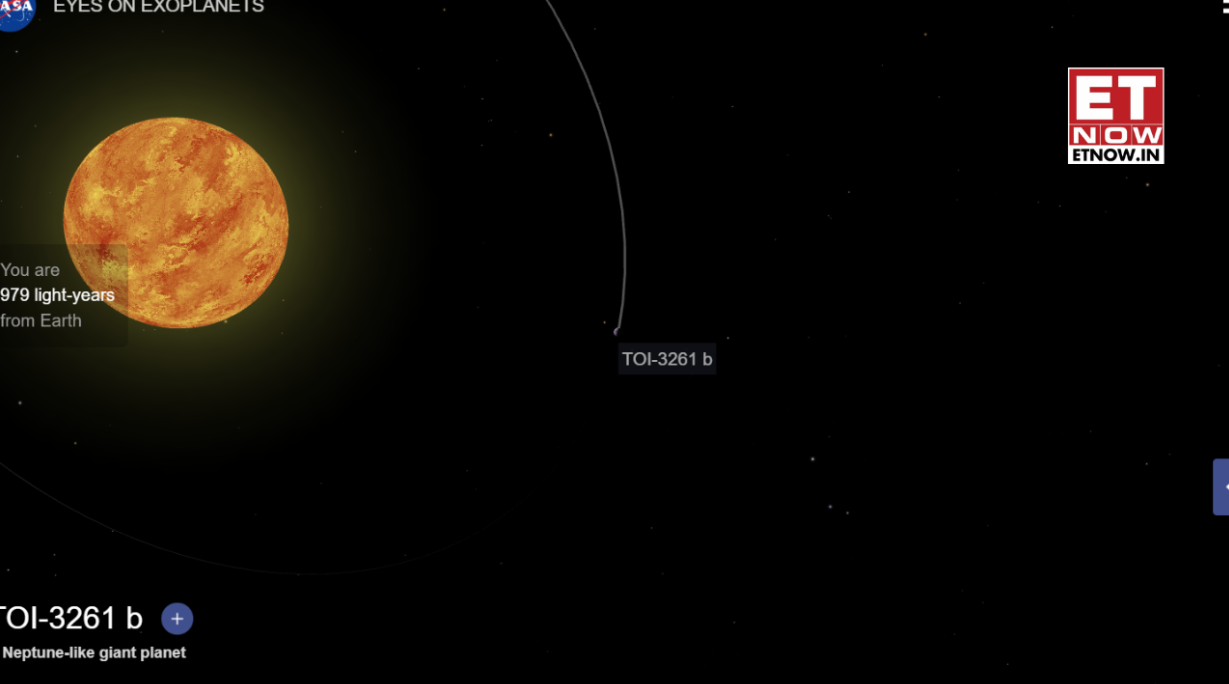
TOI-3261 b belongs to a category known as ‘Hot Neptunes’. In terms of size and composition, it is similar to our Neptune, but that is where the similarities end. Unlike the ice giant of the Solar System, TOI-3261 b orbits dangerously close to its star, completing a revolution in just 21 hours. This type of proximity makes it the fourth planet of this category ever identified.
The nickname ‘Hot Neptune Desert’ is not by chance. Discovered by NASA, these planets are extremely rare, like water in the middle of a desert. The reason? It is difficult to maintain a gaseous atmosphere so close to an intense star, which makes TOI-3261 b a perfect space laboratory for scientists.
-
In a flooded well, archaeologists found a 1,700-year-old Roman egg that still contains clear and yolk intact inside the very thin shell.

-
Something is happening around the Earth: Inside the huge explosion of fireballs in 2026

-
A hot air bubble coming from Argentina expands over Brazil, causing thermometers to exceed 38 degrees with a thermal sensation of 40 degrees in late March, affecting 6 states at once.

-
The radish leaf that almost everyone throws away has more polyphenols, flavonoids, and fiber than the consumed root, and a 2025 study showed that the leaf contains compounds that protect the intestine, combat inflammation, and may inhibit the growth of cancer cells.


Why Are Hot Neptunes So Rare?
The extreme proximity of Hot Neptunes to their stars causes them to undergo devastating processes, such as photoevaporation. In this phenomenon, the star’s radiation literally ‘fries’ the gas particles of the atmosphere, causing its dissipation over billions of years.
Another factor is tidal stripping. Imagine the star’s gravitational force pulling and wearing down the planet, stripping away layers of gas like peeling an onion. In the case of TOI-3261 b, these forces have transformed it over its 6.5 billion years of existence, leaving behind only a sample of its original atmosphere.
Cutting-Edge Technology: How TOI-3261 b Was Discovered
The discovery of TOI-3261 b was only possible thanks to the TESS (Transiting Exoplanet Survey Satellite) space telescope. This equipment observes small ‘dips’ in the brightness of stars, caused when planets pass in front of them. This data was supplemented by ground-based telescopes around the world, which confirmed the existence and characteristics of the planet.
Each discovery like this is a victory for science, highlighting the power of modern technology in uncovering the secrets of the universe.
The Future Of Research With Hot Neptunes
TOI-3261 b is not just a rare discovery but also a unique opportunity for science. It will be used as a basis to test new computational models that help predict planetary formation and evolution.
NASA plans to use the James Webb Space Telescope to investigate its atmosphere in detail. This type of analysis may reveal valuable clues about how Hot Neptunes form and evolve, paving the way for new advancements in astronomy.
The discovery of TOI-3261 b is a reminder of how the universe still holds surprising mysteries. Planets like this show us that no matter how much we know about the cosmos, we are still only scratching the surface. As NASA and other agencies explore the ‘Hot Neptune Desert’, we can expect more discoveries that challenge us to rethink our place in the universe.








-

2 pessoas reagiram a isso.