





 Portuguese
  English
  Spanish
  4 min of reading
  0 comments


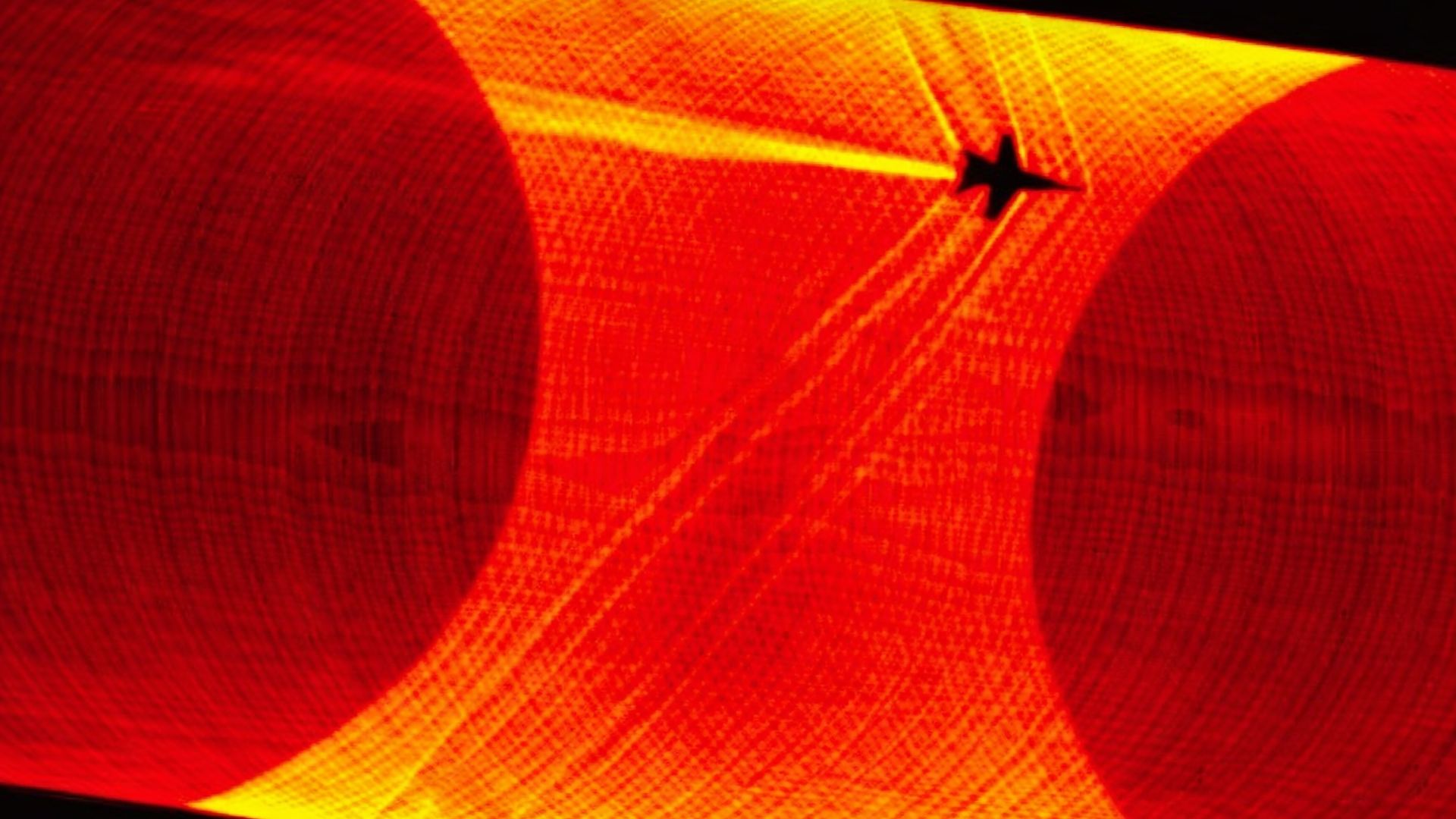
Technology Developed at Langley Research Center Allows Visualization of Air Movement in Wind Tunnels with a Compact and Self-Aligned Optical System, Simplifying a Method Used for Over a Century and Increasing the Accuracy of Aeronautical and Space Research Conducted by NASA.
A technology developed at the Langley Research Center of NASA is changing the way air flow is observed in aeronautical and space tests.
Named Self-Aligned Focusing Schlieren (SAFS), the system was created by Brett Bathel and Joshua Weisberger and received from the agency the Government Invention of the Year 2025 award, an honor reserved for inventions considered to have the greatest impact within the institution.
How Air Flow Visualization Works
The innovation addresses an old engineering problem: making density variations in air visible, something essential for studying shock waves, turbulence, flow separation, and other phenomena that directly influence the performance and safety of airplanes, rockets, and hypersonic vehicles.
-
In Mexico, a 3,000-year-old Maya site with the dimensions of an entire city may have been built as a colossal map of the cosmos, created to represent the order of the universe and reveal how this people organized space, time, and rituals.

-
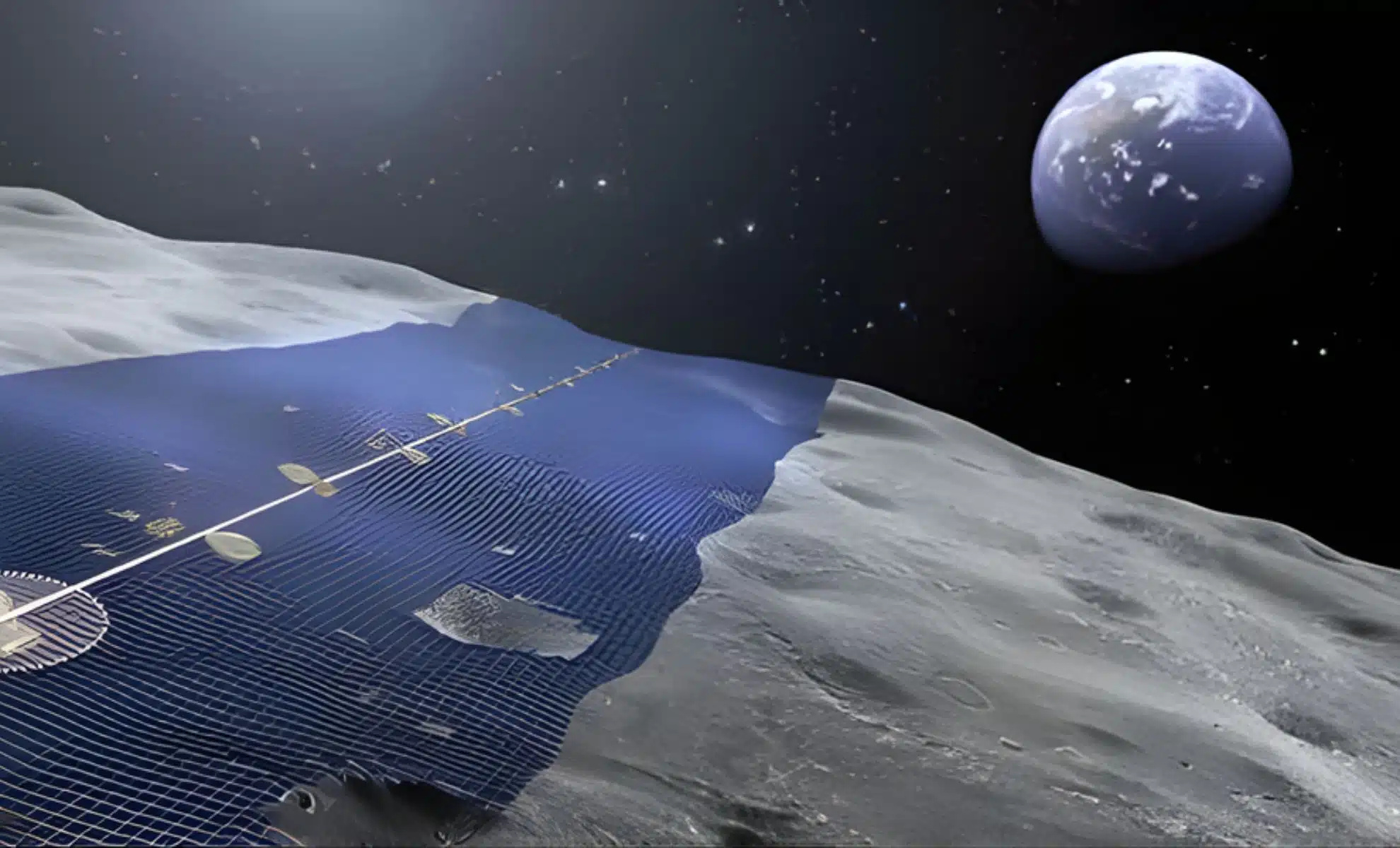
Japan wants to build a solar ring of 10,900 kilometers on the Moon to continuously send energy to Earth.
-
Weighing almost 1 ton, with temperatures of up to 3,000°C, the ability to launch 10,000 fragments within a radius of 1 km, capable of penetrating concrete and melting steel, Turkey’s terrifying bomb emerges as one of the most destructive non-nuclear weapons ever presented.

-
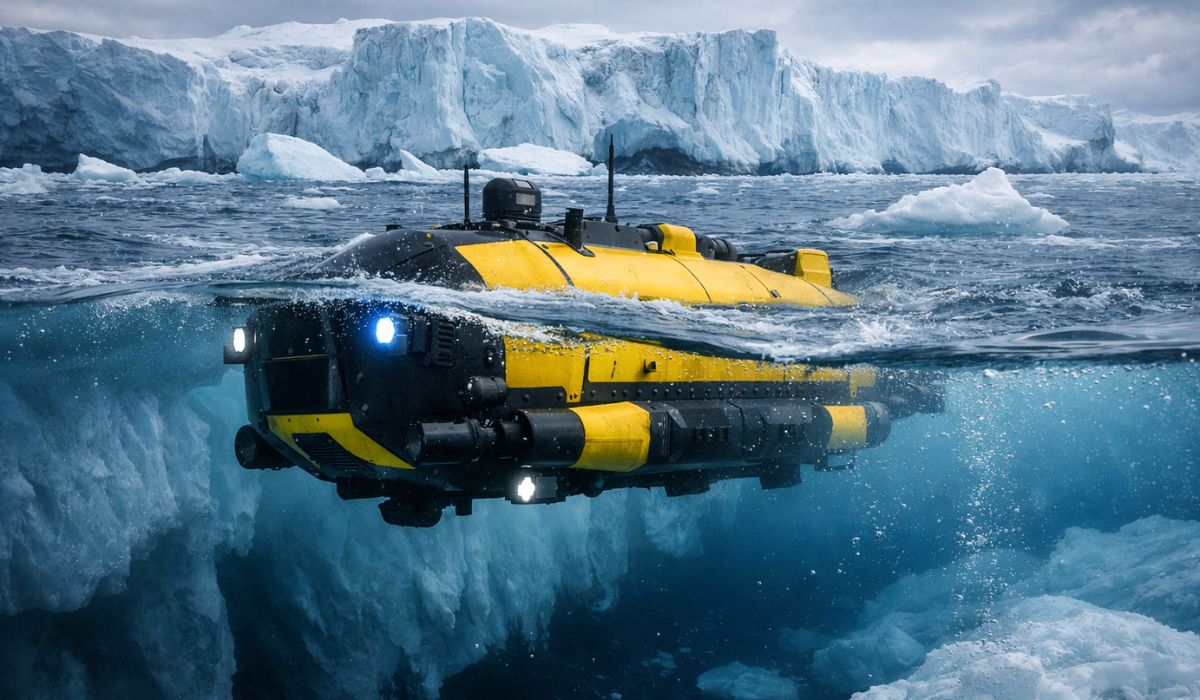
After a submarine disappeared beneath the “Doomsday Glacier,” scientists announce a new monstrous machine capable of operating at 3,000 meters depth to return to the heart of the ice and investigate a threat that could raise sea levels worldwide.

Although air cannot be seen with the naked eye, small changes in its density bend light, and this optical effect allows the behavior of the flow to be recorded.
This physical basis is not new.
The schlieren method, associated with scientist August Toepler, dates back to the 19th century, with a description linked to 1864, and has established itself as a classic tool for visualizing disturbances in transparent media.
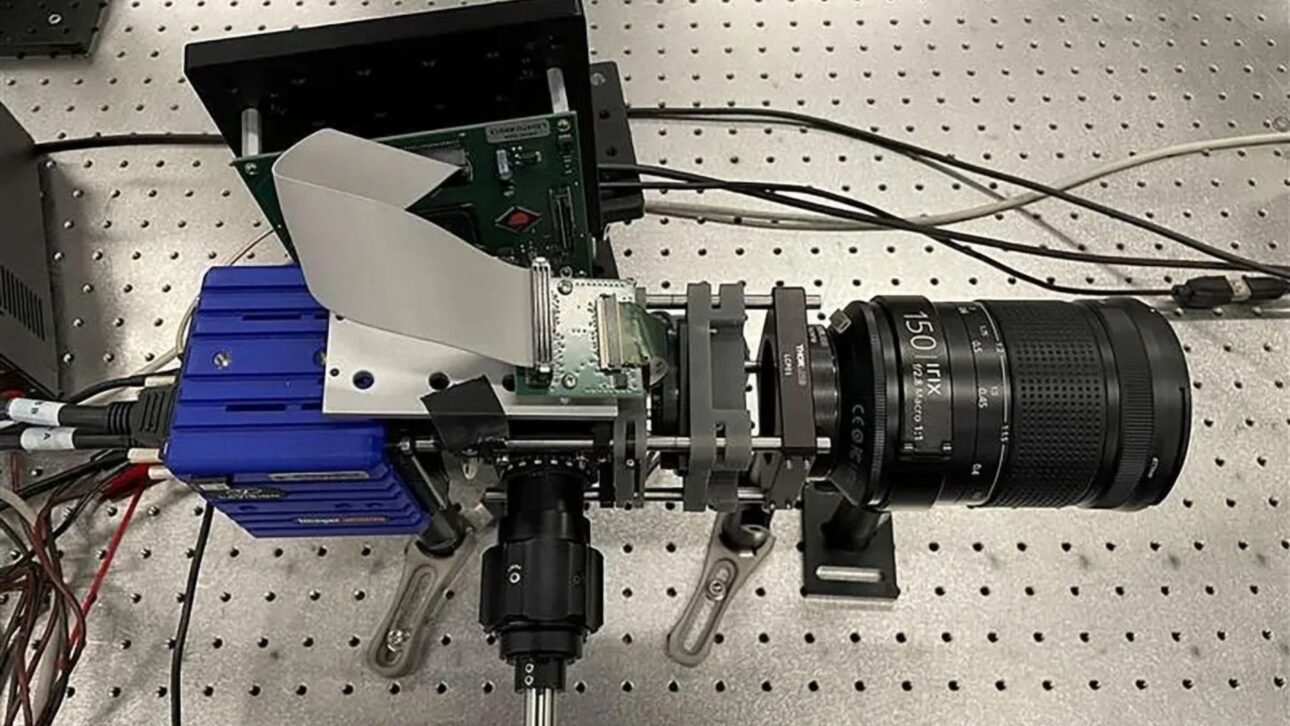
Over time, the technique gained variations and applications in aerodynamics but continued to require delicate, sensitive, and time-consuming setups.
Limitations of the Traditional Schlieren Technique
In practice, traditional focused schlieren imaging systems rely on extremely precise optical alignment, with components installed on opposite sides of the observed region.
Any vibration, improper adjustment, or alteration in the arrangement can compromise the reading, which historically increased preparation time and reduced the availability of wind tunnels and other testing facilities.
NASA itself describes this process as complex and manual.
New SAFS Technology Developed at NASA
It was in this context that SAFS emerged in 2020 as an attempt to simplify what had required significant operational effort for decades.
Instead of relying on meticulous alignment of grids separated on opposite sides of the test object, the system uses light polarization and a self-aligned architecture to produce visualization with a more compact and stable setup.
The most immediate gain appears in laboratory routines.
According to NASA, what previously could take weeks of adjustments is now prepared in minutes, with the ability to change sensitivity, field of view, and focus without disassembling the entire apparatus.
Additionally, the system requires access to only one side of the tested object, reducing space limitations and making it more practical for different types of tests.
Applications in Wind Tunnels and Rockets
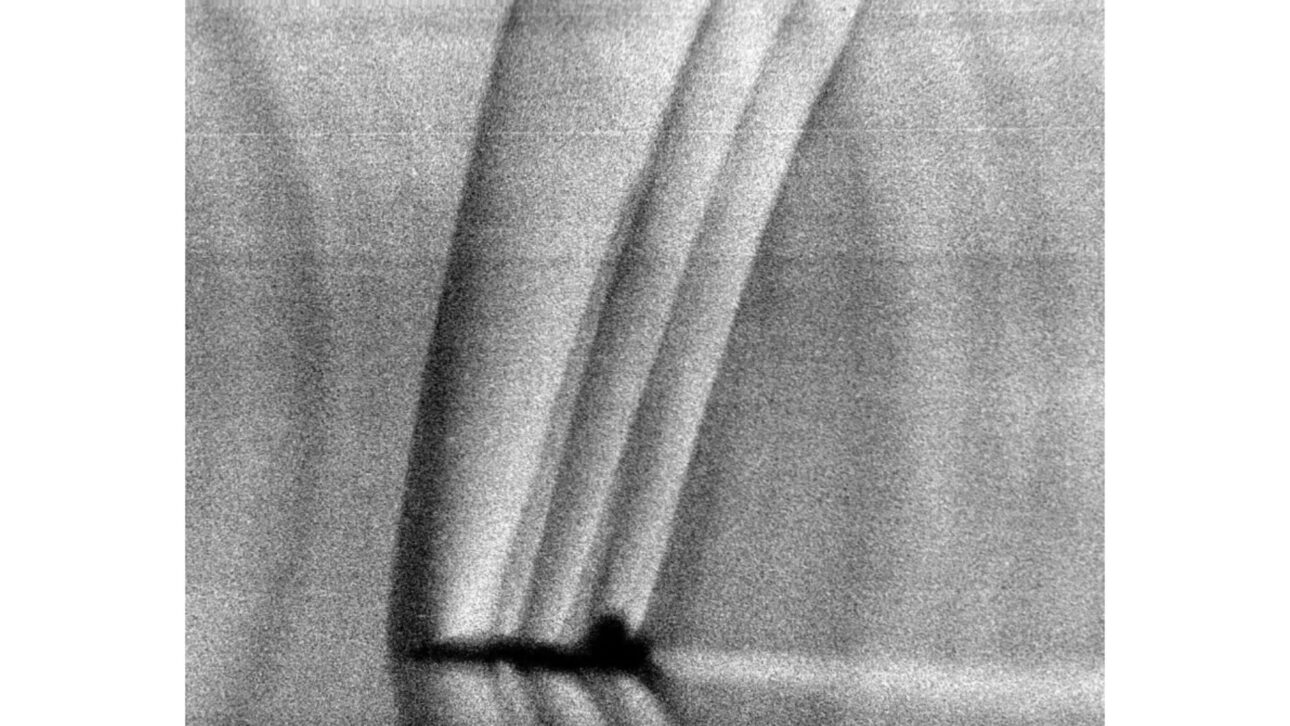
The logic of SAFS also improves the quality of the captured image.
In records published by the agency, the technology can highlight relevant structures of the flow and reduce artifacts associated with tunnel boundary layers, shock waves outside the plane of interest, and thermal variations external to the main test environment.
This refinement helps researchers clarify what belongs to the phenomenon being studied and what is measurement noise.
This type of advancement has a direct effect on research programs.
NASA reports that SAFS has been used to observe flow separation in the High Lift Common Research Model, used in studies of takeoff and landing performance.
The technology has also been used to investigate shock structures in the Space Launch System model, enhancing analytical capacity in high-cost experimental campaigns.
Global Impact of the Invention
The impact has already exceeded the internal environment of the agency.
According to NASA, the technology has been adopted by over 50 institutions in more than eight countries, with licensing underway and commercial versions reaching the market.
This reach indicates that the solution is not restricted to a specific laboratory and has begun to be incorporated by universities, research centers, and companies interested in more agile aerodynamic testing.
The repercussion has also appeared in other awards.
The agency noted that SAFS made it to the R&D 100 Awards list of 2025, an international recognition for scientific and technological innovations.
Before this, the team linked to the project had already been mentioned in the NASA Aeronautics Technology and Innovation honors.


Explaining the importance of the invention, Brett Bathel stated that the advancement produces a “cascade effect” because allowing researchers to see and understand air movement in ways that were previously difficult to achieve tends to result in better aircraft designs and safer flights.
The statement was published by NASA while presenting the award and the current stage of technology adoption.
More than just replacing an old optical arrangement, SAFS represents a shift in logic in experimental instrumentation.
Instead of increasing complexity to obtain more useful images, the solution simplifies the setup while simultaneously increasing flexibility of use.
This combination is especially appealing to aerospace engineering, where tunnel time, testing repeatability, and data quality often define the pace of development for new aircraft and space systems.
The project was supported by the Aerosciences Evaluation and Test Capabilities portfolio and by Transformational Tools and Technologies, within the Transformative Aeronautics Concepts Program of NASA’s aeronautics research directorate.
In this context, the new camera fits into a broader agency agenda aimed at tools that accelerate performance prediction, experimental validation, and enhancement of concepts for aviation and space missions.








-

-

-

-

11 pessoas reagiram a isso.