





 Portuguese
  English
  Spanish
  4 min of reading
  0 comments


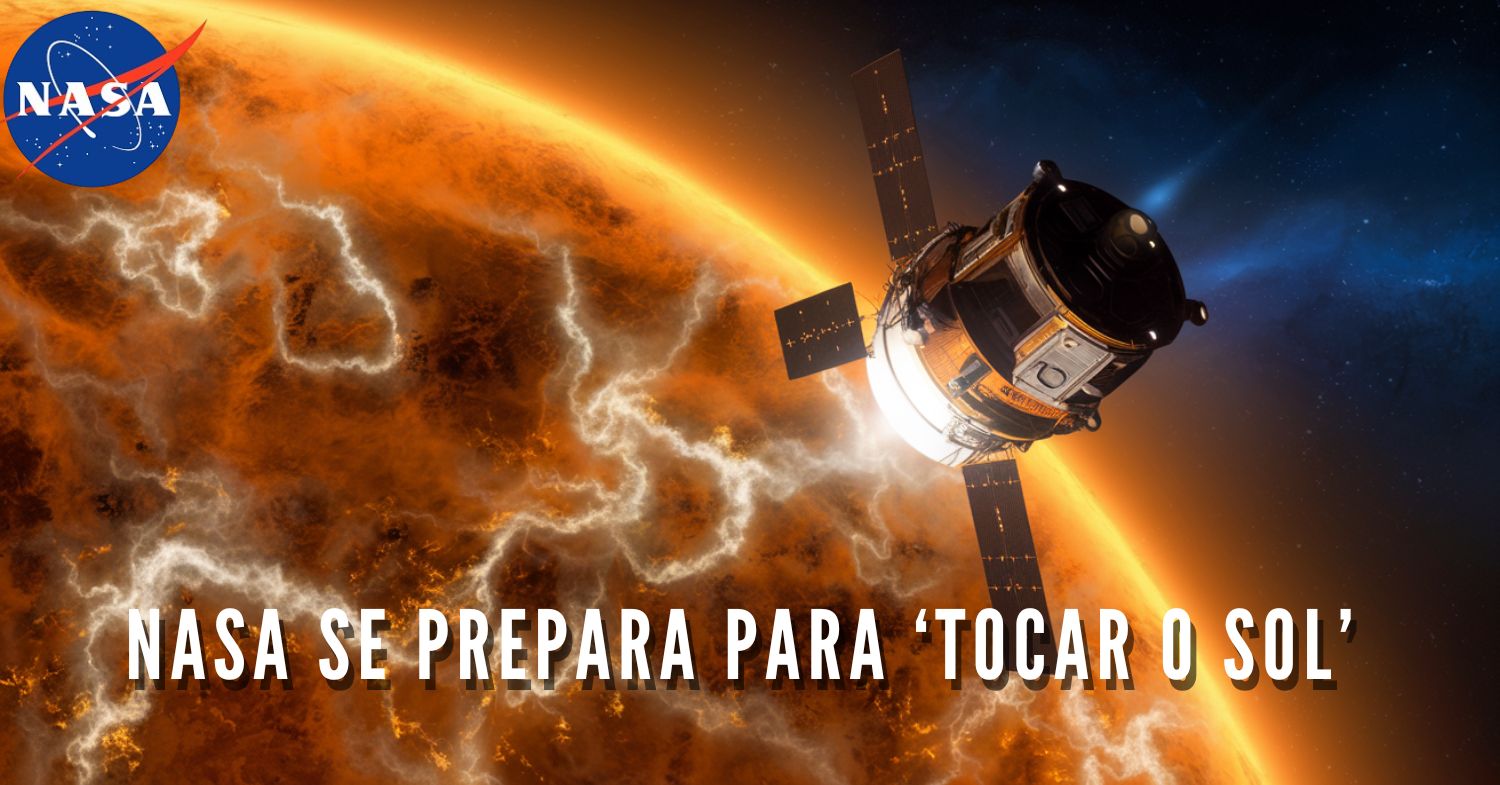
NASA’s Historic Mission Seeks to Explore the Sun’s Surface, Revealing Secrets Never Before Discovered About Our Star and Pushing the Limits of Space Science Like Never Seen Before.
Is NASA Going to ‘Touch the Sun’? Imagine an object made by humanity traveling at an impressive speed of 430 thousand miles per hour, getting closer to the Sun than we ever thought possible. It sounds like science fiction, but this is the reality of NASA’s Parker Solar Probe mission, which is about to literally ‘touch the sun.’ This historic mission not only brings us closer to the star that sustains life on Earth, but also promises to reveal mysteries that have intrigued scientists for decades.
Is NASA Going to ‘Touch the Sun’? Meet the Spacecraft That Faces Solar Hell
Launched in 2018, NASA’s Parker Solar Probe is a true engineering marvel. Its goal is to study the Sun’s corona, the outermost layer of its atmosphere, coming within just 3.8 million miles of the solar surface on the upcoming December 24. To put that in perspective, this is the closest approach a human-made object has ever made to the Sun.
But how does the spacecraft withstand such extreme temperatures? The secret lies in its highly advanced thermal shield, which withstands up to 2,500 degrees Fahrenheit (equivalent to approximately 1,371.11 degrees Celsius) while keeping the scientific instruments at a comfortable temperature. This shield not only protects the equipment from solar radiation but also ensures that the Parker continues to send valuable data about solar winds and the energy irradiated by the Sun.
-
The coldest seawater ever recorded in Earth’s history was hidden under extreme ice 717 million years ago and reached an impressive -15°C.

-
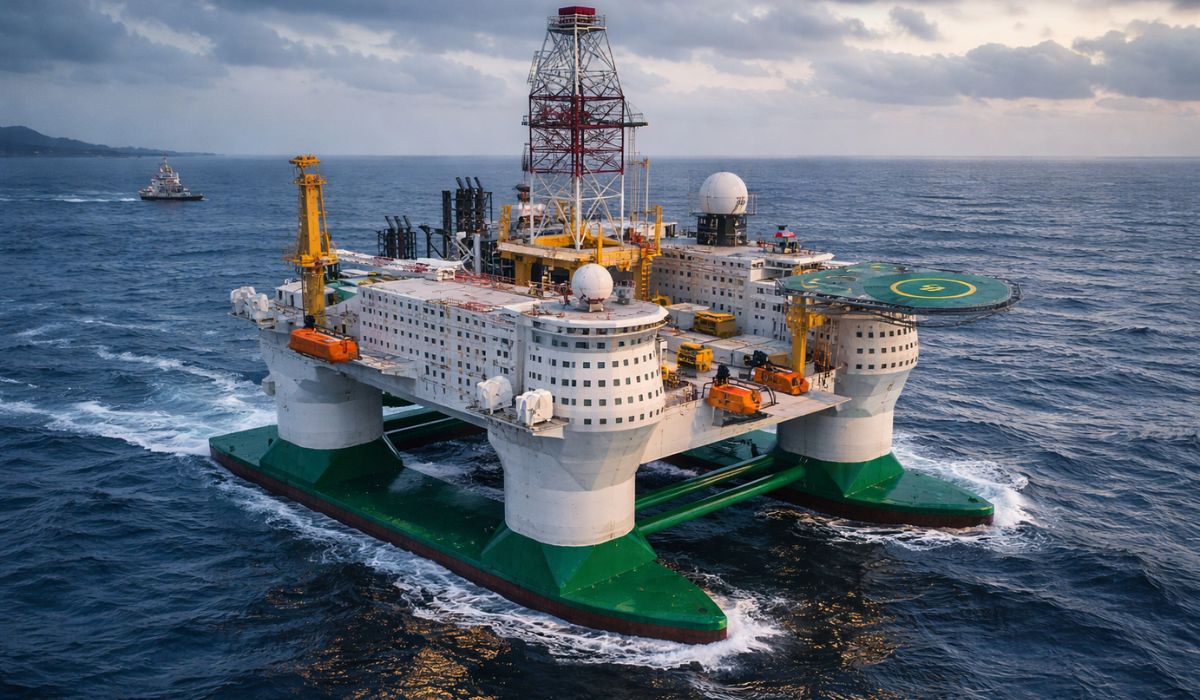
China has launched the world’s first floating artificial island, a scientific structure designed to face open seas, test equipment weighing hundreds of tons, and reach depths of 10,000 meters.
-
China accelerates global science and may surpass the United States in 2 years with increased public investment, continuous growth, and direct impact on the global technological competition.

-
Scientific studies indicate that drought may be strengthening a much greater silent threat: more resistant superbugs.




Why Is NASA Going to ‘Touch the Sun’?
You may be wondering: why is NASA investing so much effort and resources to get closer to the Sun? The answer lies in the direct impacts this star has on Earth and our technologies. Solar winds, for example, are flows of energetic particles traveling through space and can cause significant problems here on our planet.
These winds can interfere with satellites, communication systems, and even the power grid. By studying more closely how these particles are generated and transported, scientists hope to better predict the impacts of solar storms and protect our space investments, such as satellites and future crewed missions to Mars.
The Star That Shapes Our Life
The Sun has such a constant presence in our lives that we often underestimate its importance. Besides setting the rhythm of our days, it is responsible for natural phenomena like the auroras. This year, for example, the increase in solar activity provided a true spectacle, with Northern Lights visible as far south as Florida.
This activity is part of an 11-year cycle known as Solar Maximum, when the Sun enters its most active phase. During this period, solar flares and coronal mass ejections—massive explosions of energetic particles—are more frequent, releasing a gigantic amount of energy that can even be seen from Earth.
The Importance of ‘Touching the Sun’
With so much focus on the Sun, the question arises: why is this research so essential? According to NASA’s Director, Nikki Rayl, understanding the Sun’s behavior is vital to protect our technological advances and ensure the safety of astronauts in future missions.
The impact of the Sun goes far beyond our atmosphere. It influences orbiting satellites, navigation systems, and even space exploration. Better understanding solar activity means being prepared for events that could endanger both technology and the people working in space.
One Step Closer to the Space Future
The Parker Solar Probe mission is just the beginning. With the data being collected, NASA aims to enhance our understanding of the interaction between the Sun and Earth. This research also paves the way for the development of technologies that can withstand extreme conditions, essential for crewed missions to Mars and beyond.
Getting closer to the Sun is not just a scientific feat; it’s a reminder that human curiosity knows no bounds. By ‘touching the sun,’ NASA is not only exploring the mysteries of the universe but also ensuring a safer and more sustainable future for humanity in space.
What Comes Next?
As the Parker Solar Probe mission advances, NASA continues to push the limits of what is possible. The discoveries made by this spacecraft have the potential to transform our understanding of the Sun and its impact on our planet. Meanwhile, we remain here on Earth, admiring the achievements of a mission that is literally touching the stars.
And you, are you ready to follow this journey? The Sun, which warms and lights us every day, is now being unveiled like never before. The Parker mission is more than science; it is a celebration of humanity’s capacity to explore and understand the universe that surrounds us.









-

2 pessoas reagiram a isso.