





 Portuguese
  English
  Spanish
  4 min of reading
  2 comments


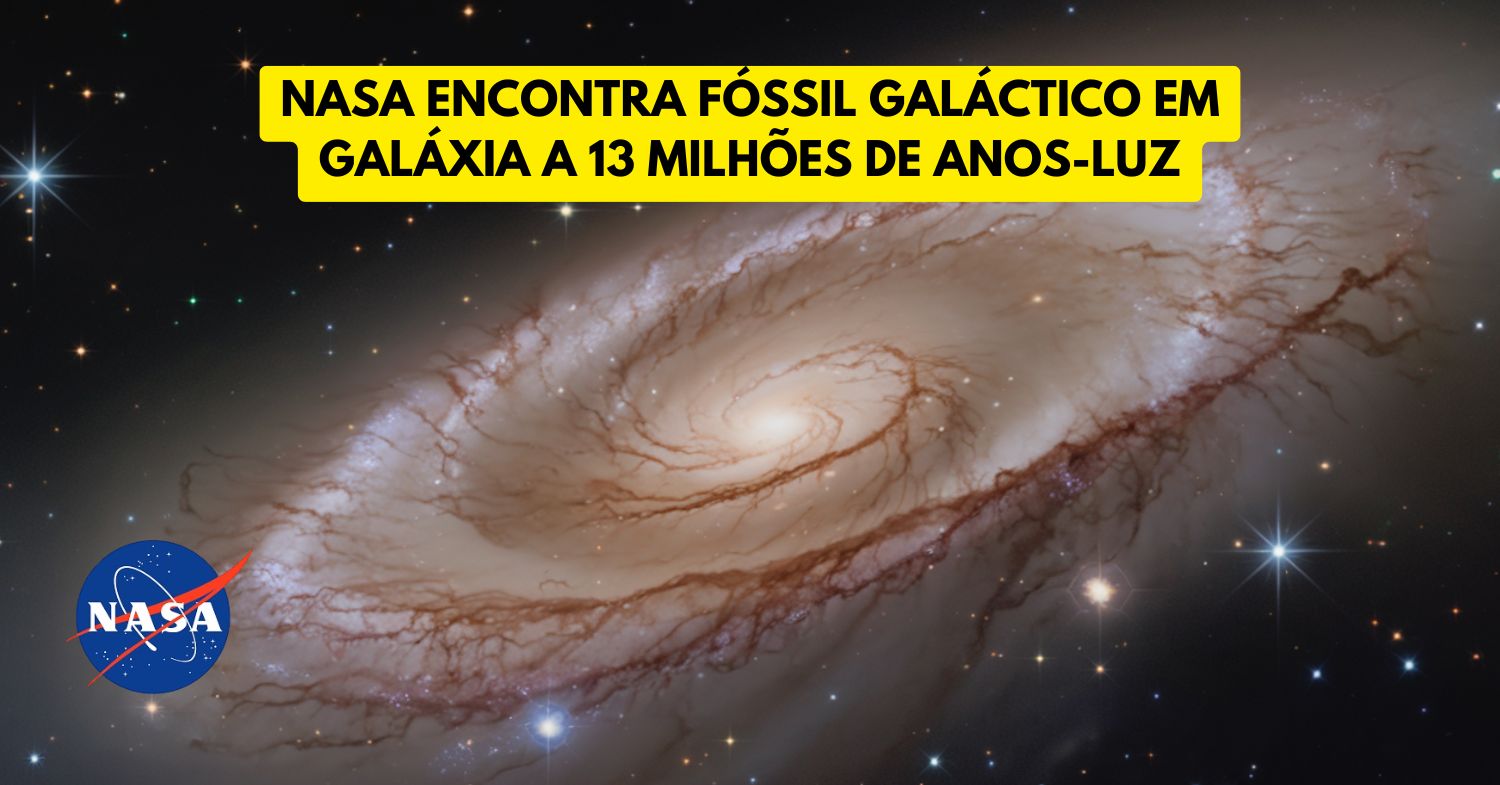


Discovery in NGC 4945, Caused by a Supermassive Black Hole, Helps Scientists Unravel Secrets About the Formation and Evolution of Galaxies. A Fascinating Story of Modern Astronomy!
The NASA made an incredible discovery that seems straight out of a science fiction movie: a true galactic fossil was found wandering through the universe. This cosmic relic is the result of a massive explosion in NGC 4945, a galaxy located in the constellation Centaurus, 13 million light-years from Earth. The event, caused by a supermassive black hole, is helping scientists better understand the formation and evolution of galaxies. Let’s dive into this fascinating story that combines science, mystery, and the secrets of the universe.
What Is the “Galactic Fossil” and Why Is It So Important?
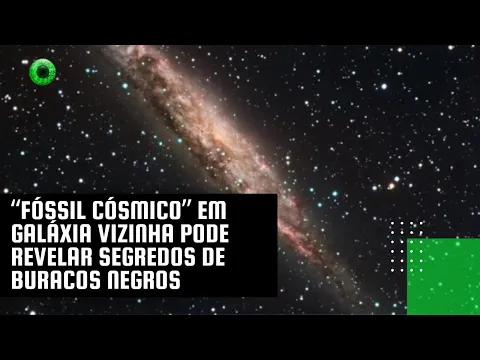
The galaxy NGC 4945 is one of the closest to Earth with an active galactic nucleus (AGN), which means it has a supermassive black hole at its center. This black hole, with a mass equivalent to 1.6 million suns, is in a state of “feeding frenzy,” sucking in everything around it and emitting massive amounts of energy.
This process generates winds and particle jets that can shape the galaxy and profoundly impact its structure. The most impressive thing is that the activity of the black hole resulted in an explosion of cold gas that created what is now called a galactic fossil.
-
Expedition 501: Scientists drill into the ocean floor and discover a giant reserve of fresh water hidden beneath the sea, extracting nearly 50,000 liters and revealing an invisible system that could reshape the map of water scarcity.

-
Archaeologists find an intact tomb over 2,500 years old, with more than 100 preserved objects, weapons, jewelry, and human remains never touched.

-
Volcanic lava transforms into threads as fine as human hair that travel over 30 kilometers by wind and fall like cutting rain on roofs and backyards in Hawaii and Iceland.
-
NASA issues a warning for the feared Godzilla El Niño that could change the planet’s climate in 2026 with extreme warming of the Pacific capable of causing devastating droughts in some regions and historic floods in others simultaneously.

A Vestige of Cosmic Eruptions
Five million years ago, a massive eruption expelled cold gas beyond the boundaries of NGC 4945. This event not only triggered a phase of intense star formation but also created a particle jet that propelled the gas to impressive distances.
One of the most remarkable discoveries was the presence of the iron K-alpha line, a high-energy signature indicating the interaction of cold gas with light reflected from the black hole.
This line was detected at distances of up to 32,000 light-years, something never observed before in another galaxy. For scientists, this galactic fossil is a window into the past, showing how black holes can shape their surrounding environment in unexpected ways.

The Impact of the Black Hole on Star Formation
Scientists have discovered that, despite their destructive nature, black holes also play a crucial role in star formation. In NGC 4945, the explosion of the supermassive black hole has resulted in a star formation rate three times greater than that of the Milky Way. The galaxy currently forms about 18 stars per year, making it a perfect example of a starburst galaxy.
However, this intense phase of star creation does not last forever. As the black hole consumes the available cold gas, star formation will eventually decrease, leading the galaxy into a quieter phase of its evolution.
Space Technology and NASA Discoveries
To study NGC 4945, the NASA team used advanced telescopes, such as XMM-Newton and Chandra. These instruments allow detailed observations of cosmic phenomena, revealing how black hole explosions influence galaxies over time.
Research director Kimberly Weaver explained that studying a galaxy like NGC 4945, which is relatively close, offers a unique opportunity to understand how black holes are related to star formation. Continuous observations of this galaxy provide valuable information about galactic dynamics and the long-term effects of massive eruptions.
Why This Discovery Is Revolutionary?
The scale of the event in NGC 4945 challenges current models of galactic evolution. The fact that particle jets have an impact at such great distances suggests that black holes may influence much more than previously thought. In addition, the discovery of the galactic fossil reinforces the idea that these phenomena play a fundamental role in controlling star formation and transforming galaxies.
Scientists believe that the continued study of NGC 4945 may offer answers to even deeper questions about the universe. As the activity of the black hole eventually exhausts the cold gas, the galaxy will enter a quieter phase. Monitoring this transition will help researchers better understand the life cycles of galaxies.
Furthermore, this research sheds light on how extreme events in the cosmos can lead to the creation of new stars and structures. Each discovery brings us closer to unraveling the secrets of the universe and understanding our own place within it.
A New Perspective on the Universe
The discovery of the galactic fossil in NGC 4945 is more than a scientific milestone; it is a reminder of how the universe is in constant transformation. Black holes, often seen as destroyers, also have the power to create, shape, and influence entire galaxies.
With the advanced technologies of NASA and the dedication of researchers, we are just beginning to explore the complexity and beauty of the cosmos. And who knows? Perhaps the next great mystery of the universe is waiting to be uncovered in a galaxy not so far away.









Excelente matéria
Muito interessante e pra que é apaixonado em o comportamento do espaço