





 Portuguese
  English
  Spanish
  3 min of reading
  3 comments


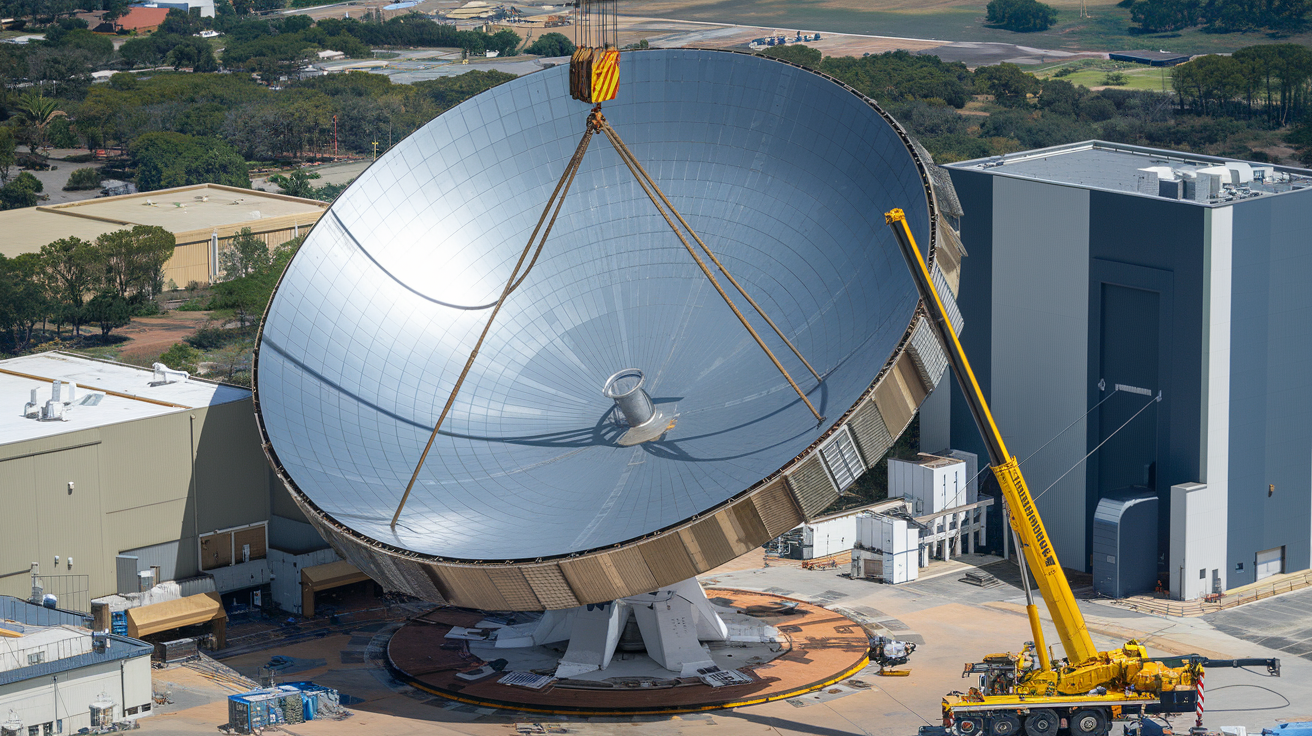


NASA’s Parabolic Antenna Is Now Operational Again After More Than Four Decades of Disuse. When Ready, NASA’s Antenna Will Be Able to Identify Aircraft Up to 50 Thousand Kilometers Away.
A giant parabolic antenna from NASA, measuring about 29 meters wide and located in Carnarvon, Western Australia, received its first signal in nearly 40 years. Deactivated in 198, after collaborating with missions from the American Space Agency (NASA), the historic structure underwent renovations carried out by the Canadian company ThothX, which invested in the revitalization of the equipment.
Company Announces Project to Restore NASA’s Antenna
The company aims to make NASA’s parabolic antenna part of a global satellite tracking network, with applications ranging from communication to strategic defense. The restoration project for NASA’s antenna began in 2022 when ThothX signed a 20-year contract to utilize the facility.
After minor repairs last year, the antenna was manually adjusted to receive the signal from the satellite NSS-12, a geostationary satellite that provides essential services such as television transmission, banking transactions, and military communications in Australia. This achievement marks a fundamental milestone for the project.
-
The most famous volcano in the world could paralyze one of the largest metropolises on the planet: Japan accelerates emergency plans for the eruption of Mount Fuji, which could bury Tokyo in ash for over two consecutive weeks.

-
The United States has a serious problem with its F-35s: China is already producing fighters at a pace that exceeds American capacity and could manufacture up to 300 aircraft per year before the end of the decade, shifting the global military balance.

-
Remains with battle wounds of over 100 soldiers from the Roman Empire are found beneath a football field in Vienna, leaving everyone surprised.

-
Elon Musk notes Brazil and lowers the price of his internet, Starlink, promising to connect all corners of the country with affordable plans, 10,000 satellites, and 1 million active users in the national territory!

According to Brendan Quine, CEO of ThothX, the precision required to align NASA’s parabolic antenna was a challenge. With the help of just three technicians and simple tools, the 300-ton structure was adjusted millimetrically until it connected to the satellite. Quine stated that this proves the project’s viability and allows for moving on to the next steps, such as completing the full renovation.
The repairs on NASA’s antenna included the installation of a new radio system, cleaning of optical components, and even the removal of decades of pigeon waste. The next phases are expected to involve an investment of over 10 million dollars in the modernization of the antenna, including the application of a corrosion-resistant coating to withstand the region’s harsh weather.
Antenna Will Have the Ability to Locate Aircraft Up to 50 Thousand Kilometers from Earth
The remote location of Carnarvon, about 900 kilometers north of Perth, is considered ideal for monitoring orbital traffic and “adversary” activities in space, according to ThothX. The company has plans to use NASA’s parabolic antenna to track satellites in real-time, offering strategic advantages for potential military clients.
With financial support from the local government, which granted 50 thousand dollars for the project, the goal is to demonstrate the radar’s full functionality next year. The company also plans to equip NASA’s antenna with technology capable of locating spacecraft up to 50 thousand kilometers from Earth, with an accuracy of three meters.
ThothX Already Has Experience with Other Innovative Projects
The initiative in Carnarvon is inspired by ThothX’s experience with another antenna, 46 meters in size, at the Algonquin Radio Observatory in Canada. This project took 15 years to reach full operational capability, and the company believes that the same success can be replicated in Australia with NASA’s parabolic antenna.
Phil Youd, director of ThothX in Australia and manager of the Carnarvon Space and Technology Museum, celebrated the revitalization of the historic landmark. According to the executive, it is like giving new life to this antenna. It represented a legacy that can now continue contributing to strategic technological advancements.
It is worth mentioning that NASA is also advancing with this type of equipment, and in February, an experimental antenna from the agency successfully received signals from both radio frequency and near-infrared laser from NASA’s Psyche spacecraft. This marks an important advancement in the use of optical communication technologies alongside traditional radio waves for deep space missions.








29 metros de largura??
It’s Wrong
Ou é 29 metros de diâmetro ou ela
tem 14,5 m de raio, o que seria a metade do diâmetro dessa antena circunferência.
Muito bom isso deve rastrear ovilhem pq et sao muito perigosos ha relato q **** cabra atacou ate em um estado.muito bom pra rastrear satelite caindo e meteoro gigante igual aquele q extinguiu os dinossauros alem outra funcao se la oq kkk .nao vejo valor nenhum nisso em apenas a meteoro q e importante acredito nasa podia se junta arruma jeito de fazer experiencia cometar dado ajudar costa terrestre saber mais sobre. Nos mundo base cientifica mundial obter dado beneficio ao desenvolvimento terrestre pois cada dia terra morre alta taxa de poluicao do mundo vindo paises 1 mundo sua industria onde alegam coisa sobre brasil poluicao mais na verdade pais mais contribui pra poluicao sao reclama faz ativismo ambiental como vc ver greta ambientalista dos estado unido pais polui ate osso terra ela e um exemplo sinismo politico democratico pois mostra vdd mentira pais conta ao ser dizer sao ambietalista cuida mundo..se nem mundo ta cuidado imagina do espaco kkkk
Depois de tentar decifrar sua escrita, parei nas primeiras linhas e vi que você só tava falando um monte de M37d@ kkkk