





 Portuguese
  English
  Spanish
  3 min of reading
  0 comments


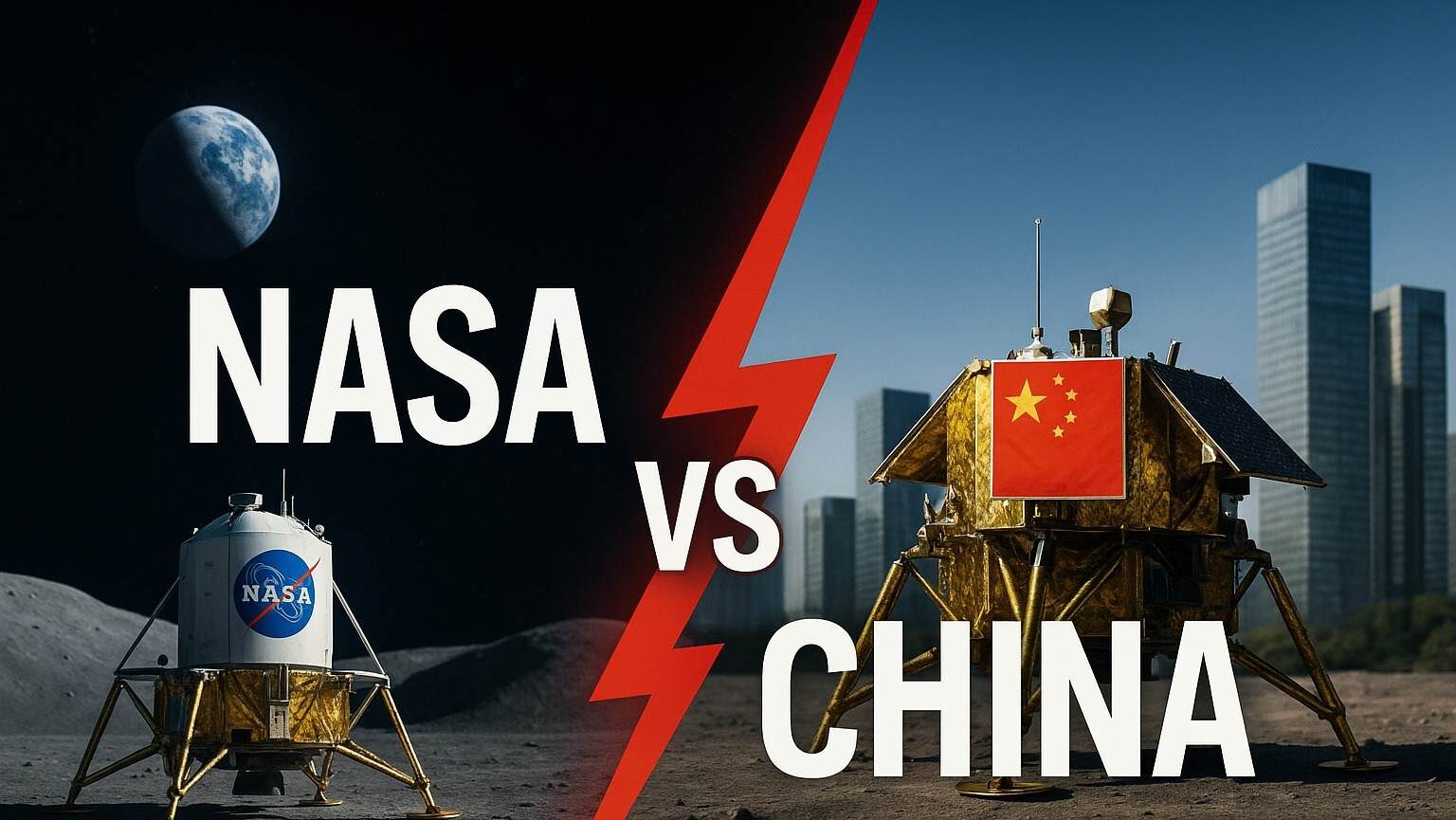
China Accelerates Plans to Land Astronauts on the Moon by 2030, While Cuts, Delays, and Political Disputes Hinder NASA’s Timeline.
More than half a year after the start of Donald Trump’s second term, NASA still hasn’t defined a permanent administrator. This leadership vacuum coincides with deep cuts to the agency’s scientific budget. The White House is concentrating resources only on space exploration, creating an environment of uncertainty.
The result is an unstable environment for NASA’s plans. The Artemis program, responsible for returning astronauts to the Moon, is accumulating delays.
Contracted companies are missing deadlines and reporting significant technical problems.
-
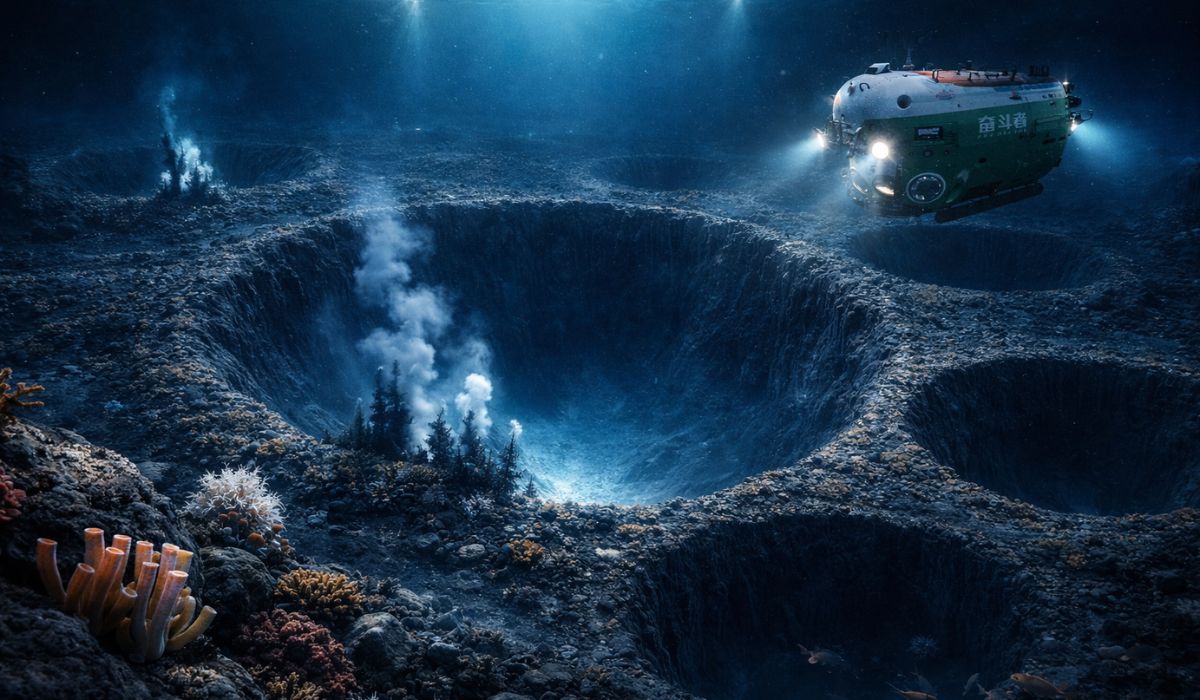
Chinese submersible discovers a colossal system of giant craters on the Pacific floor, previously unknown, teeming with life and so rich in hydrogen that they may help explain the origin of life on Earth.
-
A mysterious structure has been found beneath an ancient city in Egypt — and the most impressive thing is what technology has revealed hidden for 2,600 years.

-
Astronauts reveal that cities shine so brightly at night that they are visible from space as “artificial constellations,” while highways in the desert appear more than the Great Wall of China, which practically disappears when viewed from orbit.

-
A magnitude 9.2 earthquake in Alaska reshaped the coastline in minutes, sank entire cities, raised sections of the seabed by several meters, and left one of the fastest geographical transformations ever recorded on Earth.


The goal announced in 2019 to land Americans on the lunar surface by 2024 is increasingly distant.
Chinese Advance
Meanwhile, China is accelerating its own plans. The country recently conducted a crucial test of the lunar module “Lanyue” in Beijing.
The test was considered a milestone in Chinese space exploration, as it demonstrated for the first time the landing and takeoff capability of a crewed spacecraft outside Earth.
According to the China Aerospace Science and Technology Corporation, this was an essential step toward meeting the goal of sending astronauts to the Moon before 2030.
This forecast puts direct pressure on the United States. After all, Artemis 3, the mission intending to carry out the crewed landing, is not expected to occur until 2027 — and could face further delays.
SpaceX Obstacles
One of NASA’s biggest challenges is related to the development of Starship, the SpaceX spacecraft chosen for the human landing system. Elon Musk’s company is facing difficulties in proving that the vehicle is safe and reliable to transport crews from lunar orbit to the surface.
This instability threatens to compromise the Artemis timeline. Analysts are already pointing out that the American advantage is rapidly diminishing.
Expert Dean Cheng stated that the possibility of China reaching the Moon first is real and would have a strong geopolitical impact.
Geopolitical Consequences
Cheng also emphasized that the Chinese project is not limited to landing astronauts. The plan is to create permanent facilities and establish a continuous presence. This would allow the country to influence technical standards and set parameters for future activities in cislunar space.
Therefore, it’s not just about prestige. The race for the Moon also involves strategic influence and control over key technologies.
If China manages to establish bases before the U.S., it could dictate rules in a territory still in dispute.
Political Conflict in the U.S.
In the United States, NASA’s problems go beyond technical failures. The relationship between Donald Trump and Elon Musk has plunged into disagreements.
The billionaire has always downplayed the importance of the Moon, advocating for direct focus on Mars. This vision conflicts with the Artemis program.
The situation worsened when Jared Isaacman, Musk’s pick for NASA administration, was sidelined amid political disputes. After the incident, Trump appointed Sean Duffy, Secretary of Transportation, as interim administrator. This decision reinforced the impression that the agency has lost priority in the government.
Uncertain Future
Even with Trump’s promise to allocate an additional US$ 1 billion to send humans to Mars in 2026, the scenario remains unclear.
The lack of stable leadership, recurring delays, and dependence on SpaceX cast doubt on NASA’s ability to meet its deadlines.
Meanwhile, China is progressing with a consistent plan, without major public interruptions. The country aims not only to arrive first but also to consolidate a long-term presence on the Moon.
Most importantly, the dispute has ceased to be merely technological. Today, it also represents a struggle for power and influence.
If delays persist, the United States may lose the race that has symbolized global leadership in space for decades.






Seja o primeiro a reagir!