





 Portuguese
  English
  Spanish
  5 min of reading
  1 comment


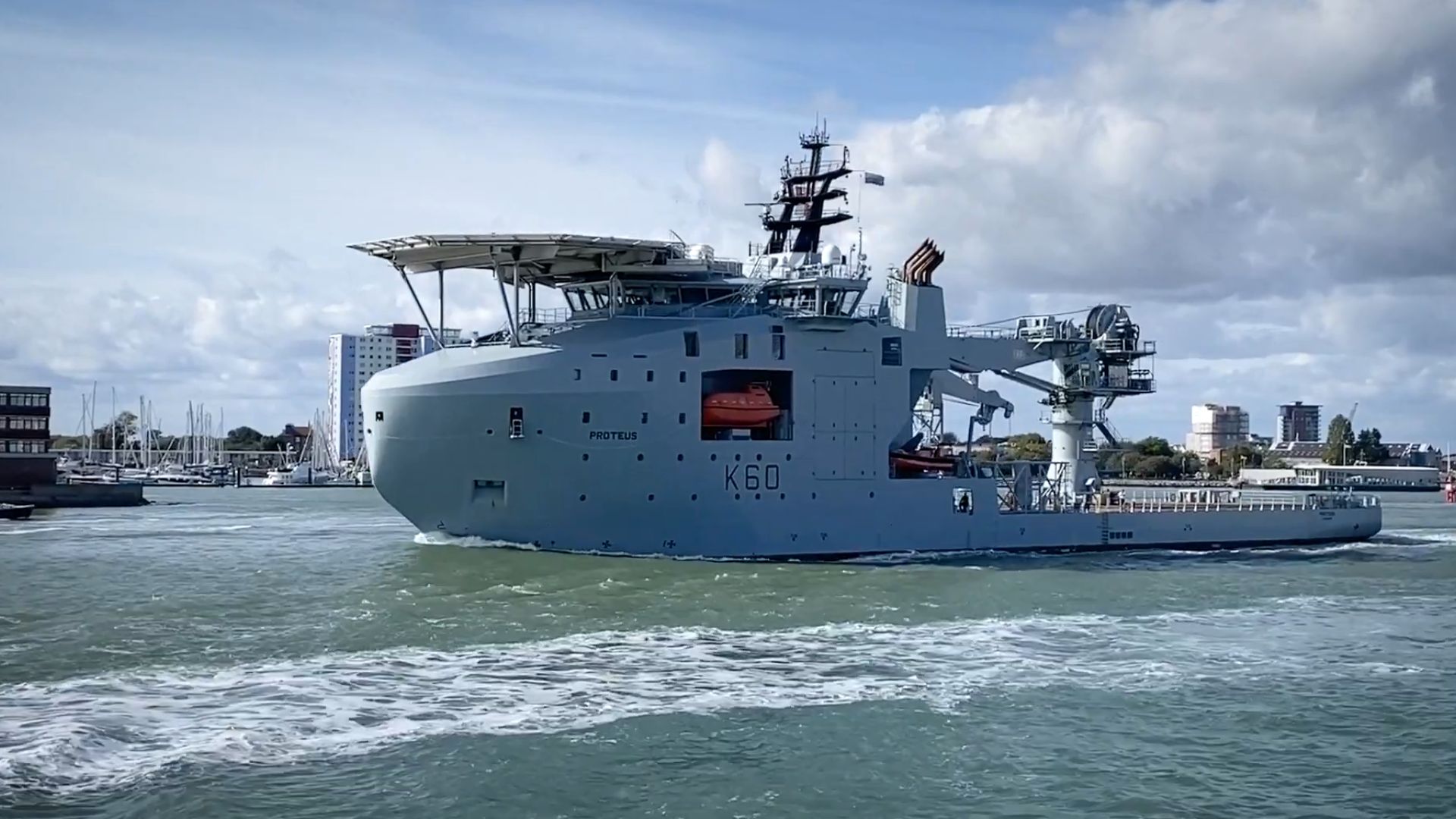


Accelerated Conversion Transforms Civil Ship into Strategic Platform to Protect Submarine Cables and Expand Seabed Surveillance with Specialized Team and Focus on Underwater Warfare.
The United Kingdom has put into operation the RFA Proteus, a vessel from the Royal Fleet Auxiliary dedicated to monitoring and protecting critical underwater infrastructure, such as communication cables and other assets on the seabed, integrating inspection, monitoring, and support for underwater warfare systems.
The Royal Navy states that the platform was designed to operate “undersea surveillance, survey and warfare systems,” combining seabed surveying, activity monitoring, and deploying specialized means for persistent missions in a scenario where the security of cables and pipelines has gained strategic importance.
In practice, the Proteus originated from a commercial support vessel for the offshore industry and underwent conversion for naval service, a choice aimed at expediting the delivery of capability without waiting for a complete design and construction cycle of a military ship from scratch.
-
He started running at 66 years old, broke records at 82, and is now a subject of study for having a metabolic age comparable to that of a 20-year-old, in a case that is intriguing scientists and inspiring the world.

-
Oldest tree on the planet reappears after 130 years of searches: Wattieza, 385 million years old, was 10 meters tall and had no leaves or seeds; Gilboa fossils in New York solved the mystery in 2007.

-
A 48-square-meter house assembled in hours with 4,000 bricks made of recycled plastic that does not absorb moisture, has natural thermal insulation, and costs less than 90,000 reais in a complete kit.

-
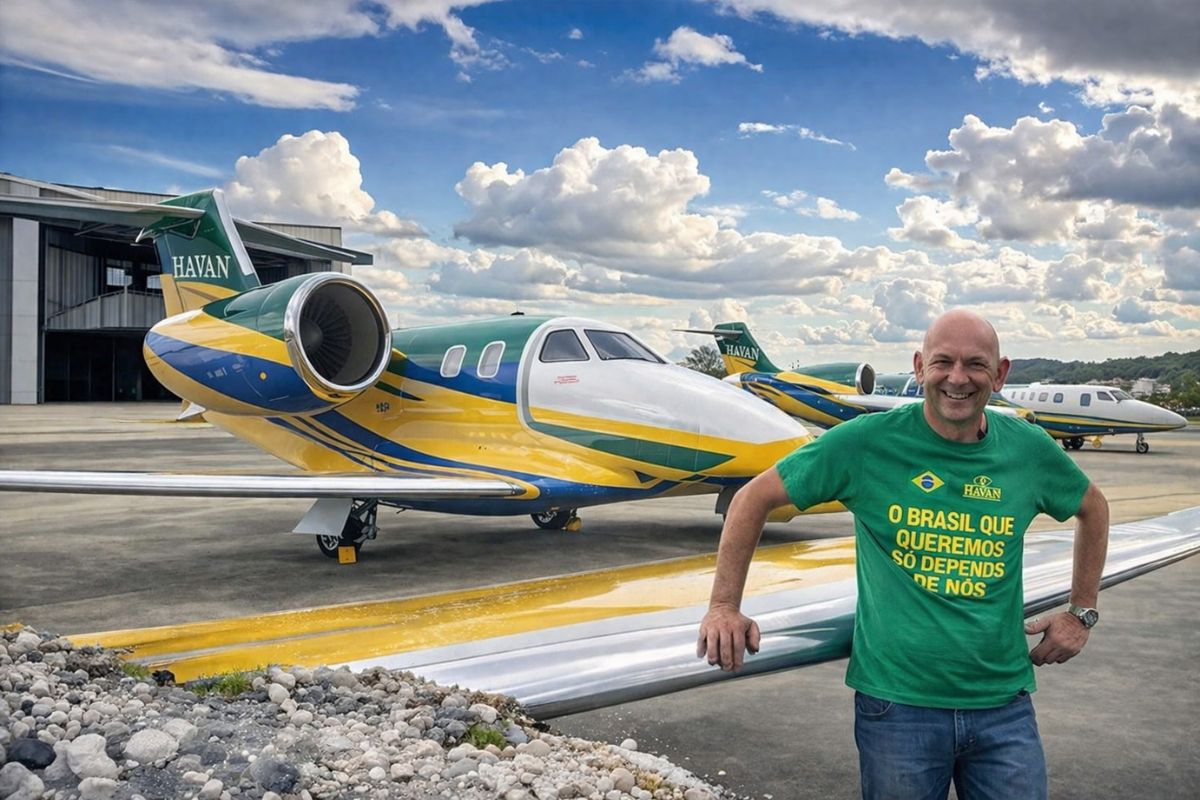
Luciano Hang revealed that Havan’s air fleet has already accumulated more than 20,000 landings, 10,000 flight hours, and 6 million kilometers traveled, and he says that without the planes, the company would never have grown so quickly.

According to the Royal Navy, the vessel “began life as an oil rig-support vessel,” which helps explain why the civil hull served as the basis for a mission that requires deck space, autonomy, lifting capacity, and long operational routines at sea.
Entry into Service and Structure of Specialized Crew

The public dedication that marked the entry into service occurred on October 10, 2023, when the ship was presented as a national protection reinforcement, following a period of testing and training before heading to London and docking near naval landmarks in the capital.
The core crew comprises 26 RFA officers and sailors, “augmented by 60 Royal Navy specialists” responsible for sensors and systems focused on monitoring and surveying the seabed, as well as capabilities associated with underwater warfare.
This arrangement, with a reduced operational core and an expanded technical team, signals the Proteus’s focus on collection, inspection, and support for specialized systems, rather than traditional armed escort or surface presence functions.
Offshore Ship Conversion and Rapid Acquisition Strategy
By opting for a modern hull from the civil sector, the United Kingdom followed a logic that has emerged in recent defense programs: take advantage of an already available platform and concentrate adaptation efforts on communications, mission spaces, and equipment integration, thereby reducing timelines.
The mission related to submarine cables demands, above all, persistence at sea, the ability to launch and recover underwater vehicles, and the structure for specialized teams to work for long periods, something common in offshore vessels designed for support and maintenance.
In this context, specialized press described the Proteus as a “mother ship,” a term used to indicate a mother vessel capable of sustaining remote and autonomous systems for surveillance, inspection, and protection of assets on the seabed.
Purchase for £70 Million and Integration into the MROS Program

Navy Lookout reported that the British Ministry of Defence purchased the vessel for around £70 million, noting that the hull came from Topaz Marine, a subsidiary of P&O Maritime, and that the ship was designated for conversion on British territory.
This same report characterizes the Proteus as a modern platform designed for offshore work, with useful attributes for operating underwater equipment and supporting unmanned systems, which helps explain the choice for conversion instead of dedicated construction.
The Royal Navy, when announcing the start of service, also emphasized to the public the civil origin of the ship and the idea of repurposing a commercial structure for military ends, highlighting the capability to serve as a base for remotely operated vehicles.
The Proteus integrates the concept of Multi-Role Ocean Surveillance, known as MROS, associated by the British government with the need to enhance monitoring and protection of strategic interests in relevant maritime areas, especially in seabed monitoring.
In institutional communications, the ship has already been referred to as a “new multi-role ocean surveillance (MROS) vessel, named RFA Proteus,” framing the conversion as part of a broader effort to respond quickly to emerging maritime security demands.
The British defense procurement and support agency, DE&S, described the delivery of ships within a process of “rapid procurement,” indicating that the priority was not just to obtain a hull but to put a specific capability into operation as quickly as possible.

Seabed Surveillance and Protection of Critical Infrastructure
Although the Proteus is the most visible example, the theme of protecting underwater infrastructure appears as a line of continuity in public discussions in the United Kingdom, with calls for increased surveillance and attention to risks related to the underwater environment in the North Atlantic.
When presenting the Proteus, the Royal Navy described the ship as a “launchpad” for specialized systems, bringing the operational logic closer to what is already practiced in the oil and gas sectors, where support platforms sustain continuous inspection and intervention routines.
The result is a platform that prioritizes sensors, communications, and technical teams, with space for workshops and integration of remote means, in an approach where the protection of cables and other assets depends less on armament and more on detection, tracking, and response.
At the same time, the use of a converted ship clarifies an operational trade-off: instead of concentrating resources on a new class of escorts, the program bets on a “base ship” focused on discreet and prolonged missions, sustaining systems that operate beneath the surface.
With the RFA Proteus in service, the protection of what traverses the seabed gains a dedicated instrument, but the question that remains for public and strategic debate is: how many ships of this type will be needed to continuously monitor networks of cables and critical assets spread over vast areas?








A dúvida é: os cabos submarinos são alvos de pirataria?, sofrem desgastes naturais? Ou se rompem por acidentes com embarcações?