





 Português
  Inglês
  Espanhol
  3 min de leitura


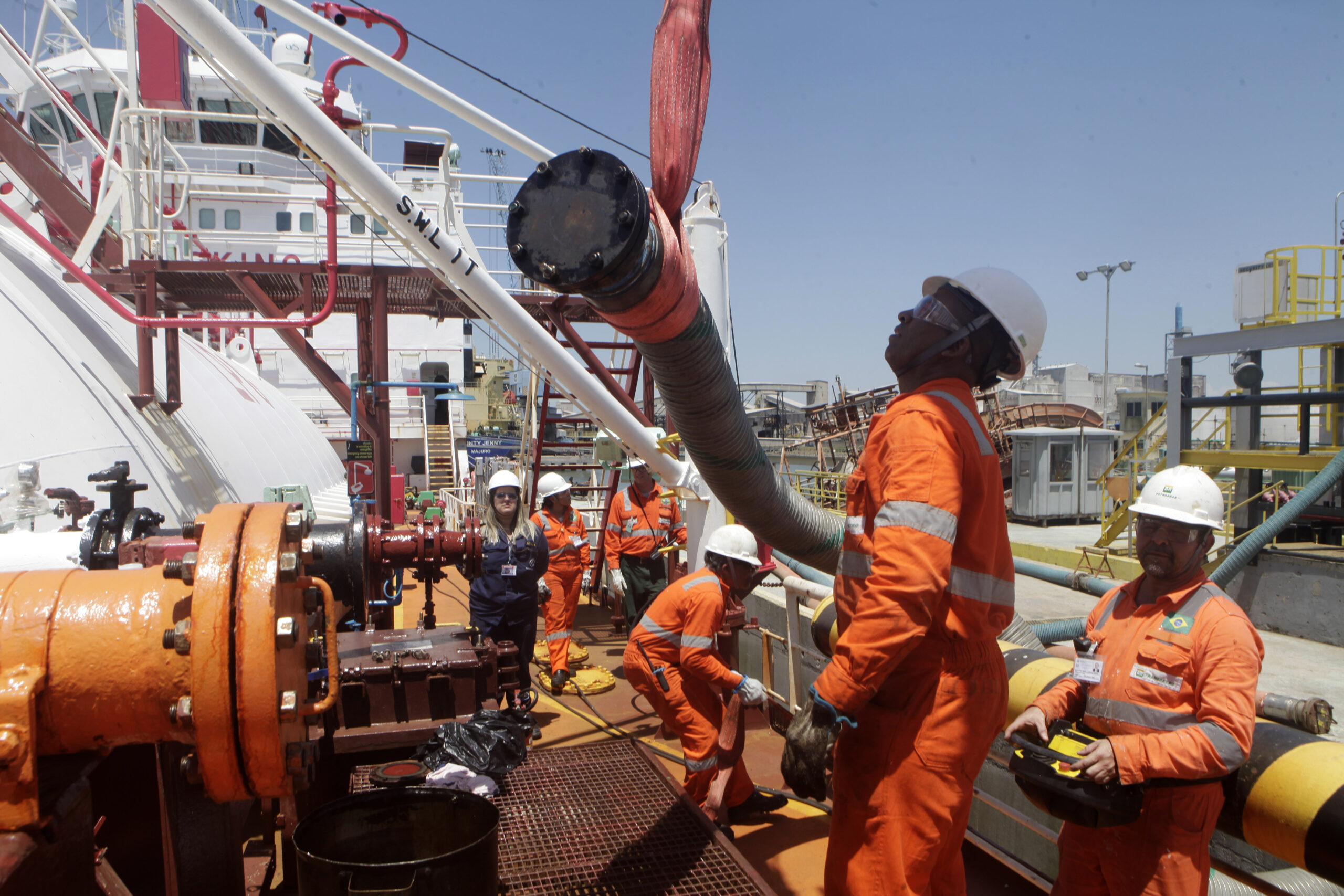
Petrobras Tests Bunker With Renewable Content on Transpetro Ship. Test Will Evaluate the Use of New Fuel With Lower Carbon Footprint
The first supply of bunker with renewable content in Brazil occurred on Saturday (12/31), at the Terminal of Rio Grande (Terig), in Rio Grande do Sul! Petrobras supplied the vessel Darcy Ribeiro, from Transpetro, with the new fuel having a lower carbon footprint, a mixture composed of 90% by volume of mineral-origin bunker and 10% by volume of biodiesel.
According to Petrobras, the objective of the test is to assess the use of the bunker with the new renewable fuel over two months and the logistical challenges associated with the use of the product.
Petrobras’ New Fuel Promises to Reduce Greenhouse Gas Emissions Compared to Bunker
The renewable fraction of Petrobras’ new fuel has the potential to reduce greenhouse gas emissions compared to bunker when considering the complete life cycle. The estimated percentage of CO2 equivalent emissions reduction for this mixture is about 7%.
-
Offshore industrial demand in Macaé skyrockets with the recovery of oil and gas and could grow by up to 396% by 2026 in the Campos Basin.
-
Offshore industrial demand in Macaé surges with the recovery of oil and gas and could grow by up to 396% by 2026 in the Campos Basin.
-
Brazilian giant expands borders in the Southeast: Petrobras confirms new oil discovery in ultra-deep waters in the pre-salt of the Campos Basin.

-
Alert in the global energy market: Severe tropical cyclone hits the coast and disrupts gas production at major plants in Australia, threatening global supply.


Laboratory Tests Confirm the Viability of the Mixture. In the first phase of the project, during tests conducted at Petrobras’ Research and Development Center (Cenpes), no impacts were observed on meeting the main properties of the bunker specification.
The evaluations of the burning quality and stability of the mixture indicated approval for the field test on a maritime vessel. There is expectation that the operation of the ship will confirm the laboratory results and proceed without complications in engine performance, filters, and fuel purification systems.
United Nations Aims to Reduce Absolute Greenhouse Gas Emissions from Ships by 50% by 2050
The IMO (International Maritime Organization), a UN agency responsible for improving maritime transport safety and preventing ship pollution, aims to reduce absolute greenhouse gas emissions from the sector by at least 50% by 2050 (compared to 2008). Among the main measures that can be adopted is the use of marine fuels with a mixture of renewable components, which is one of the solutions being developed by Petrobras.
It is worth noting that, starting this month, the IMO 2023 initiative will take effect, a program that aims to stimulate improvements in ship efficiency and the adoption of low-carbon fuels. “With the IMO 2023 label, vessels will be classified according to the level of energy efficiency, and Transpetro has been investing in various solutions in recent years, focusing on bringing our fleet to the highest efficiency standards,” states Jair Toledo, Director of Maritime and Terrestrial Engineering and Technology at Transpetro. “To meet this indicator, we have invested in various improvements. The installation of propeller and hull appendices on our fleet’s vessels, operational optimization actions, among others, achieved a 7% reduction in emissions in 2022 compared to 2021, serving as important proof of the advances made in our journey of energy efficiency evolution,” he reveals.
In the maritime sector, depending on the percentage of biodiesel blended into the fuel, little or no adaptation of the vessels is required, which facilitates the adoption of this new product. With the field test, Petrobras will take another step towards contributing to the commercialization of fuels with a lower impact on the environment.
Petrobras Will Invest US$ 4.4 Billion in Energy Transition Projects Focused on Low-Carbon Initiatives
Focusing on energy transition, Petrobras announced a billion-dollar investment of US$ 4.4 billion in projects aimed at low-carbon initiatives. The values are included in the Strategic Plan for the period from 2023 to 2027 of the state-owned company. “We are working on a new generation of more efficient products and fuels with lower greenhouse gas emissions, in line with society’s demands. The development of the bunker with renewable content is an example of our commitment to the transition to a low-carbon future,” states Sandro Barreto, Executive Manager of Marketing in the Domestic Market.










Seja o primeiro a reagir!