Portuguese
  Spanish


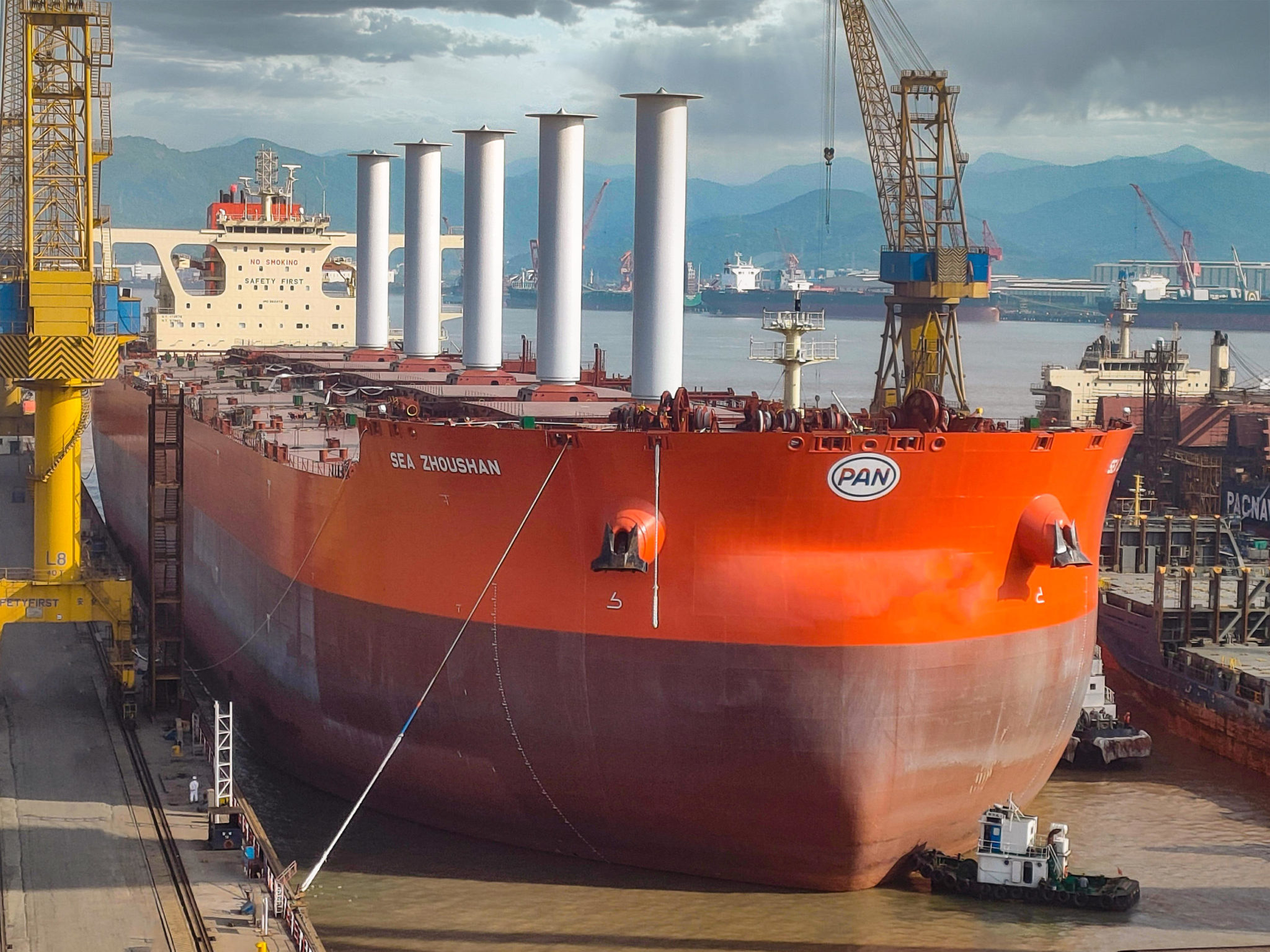

Docked this Tuesday at the port of Tubarão in ES, the giant iron ore ship at the service of Vale uses rotating sails to generate energy. In total, the vessel will reduce up to 3,4 thousand tons of carbon dioxide per year
The world’s first large-capacity iron ore ship, which generates energy using a system composed of five rotating sails (rotor sails), at the service of Vale, docked at the Porto de Tubarão in Vitória this Tuesday (27). The vessel was named Sea Zhoushan.
Read Also
Vale’s Giant Ship Has Capacity to Transport 325 Thousand Tons
Vale’s Sea Zhoushan docked around 11:30 PM last night, requiring the assistance of five tugboats: Camorim Topázio, Brucutu, Itabira, Timbopeba, and Hélio Ferraz I. The Vale iron ore ship left China a few weeks ago and is a Guaibamax of the VLOC category with a transport capacity of 325 thousand tons of iron and pellets.
In total, as mentioned before, there are five rotating sails that generate energy, installed along the ship and functioning as cylindrical rotors. The structures, which generate energy, have a diameter of four meters and a height of 24 meters, and during their operations, they rotate at different speeds, varying according to environmental and operational conditions to create a pressure difference and propel the iron ore ship.
-
France Revamps 530 Social Housing Units with Large Balconies and Glass Facades Without Demolishing Existing Buildings

-
10-Year-Old Max Makes History with Paris Fashion Show, Launches Own Brand, Hires Staff, and Sets World Record as Youngest Runway Designer

-
Bolivian Female Construction Workers Form Association to Combat Discrimination and 38% Pay Gap in the Industry
-
Near Amsterdam, residents buy land and discover they must also build streets, manage drainage, handle waste, and grow food on half their plot.




According to Vale, the rotating sails will allow for an 8% gain in efficiency and will also reduce emissions by up to 3,4 thousand tons of carbon dioxide per year.
Vale Plans to Hire a Fleet Composed of 40% Ships with Rotating Sails
-

First iron ore ship to sail using energy generated from rotating sails. Credit: Anderson Bibico/Disclosure -

First iron ore ship to sail using energy generated from rotating sails. Credit: Anderson Bibico/Disclosure -

First iron ore ship to sail using energy generated from rotating sails. Credit: Anderson Bibico/Disclosure
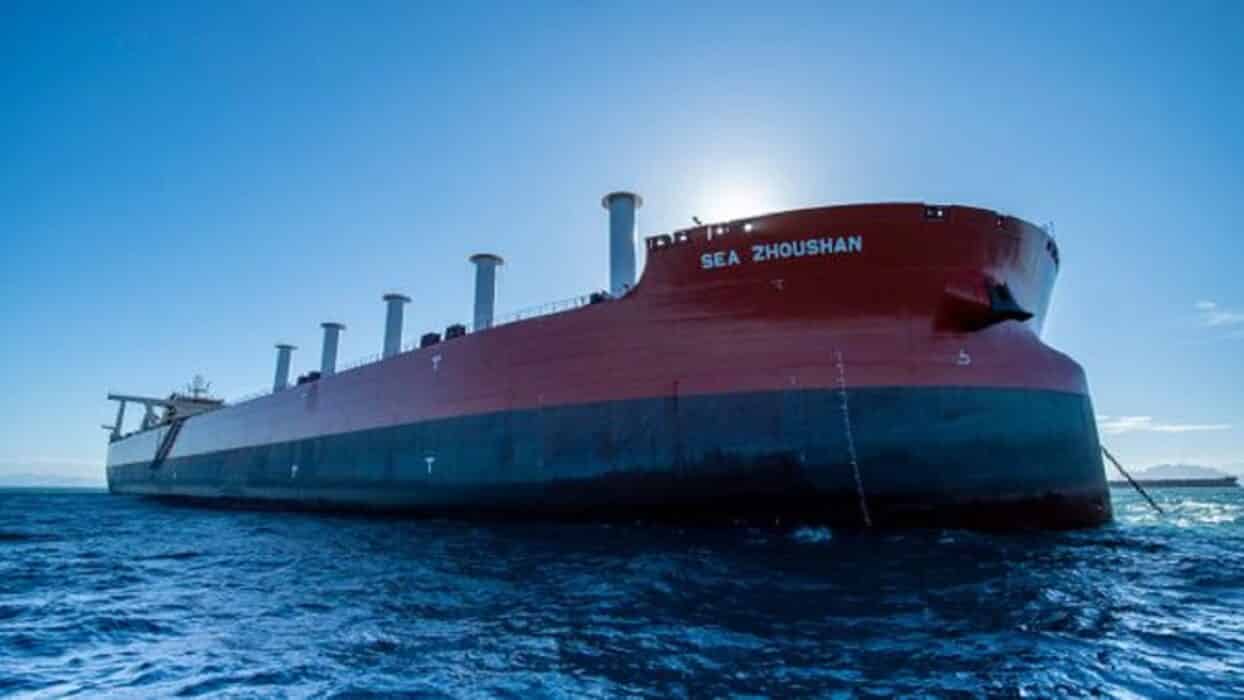
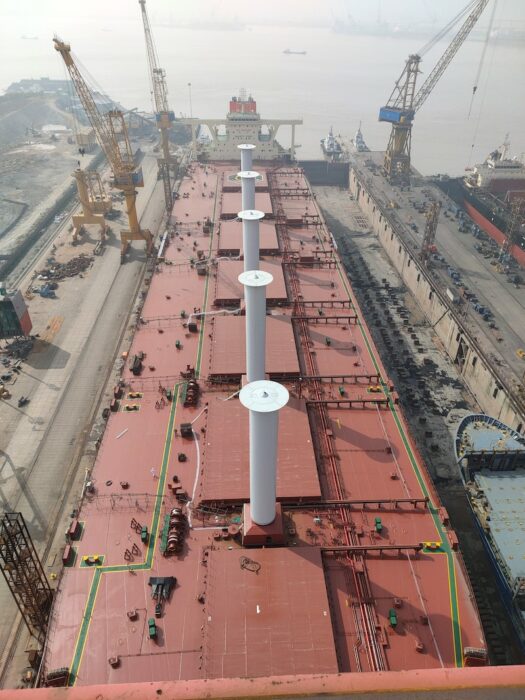
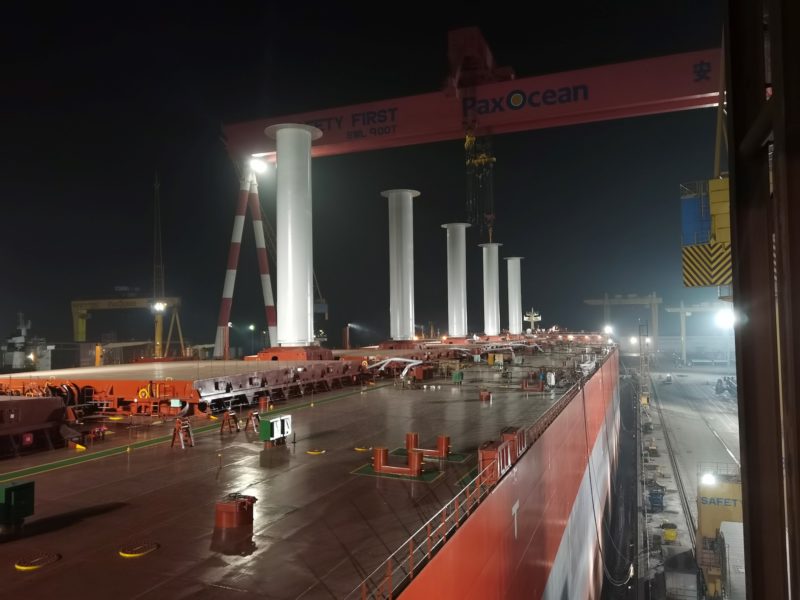
This will be the Sea Zhoushan’s first operation from Vale, which will return to China full of ore by the end of this week. The vessel takes about two days to be loaded. For now, it is a pilot project, but if the technology proves efficient, Vale plans to form a fleet composed of at least 40% of this type of sail, impacting a reduction of nearly 1.5% of emissions per year from Vale’s iron ore vessels.
It is worth noting that this type of system has existed since the 19th century, but only in recent years has it been used on large vessels such as oil, passenger, and cargo ships.
Vale’s CEO Speaks About the Success of Ore Transportation
According to Guilherme Brega, executive manager of Navigation at Vale, the operation is part of the Ecoshipping program, which is aimed at meeting the company’s goals for reducing its carbon emissions.
Last year, the company announced an investment of around R$ 6 billion to reduce up to 33% of its carbon emissions, referred to as scopes 1 and 2, by 2030. The company also announced plans to reduce scope 3 emissions by 15% by 2035, related to the value chain.
The executive states that this initiative is bringing the company various positive news. The arrival of the ship is an important milestone for Vale and it was interesting to bring it, primarily, to the Porto de Tubarão in ES, as it is a port with an innovative character designed to receive large ships. According to Guilherme, the rotating sails fold and almost lie down on the deck, reducing fuel use and generating entirely natural “energy.”