





 Portuguese
  English
  Spanish
  2 min of reading
  0 comments


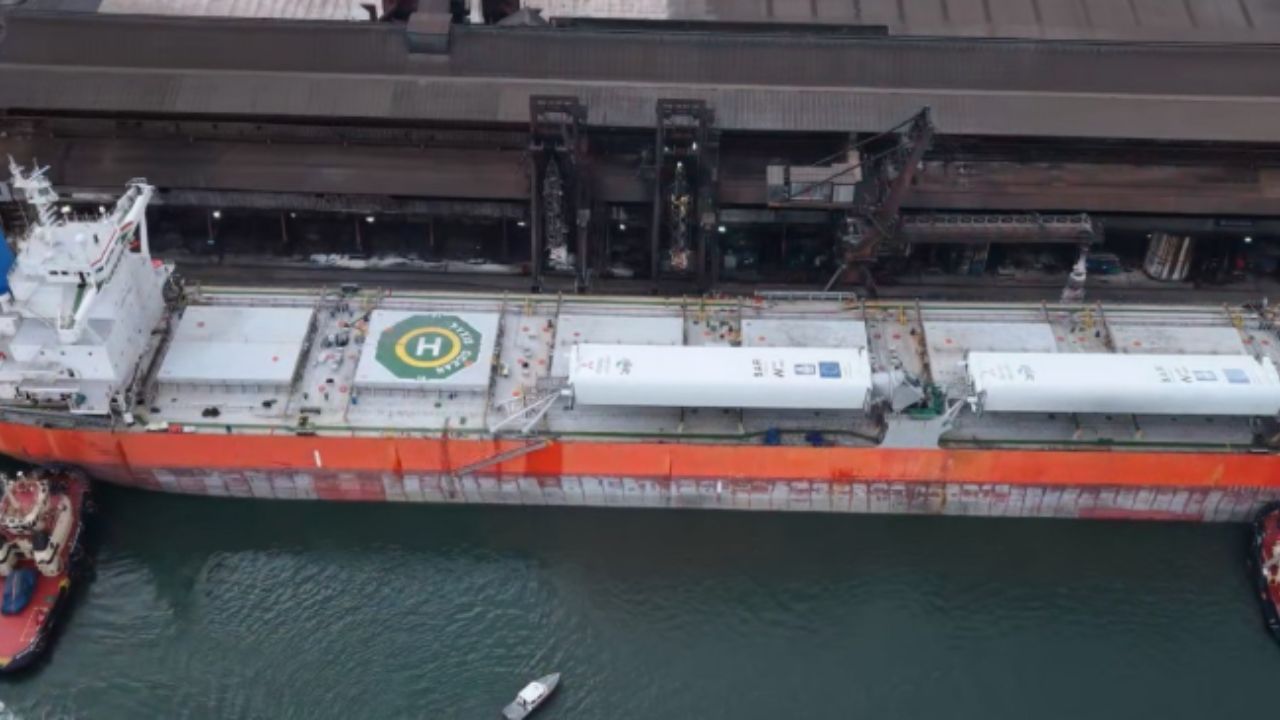
Pyxis Ocean Vessel, Equipped with Steel Sails, Embarks 72 Thousand Tons of Product at Santos Port Destined for China, Promoting a More Eco-Friendly Transport.
The Port of Santos was the scene of an innovative operation with the wind-powered ship Pyxis Ocean. This vessel, which uses wind power as auxiliary propulsion, loaded a cargo of 72 thousand tons of sugar. The operation, carried out by the maritime agency RZ Mura, marks a significant advancement towards more sustainable maritime transport.
Wind Propulsion Technology at the Port of Santos
For the first time, a bulk carrier with wind propulsion technology operated at the Port of Santos. The Pyxis Ocean, owned by Mitsubishi Corporation and chartered by Cargill, represents a milestone for the sector. Its presence at the Copersucar terminal dock in the Ponta da Praia neighborhood drew attention for its differentiated technology.
The Cargo: 72 Thousand Tons of Sugar Destined for China
The wind-powered ship was loaded with a large quantity of sugar. In total, 72 thousand tons of the product were embarked, destined for China. This type of cargo, essential for Brazilian exports, now has a transportation alternative that seeks to reduce environmental impact.
-
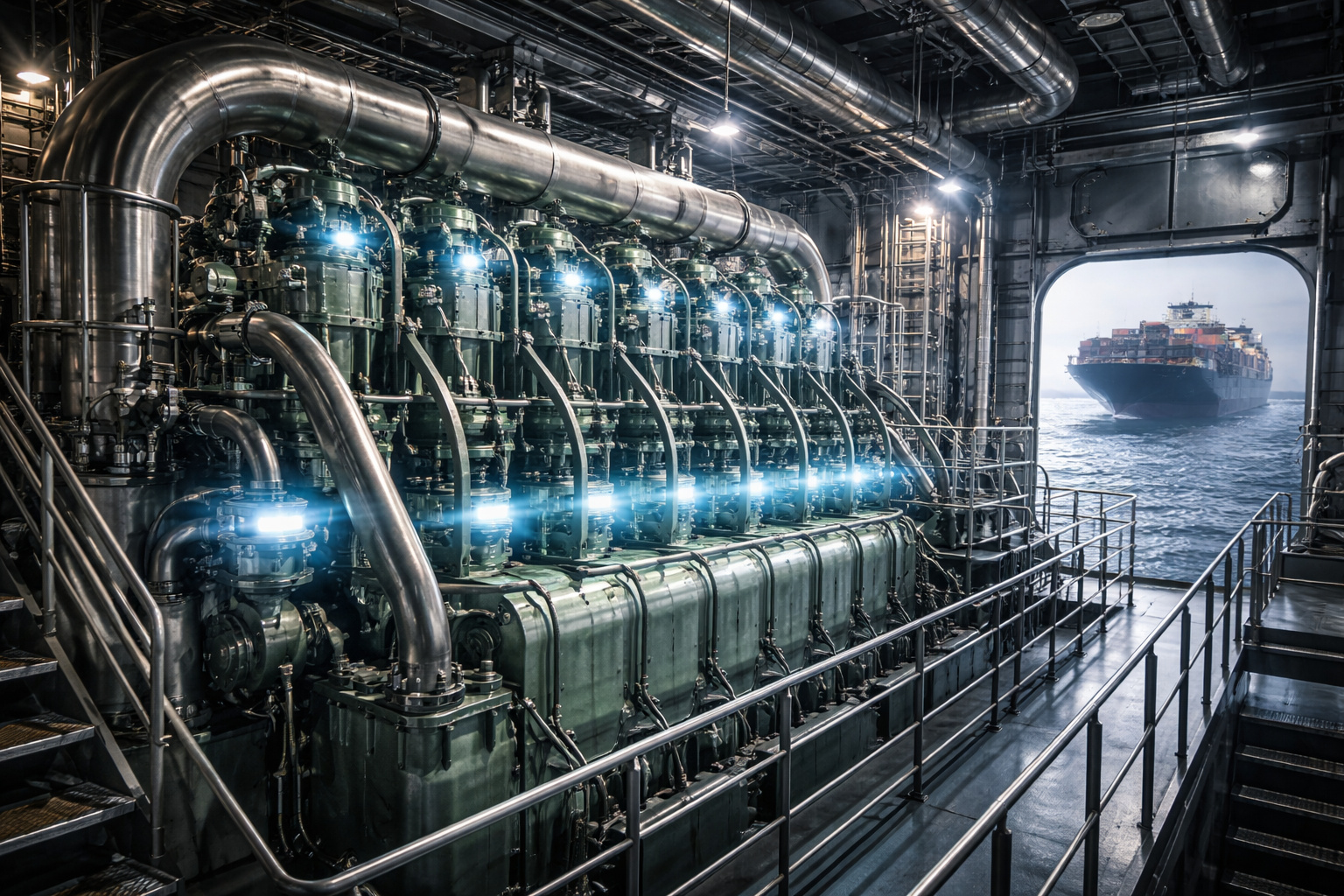
Europe is trying to create an ammonia-powered marine engine without auxiliary fuel, which could unlock the race for giant emission-free ships. The technology aims to eliminate one of the biggest obstacles to clean maritime propulsion.
-
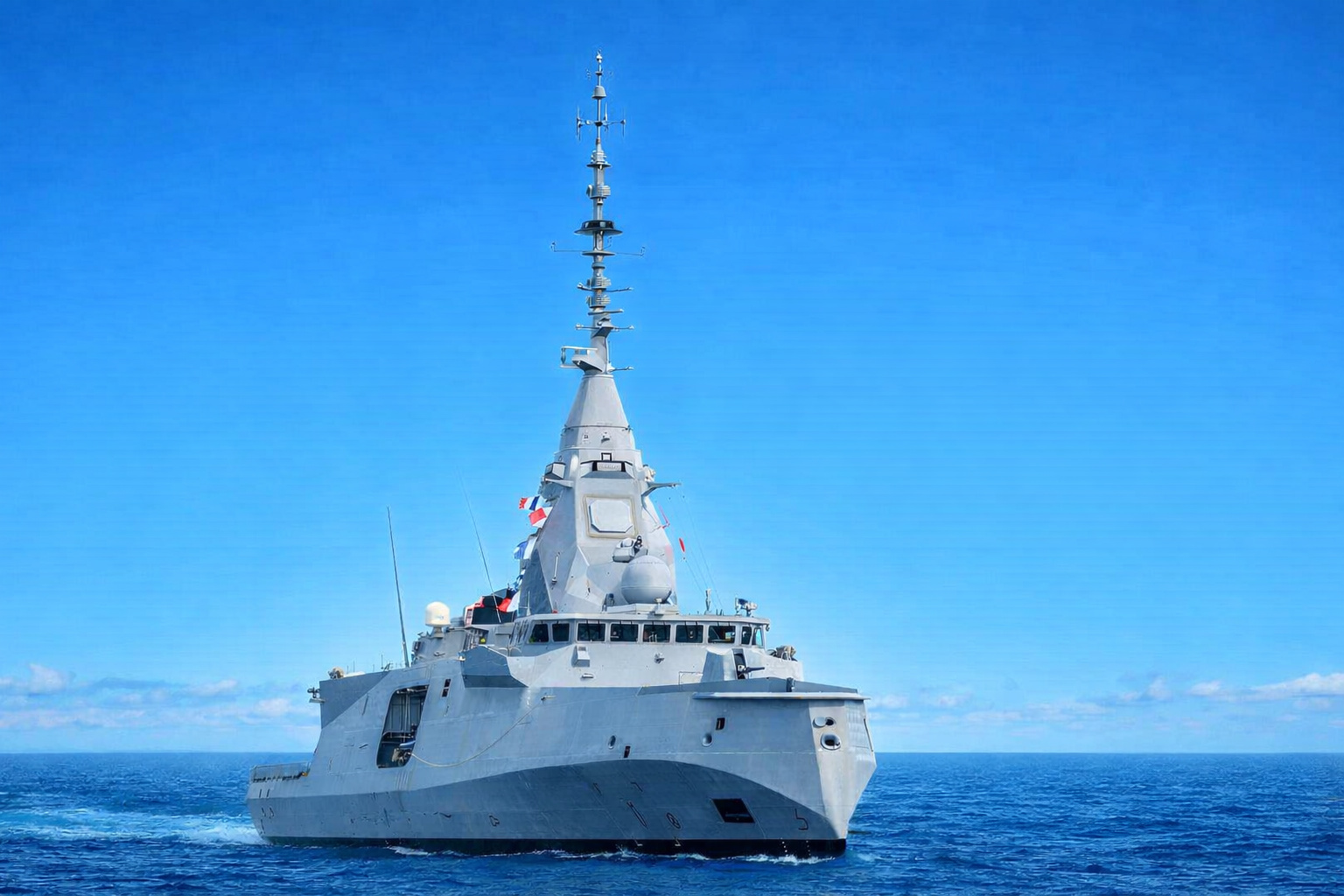
A 4,500-ton frigate with just over 100 crew members, state-of-the-art radar, and cruise missiles is being touted as the new standard of naval warfare in the 21st century.
-
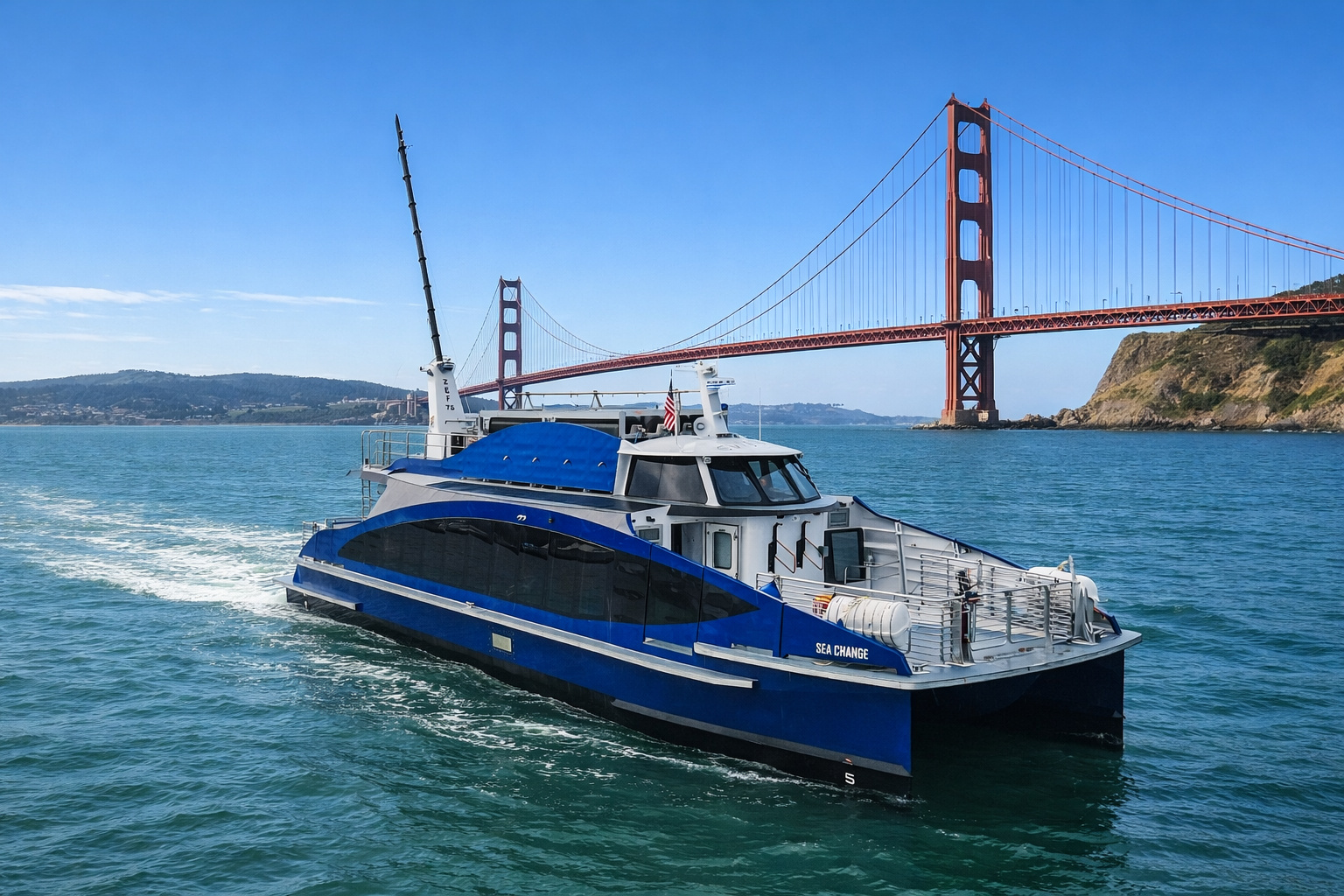
The first commercial hydrogen-powered ferry enters operation in the U.S., eliminates the use of diesel, uses fuel cells to generate clean energy on board, and transforms San Francisco Bay into a landmark of the new era of emission-free navigation.
-
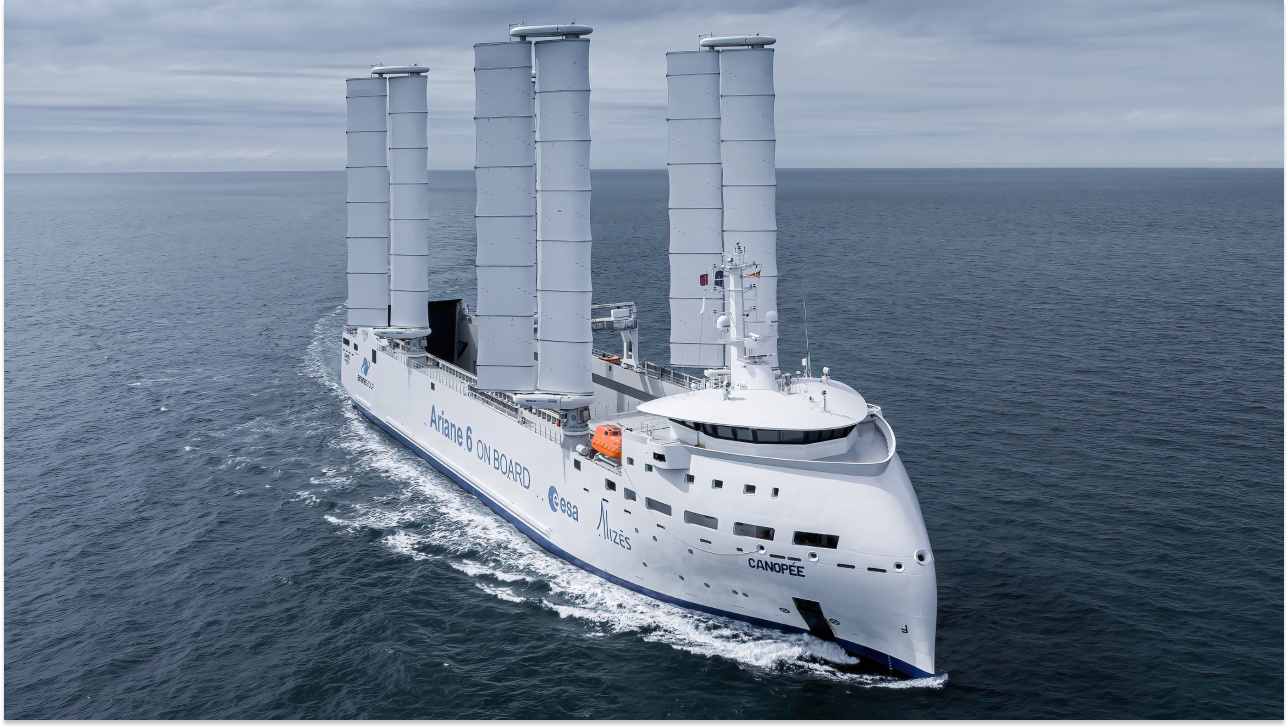
With a length of 121 meters and four rigid sails of 36 meters that automatically rotate to capture the wind, Canopée is the world’s first hybrid industrial cargo ship powered by wind, used to transport rockets and reduce fuel consumption by up to 30% on transoceanic routes.

Details of the Pyxis Ocean and Its Sail Technology
The main differentiator of the Pyxis Ocean is its steel sails, called WindWings. Developed by BAR Technologies, these sails can be deployed in open water to capture the wind. Standing 37.5 meters tall, they provide significant fuel savings, which can reach up to 30%. This represents a crucial innovation for the maritime industry.
The Impact of Wind-Powered Ship Technology on Emission Reduction
The use of a wind-powered ship has a clear purpose: the decarbonization of maritime transport. The WindWings technology allows for a considerable reduction in fossil fuel consumption. Consequently, there is a decrease in greenhouse gas emissions, aligning logistics with global sustainability goals.
The Logistics Operation of RZ Mura
RZ Mura Maritime Agency was responsible for the complex loading operation at the Port of Santos. The company, with offices in Santos and São Sebastião, managed all the procedures for the wind-powered ship to dock, load, and depart safely and efficiently, consolidating the success of this pioneering mission in Brazil.
With information from Portos e Navios.






Seja o primeiro a reagir!