





 Portuguese
  English
  Spanish
  5 min of reading
  0 comments


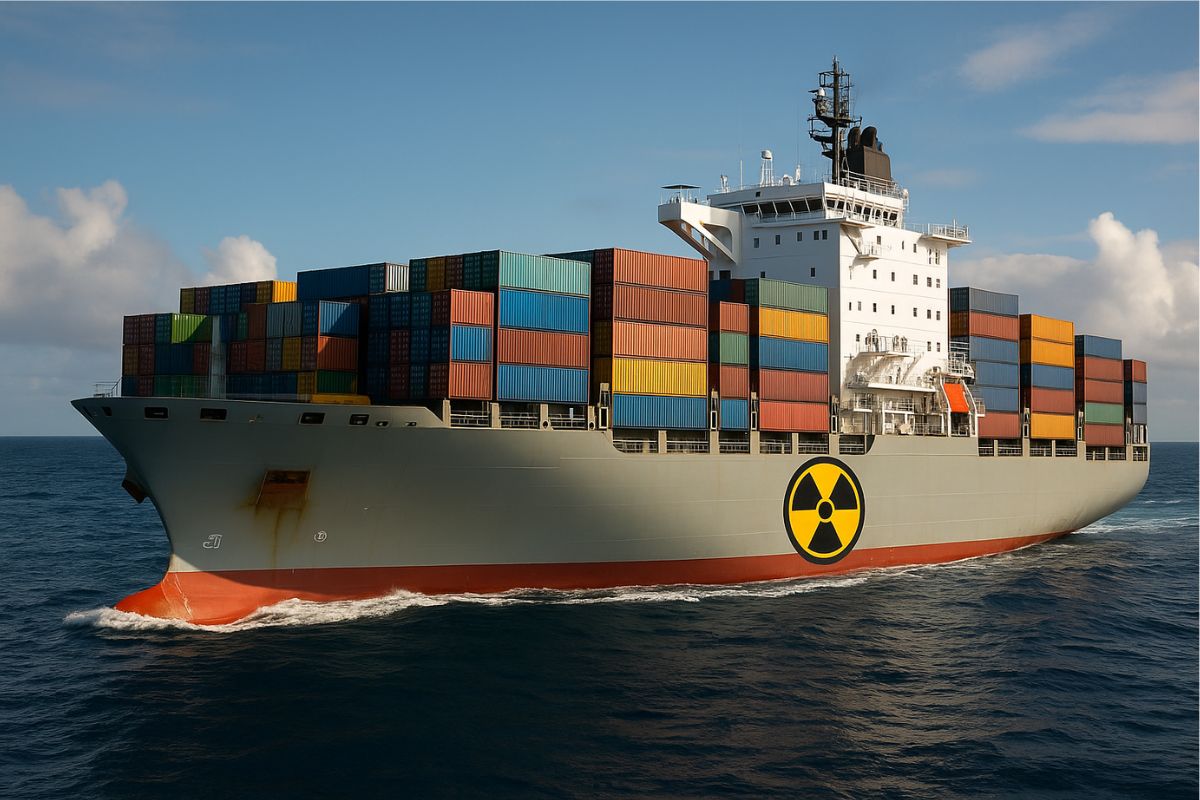
The New Revolution in Global Trade Begins at the Ports: Nuclear Reactor-Powered Ships Promise Maximum Speed, More Cargo, and Zero Emissions by 2050
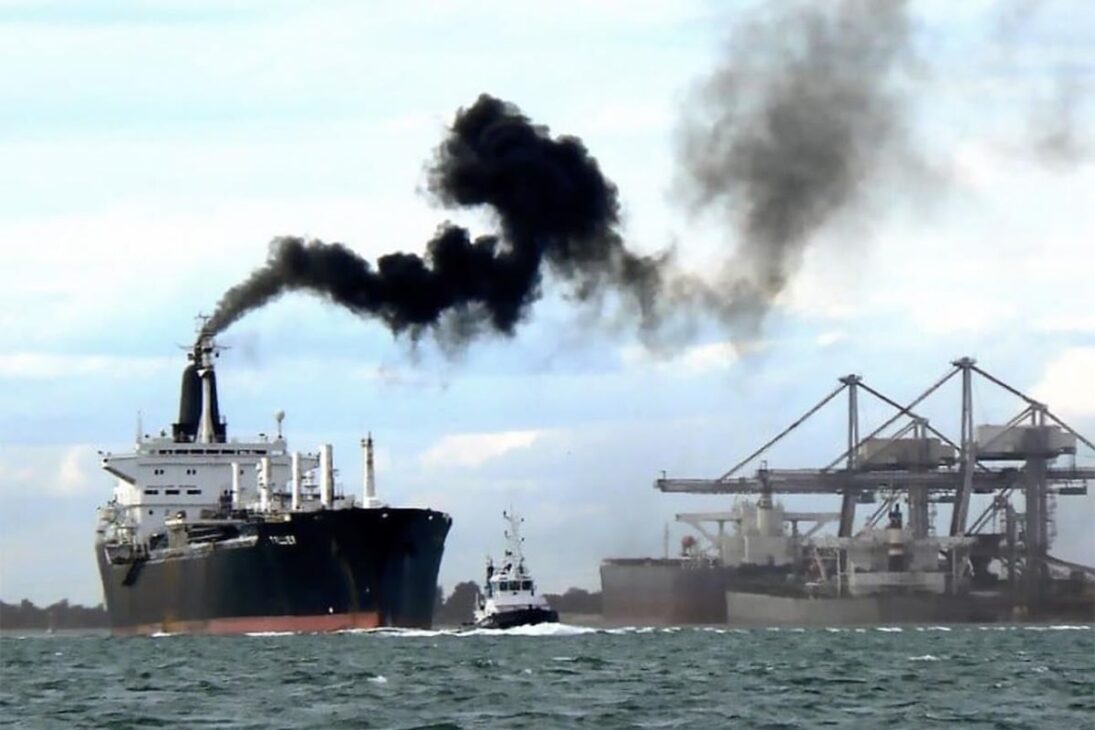
Few people know, but global maritime transport emits more greenhouse gases than the entire Japan. It amounts to over 1 billion tons of CO₂ per year, which represents approximately 3% of global emissions, according to data from the IMO – International Maritime Organization.
Although it is not on the radar of most people, the sector is vital: 90% of global trade passes through the seas. And to reach the IMO’s target of carbon neutrality by 2050, more than ammonia and green hydrogen will be needed. It will require rewriting the laws of physics and naval economics.
The Answer? An Old Friend: The Nuclear Reactor
It is precisely this gap in viable solutions that has rekindled interest in a technology used for decades in the navy: nuclear fission propulsion. With zero emissions in operation, high energy efficiency, and decades of autonomy, reactors have begun to appear as an enticing alternative for the giants of the oceans.
-
Milei’s government launches surprise police operations on the streets of Argentina to hunt undocumented immigrants, but the government’s own data reveals that only 4% were irregular. Critics say it is a copy of Trump’s policy without real necessity.

-
Indonesia is the largest producer of tropical seaweed in the world, and this market is already worth billions of dollars, but 90% of the production goes directly to China as raw material. Now the country wants to change the game and process everything on its own.

-
This extremely contagious virus has already affected 90% of the population of Brazil and has no cure.

-
The São Paulo city has one doctor for every 100 inhabitants and still holds the title of the third best place to live in Brazil.

The company leading this new movement is the British Core Power, in partnership with HD Korea Shipbuilding & Offshore Engineering and the American Southern Company. Together, they aim to launch the first civil cargo ship with next-generation nuclear propulsion at sea by 2035.
The selected reactor will be developed by TerraPower, a company founded by Bill Gates and specialized in clean technologies. The proposal is to use modular, safe reactors with normal atmospheric pressure, which drastically reduces the risk of catastrophic accidents.
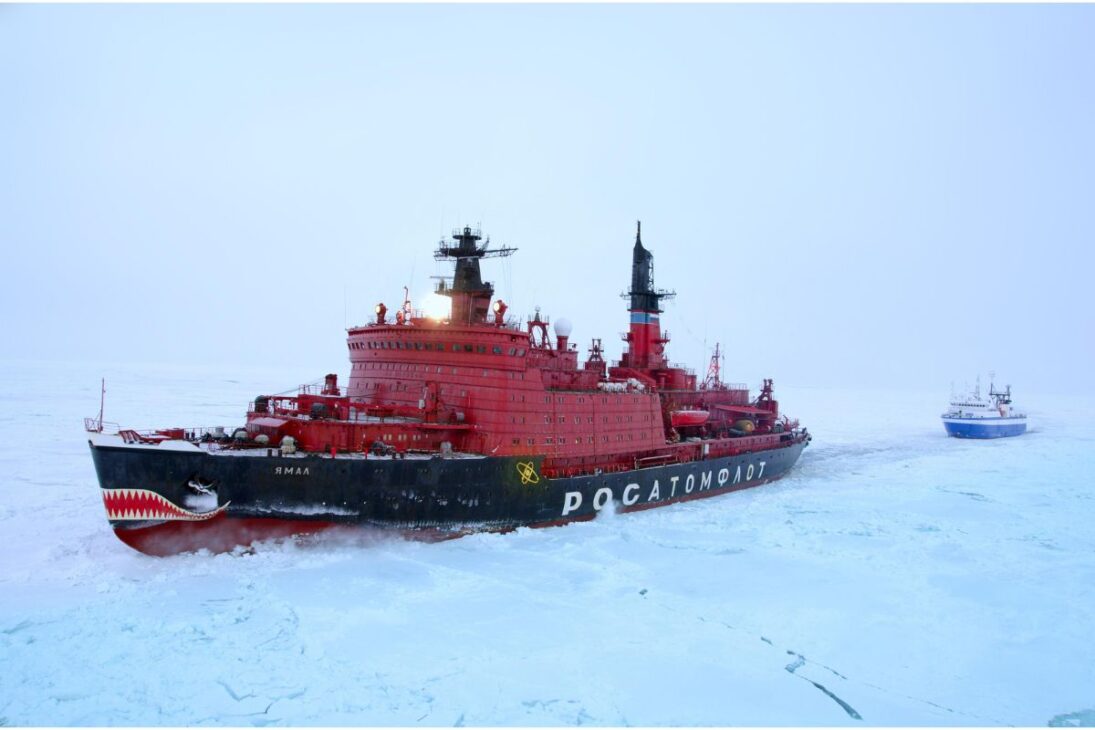
Unlike the pressurized water reactors used in submarines and aircraft carriers, civilian reactors will be based on molten salt or liquid metal technologies, with passive safety systems. In other words, even in the event of a total electrical failure, the system cools itself without the need for human action.
According to TerraPower itself, the fuel could last the entire lifespan of the ship — about 25 years — without needing to be refueled. This eliminates logistical costs and drastically reduces downtime. By way of comparison, a traditional cargo ship loses up to a month per year just for refueling, according to Sangmin Park, vice president of HD Korea.
With a nuclear reactor, there is also a gain in usable space. Today, fuel tanks take up up to 10% of the volumetric capacity of ships. Eliminating them means this space can be used for cargo — which generates more revenue on each trip.
Faster Deliveries and Less Carbon
Another important point: traditional ships operate well below their maximum speed, precisely to consume less fuel. This reduces operational costs but also delays deliveries. Nuclear ships can operate at constant maximum speed without worrying about consumption.
This change in logistical pace is not just a luxury. In an increasingly competitive market, where global supply chains demand fast and predictable deliveries, speed translates into profit. According to Mikal Boe, CEO of Core Power, “if we launched a nuclear cargo ship today, the demand would be immediate.”
Despite the optimism, the road to 2035 is full of obstacles. The biggest one is legal. No commercial insurer covers ships with nuclear propulsion, preventing them from docking at civilian ports. Without insurance, even a ship that is 100% safe in practice becomes unfeasible in theory.
And unlike military ships, which operate from base to base, cargo ships need to access commercial ports on all continents. Thus, the legal blockade is global.
Moreover, there is fear of the unknown. For George Moore, a researcher at the Middlebury Institute, even if the fuel used is not enriched to military levels, it remains radioactive. “Civilian ships are more vulnerable to sabotage and collisions. We need an international framework before releasing this technology to the private sector,” he warns.
A History That Inspires Caution
It is worth noting: the idea of civilian nuclear ships is not new. In 1959, the USA launched the NS Savannah, the first civil cargo ship powered by atomic energy. It was sleek, innovative, and efficient — but too expensive. It never operated profitably.
Other countries, such as Germany, Japan, and the Soviet Union, tried to replicate the experience in the following decades but encountered the same problem: high costs and political resistance. Today, more than 160 military ships use nuclear fission, but in the civilian sector, the technology lay dormant for decades.
Meanwhile, the pressure for decarbonization increases. Maersk, the world’s largest shipping company, already operates ships with green methanol. Other groups are testing green ammonia and even automated wind propulsion with retractable sails.
But the infrastructure for these alternative fuels is still far from being viable. José Esteve from Bureau Veritas is adamant: “We will need thousands of tons per port. We won’t have that ready in time.”
Despite the high initial costs — a nuclear cargo ship may cost double or even triple that of a traditional ship — project advocates argue that the total operating cost over its lifespan will be lower.
Without fuel to purchase and with less maintenance, the savings accumulate. According to HD Korea, in 25 years, the operational cost of a nuclear cargo ship could be half the value of a conventional ship.
And Brazil?
A country with one of the largest coastlines in the world and holding an active nuclear program, Brazil observes these movements with interest. The Brazilian Navy has been developing for years the nuclear submarine project Álvaro Alberto, with partially national technology. The experience gained could, in the future, serve as a basis to assess commercial ships with nuclear propulsion, especially for long-distance routes between South America, Europe, and Asia.
However, to make this a reality, a transparent public debate and a deep legal reform will be necessary. Today, Brazilian legislation, like that of many countries, strongly restricts the civil use of nuclear energy in vessels.






-

-

-

-

16 pessoas reagiram a isso.