





 Portuguese
  English
  Spanish
  5 min of reading
  0 comments


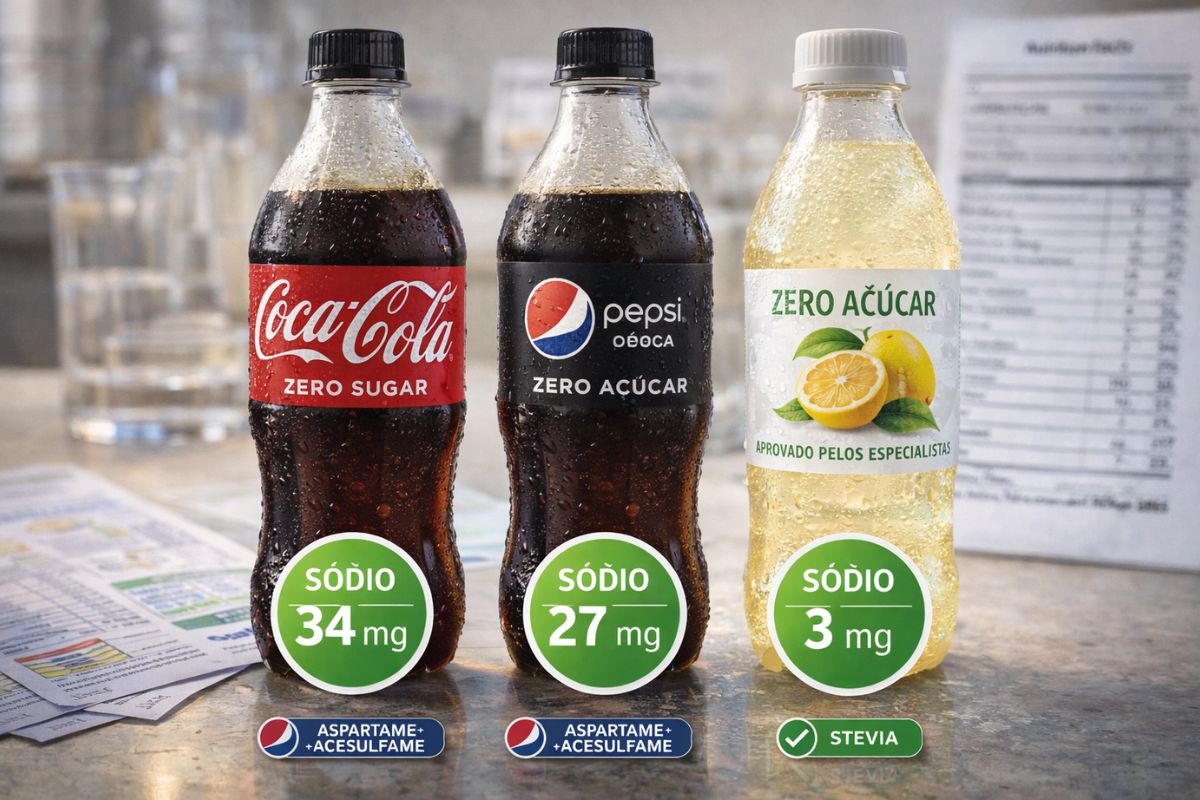
Specialists analyzed sodium, sweeteners, and additives of the main zero soda brands in Brazil and concluded that Zero Tonic Water and Guaraná Antarctica Zero lead the ranking, while Coca-Cola Zero and Pepsi Zero fall behind due to sodium content and type of sweetener used.
The consumption of zero soda in Brazil grew by almost 30% in 2024, according to data from the Brazilian Association of Soft Drink and Non-Alcoholic Beverage Industries. The search for alternatives with fewer calories and lower glycemic impact has driven sales, but specialists warn that no zero soda can be considered truly healthy. The proposal to be “lighter” does not eliminate risks ranging from changes in gut microbiota to increased blood pressure due to excess sodium. What changes between brands is the intensity of these risks.
When the evaluation criteria consider sodium content, type of sweetener, and presence of additives, the result of the zero soda ranking is surprising: neither Coca-Cola Zero nor Pepsi Zero occupy the top spots. The brands that present the least harmful profile are Zero Tonic Water and Guaraná Antarctica Zero, which use sweeteners considered more stable, such as sucralose, and have lower sodium levels. Still, specialists are emphatic: the best choice remains water and natural beverages. Zero soda is less bad, not good.
What the specialists analyzed to rank each zero soda brand
The evaluation was not based on taste or popular preference. The technical criteria considered were sodium content per serving, the type of sweetener used in the formulation, and the presence of chemical additives that can generate adverse effects in the body.
-
The Civil Defense issued a red alert amid the advance of the cold front in southern Brazil, where instability is increasing and the chance of problems is becoming more serious.

-
South Korea’s intelligence agency claims to have reliable information that Kim Jong-un’s teenage daughter has already been chosen as his successor and is being prepared to lead North Korea by driving tanks and shooting rifles.

-
At over 2,400 meters above sea level, Pico da Tripla Divisão is a rare mountain where a single drop of rain can take paths that lead to three different oceans.

-
With 75 mutations and confirmed circulation in 23 countries, a subvariant of Covid-19 challenges part of the protection against infection and reinforces the warning about the decline in vaccination.
Sodium is relevant because it contributes to increased blood pressure. The type of sweetener matters because different substances have distinct safety profiles. And additives are included because not all are inert in the body.
Brands that use aspartame and acesulfame-K tend to have higher sodium content and compounds that raise concerns in recent studies. The World Health Organization classified aspartame as “possibly carcinogenic,” which does not mean it causes cancer at normal consumption levels, but reinforces the need for caution.
On the other hand, sucralose, present in brands like Guaraná Antarctica Zero, is considered more stable and has fewer controversies in current scientific literature. The zero soda ranking reflects these differences.
Why Zero Tonic Water and Guaraná Antarctica Zero lead the ranking

At the top of the evaluation are two brands that are not the most popular on the shelves. Zero Tonic Water and Guaraná Antarctica Zero have the lowest sodium levels among the analyzed options and use sweeteners considered more stable by specialists.
The combination of lower sodium content with less controversial sweeteners positions these brands as the zero soda options with the least harmful health profile.
This does not mean that these beverages are healthy. Specialists emphasize that even the best-rated zero soda contains acidic substances that can harm tooth enamel and artificial sweeteners that can alter gut microbiota with frequent consumption.
The difference between leading and trailing in this ranking is the difference between “less risky” and “more risky,” not between “good” and “bad.” No zero soda receives unrestricted consumption recommendations from nutritionists.
Why Coca-Cola Zero and Pepsi Zero do not lead the list
The two best-selling brands in Brazil fall behind in the ranking for specific technical reasons. The sweetener profile used by Coca-Cola Zero and Pepsi Zero includes substances like aspartame and acesulfame-K, which are the subject of more intense debates in the scientific community compared to sucralose.
Additionally, the sodium content per serving of these brands tends to be higher than in the options that lead the evaluation.
For consumers who drink zero soda sporadically, the difference between brands may not have a noticeable impact on health. But for those who consume it daily, over months and years, the choice of sweetener type and the amount of sodium ingested accumulate.
It is in cases of frequent consumption that the ranking makes more sense as a decision-making tool. The zero soda you drink once a week is unlikely to make a difference. What you drink every day can.
The real risks that every zero soda offers regardless of the brand
Even the top-ranked ones do not escape important warnings. Research indicates that artificial sweeteners can alter the composition of gut microbiota, the collection of microorganisms that inhabit the digestive system and influence everything from digestion to the immune system.
Digestive discomforts such as bloating and gas are reported by frequent consumers of zero soda, and studies are trying to establish whether there is a causal relationship or just an association.
Another documented risk is the relationship between frequent consumption of zero soda and hepatic steatosis, a condition known as fatty liver, which can progress to severe cases. Research with thousands of participants indicates that replacing soda with water significantly reduces these risks, while the switch between sugary versions and zero versions does not present relevant benefits.
The message from specialists is clear: zero soda is better than conventional soda in calories, but it does not replace what the body really needs.
What the specialists recommend for those who cannot give up zero soda
The main recommendation is moderation. No nutritionist recommends zero soda as a daily beverage, but many recognize that it can be a temporary alternative for those in the process of reducing conventional soda consumption.
The transition from sugary soda to zero soda and then to water and natural beverages is a strategy that health professionals consider realistic and effective.
For those who will continue consuming, choosing brands with lower sodium content and more stable sweeteners is a way to reduce risks without having to cut the habit all at once. Zero Tonic Water and Guaraná Antarctica Zero appear as less harmful options in this scenario.
But the ultimate health reference remains water. No zero soda ranking changes this fact, no matter how much the industry invests in increasingly sophisticated formulas.
Which zero soda do you consume the most? Did you know that the type of sweetener and sodium content vary so much between brands? Leave a comment. This is the kind of information that changes how we look at the label before putting it in the cart.




Seja o primeiro a reagir!