





 Português
  Inglês
  Espanhol
  5 min de leitura
  0 comentários


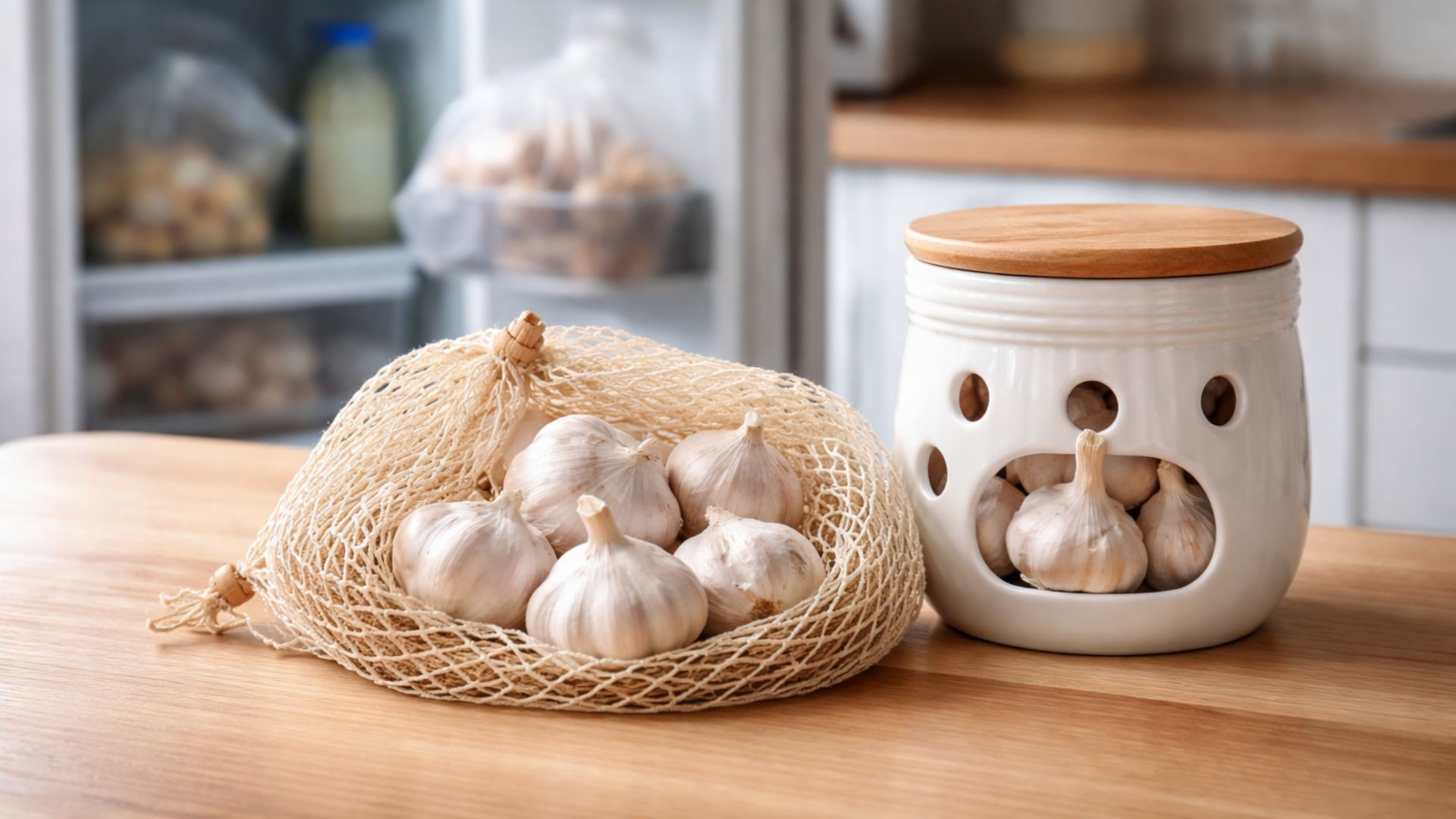
How to store garlic at home directly influences the flavor, texture, and shelf life of the food, and common mistakes like using the refrigerator and sealed plastic can accelerate deterioration without the consumer noticing.
Storing whole garlic in the refrigerator or in a plastic bag may seem practical, but this combination usually shortens the product’s shelf life instead of preserving it.
The most consistent guidance from universities and agricultural extension agencies is different: keep the bulbs out of the refrigerator, in a dry, dark, cool, and ventilated place, preferably in a paper bag, mesh bag, or a proper container with air circulation.
Why avoid the refrigerator when storing garlic
This recommendation appears repeatedly in technical materials used as references for home storage.
-
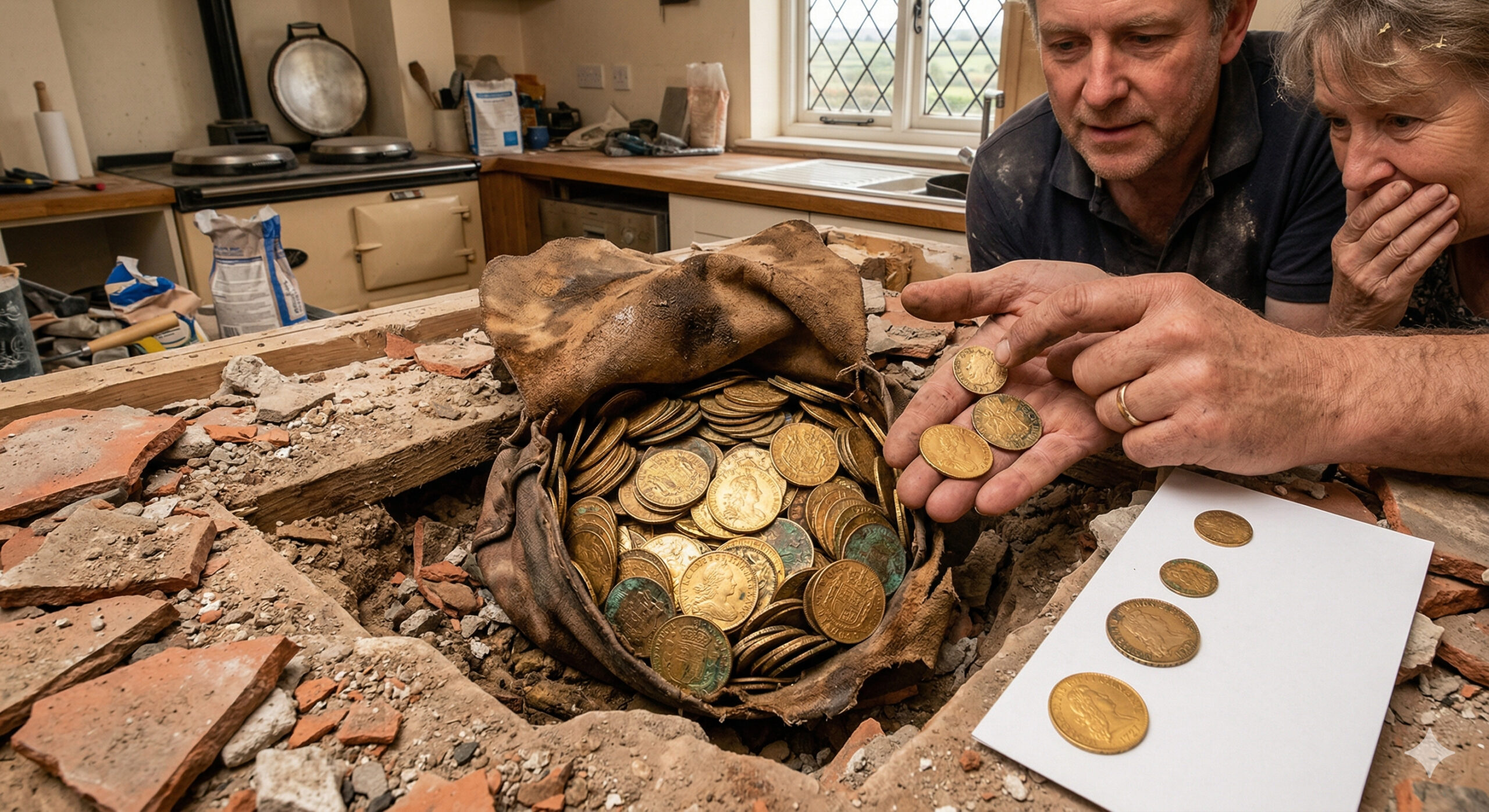
While breaking the kitchen floor during a renovation, residents in England found 260 gold coins hidden for over 300 years, with pieces dated between 1610 and 1727 and an estimated value of hundreds of thousands of pounds.
-
More tolls! The Anchieta-Imigrantes system will start implementing charges in both directions with free flow on July 1st, a fee of R$ 19.35 per segment, the end of toll plazas, and a project for a new 21.5 km lane.

-
A Brazilian city has a water park in the middle of the forest with tickets priced at R$ 29, over 300,000 m², 40 attractions, heated pools, and a record of 700,000 visitors in one year.

-
With an unusual prize, Japan transforms office chairs into a resistance race on the streets, ISU-1 Grand Prix grows, fills stages, and pays 90 kilograms of rice.


The University of New Hampshire advises storing garlic at room temperature, in a dry and dark environment, avoiding plastic and favoring air flow.
North Dakota State University makes the same recommendation and adds that the bulb should remain intact, in a ventilated object, such as a mesh bag.
The refrigerator gives a sense of protection, but whole garlic reacts poorly to the common temperature range of these appliances.
According to North Dakota State University, temperatures around 40°F, equivalent to about 4°C, can stimulate sprouting.
When this happens, the food does not automatically become unfit for consumption, but it already loses part of the texture and flavor considered ideal.
The University of Maine also points out that certain cold ranges favor sprouting, while high humidity contributes to preservation problems.
In technical material from the university’s extension, the institution states that garlic can be kept in the dark, with moderate humidity, and notes that intermediate temperatures and excess humidity worsen storage.
In domestic conditions, this helps explain why the refrigerator is rarely the best choice for whole bulbs.

Plastic bag accelerates quality loss
The plastic bag is among the most common mistakes because it creates a microenvironment that is not favorable to garlic.
Instead of ventilation, it tends to retain moisture and reduce air exchange around the bulbs, exactly the opposite of what technical materials recommend.
The guidance from the University of New Hampshire is direct in discouraging plastic and recommending paper or mesh bags.
When garlic is suffocated, especially in warmer or more humid kitchens, the chance of quality loss increases.
The University of Maine emphasizes that high humidity favors rooting and deterioration, while NDSU highlights the need for a dry, dark, and ventilated environment.
In practice, this means that containers that are too closed, damp drawers, and sealed packaging usually work against preservation.
Where to store garlic correctly at home
In daily routines, the best destination for the bulbs is usually a dry pantry, a ventilated cabinet, or some spot protected from direct light and away from constant heat.
Countertops near the stove, sunny windows, and stuffy areas reduce shelf life.
The technical recommendation ultimately boils down to three care tips that appear repeatedly in sources: little light, low humidity, and good air circulation.
There is no need to resort to sophisticated accessories, although they can help.
North Dakota State University mentions the use of mesh bags and ventilated containers specifically for garlic as suitable alternatives.
Meanwhile, the University of New Hampshire reinforces that paper bags also work well, as long as the food remains dry and away from suffocation.
How long can garlic last

The shelf life varies depending on the variety, post-harvest curing, and home conditions.
The University of New Hampshire states that whole garlic can last up to about a month in a dry and dark place.
North Dakota State University works with a longer range, from three to six months, and mentions storage close to six months under good ventilation conditions.
Meanwhile, UC ANR’s publication differentiates varieties and points out that softneck garlic stores longer than hardneck garlic, potentially lasting several months under suitable conditions.
This difference in shelf life does not represent a contradiction, but rather the effect of the variables involved in storage.
Not all garlic bought at retail has undergone the same curing process, nor does every kitchen offer similar temperature and humidity conditions.
The consensus among sources is less about a fixed number of days and more about the method: whole bulb, ventilated environment, absence of sealed plastic, and distance from the cold humidity of the refrigerator.
When is it still safe to consume and when to discard
Not every visual sign indicates total loss.
NDSU reports that cloves starting to wilt or bulbs beginning to sprout are not necessarily spoiled, although they are no longer at their peak quality.
The green sprout may bring bitterness, so the recommendation is to remove it before preparation when it appears.
On the other hand, abnormal discoloration, very soft texture, mold, and altered odor indicate clearer deterioration.
This point is important because hasty disposal is not always justified, but the evaluation must go beyond external appearance.
A garlic bulb that has just started to sprout can still be used in cooking, while a softened or moldy bulb has already gone beyond the safe and quality standard.
Proper preservation reduces the chance of reaching this stage prematurely.
Peeled, chopped, or preserved garlic requires different care
The logic changes as soon as garlic is no longer whole.
The natural protection of the bulb decreases when the cloves are separated, peeled, chopped, or crushed, and refrigeration becomes necessary in many cases.
The University of New Hampshire states that chopped garlic should be covered in the refrigerator and usually lasts from seven to ten days.
In the case of cloves submerged in wine or vinegar, UC ANR states that storage should be refrigerated and can last about four months, provided the mixture uses undiluted liquid and shows no mold or yeast growth.
The acidic environment reduces the risk of Clostridium botulinum growth, but this does not eliminate the need for refrigeration nor authorize storing the preparation at room temperature.
Garlic oil mixture requires extra attention
The most important alert concerns mixtures with oil.
Oregon State University states that raw garlic in oil should not be left at room temperature, as this medium can favor the growth of Clostridium botulinum, a bacterium associated with botulism.
The guidance is to keep the mixture refrigerated for no more than four days or freeze it for longer storage.
UC ANR provides the same warning and notes that there have been outbreaks of botulism associated with improperly stored garlic in oil.
The USDA recommends that preparations of this type be made for fresh use and kept refrigerated at about 4°C.
In everyday use, therefore, the practical rule is simple: whole garlic requires a ventilated, dry, and dark environment; manipulated garlic requires refrigeration; oil mixtures require strict temperature control.








Seja o primeiro a reagir!