





 Portuguese
  English
  Spanish
  5 min of reading
  0 comments


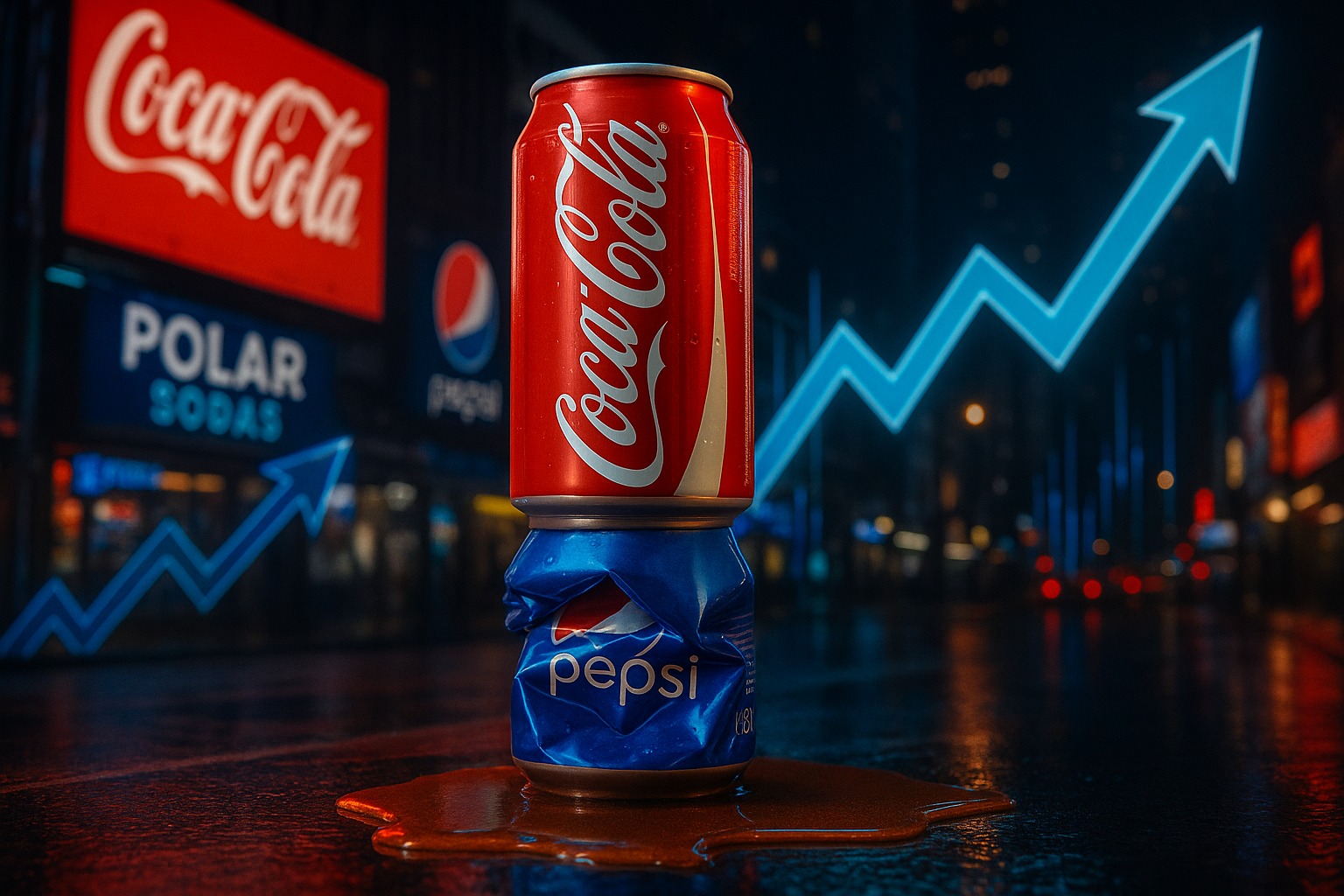
Coca-Cola Strengthened Margins by Focusing on Marketing and Outsourced Bottling, While PepsiCo Faces Investor Pressure and Declining Snack Sales
Most people choose a Coca-Cola or a Pepsi simply, without much thought. The decision is influenced by taste, habit, or even what appears first in the fridge. Few question who brings the drink there or who takes care of the bottling process.
Fifteen years ago, both Coca-Cola and PepsiCo decided to buy back their bottling operations.
The goal was to strengthen the companies’ control over the entire business chain. But time showed that the subsequent choices put both on different paths.
-
Historic bankruptcy of Centauro shocks the market, and the century-old company puts more than 500,000 products, machines, and complete infrastructure up for online auction.

-
New shoe factory in Ceará is expected to create 400 jobs and strengthen the local economy.
-
No one imagined it, but a mixture of sawdust with a mineral that fights fires surprises scientists with a result that changes the course of fire-resistant construction.
-
From empty land to a high-end house, wooden construction uses a lightweight system, metal structure for the foundation, ventilated ceramic cladding, and special windows to create an efficient and comfortable living space throughout the year.


Coca-Cola chose to separate the business later, while PepsiCo decided to keep everything in-house. This strategic difference proved to be decisive.
The Impact of the Choice
Free of trucks and warehouses, Coca-Cola concentrated its efforts on what it has always done best: building brand and eliminating underperforming products. The result was increased focus and heightened discipline in the portfolio.
On the other hand, PepsiCo, which is much more diversified due to its vast snack empire, remained trapped in complexity.
In addition to managing truck fleets, it had to deal with huge teams of sales representatives scattered across the market.
The reflection was direct. While Coca-Cola consolidated higher profit margins and expanded its presence at points of sale, PepsiCo saw its beverage division in North America lose strength, falling short of previous years’ performance.
The Logic of Incentives
The difference lies in the incentives. Independent operators have a single goal: to move products.
They do not face heavy layers of bureaucracy and are motivated to extract the most from each delivery.
Moreover, by outsourcing such a capital-intensive part as distribution, the brand owner frees up resources to invest in more strategic areas.
This logic helped Coca-Cola increase its efficiency. For PepsiCo, however, the choice to maintain the integrated model reduced flexibility.
The Strength and Limits of Frito-Lay
For a long time, investors overlooked the problems in PepsiCo’s beverage division. This was because Frito-Lay, responsible for brands such as Doritos and Cheetos, sustained profits with high margins. It was the solid foundation of the group.
But this shield began to weaken. The rising food prices and growing health concerns affected the industry broadly.
Frito-Lay itself reported declines in sales volumes in North America for several quarters.
The effect of this became evident in the market. PepsiCo’s stocks fell almost 20% over two years, while Coca-Cola rose 15% in the same period.
The Entrance of Elliott Investment
This scenario opened the door for Elliott Investment Management. The fund acquired a $4 billion stake in PepsiCo and delivered a clear message: the conglomerate’s expansion is no longer a differential but rather a problem.
Despite generating almost double the rival in annual revenue—$92 billion compared to about half of Coca-Cola—PepsiCo is valued on the market at approximately two-thirds of its competitor’s value.
The price-to-earnings ratio also shows the difference: 17 times versus 22 times for Coca-Cola. This reflects the so-called “conglomerate discount.”
The Wave of Divisions
Investors are increasingly impatient with promises of synergy that remain unfulfilled. Therefore, they pushed traditional giants to break up.
Kellogg separated cereals from snacks, Kraft Heinz divided meals from condiments, and Keurig Dr Pepper is working to separate coffee from soft drinks.
With PepsiCo, the pressure follows the same path. The company insists that the integration of food and beverages generates efficiency, but many analysts see this discourse as more rhetorical than practical.
The Resistance to Breaking Up
A complete split between snacks and beverages, however, does not seem likely in the short term. About ten years ago, Nelson Peltz and the Trian fund already attempted this strategy, and management resisted.
Moreover, not all divisions in the sector generated positive results. Of the eight largest in the last decade, three produced negative returns.
Therefore, Elliott’s proposal is more limited: reduce costs, divest brands with poor performance, such as Quaker, and focus on growth. Many of these measures coincide with what the company was already evaluating.
The Bottling Dilemma
Revisiting the distribution model is also under discussion. Today, a quarter of PepsiCo’s beverage system in the U.S. is managed by independent operators. Expanding this model would mean facing a complex restructuring.
Initial costs would be high, and profits could be pressured for years. Coca-Cola itself went through this process before reaping results.
Even so, the comparison shows that it was worth it: Coca-Cola’s operating margin in North America was 28.5% in 2024, compared to only 11.2% for Pepsi.
The Difference in Marketing
Meanwhile, Coca-Cola benefits from another factor: a greater capacity to invest in marketing. In 2023, it allocated about 6% of sales to advertising, compared to 4.4% for Pepsi. This investment reinforces the brand’s presence in each relaunch or campaign.
The result appears on the shelves. Coca-Cola Zero Sugar, boosted by global campaigns, gained strength.
On the other hand, Pepsi, with its blue can, fell to fourth place in the ranking of soft drinks in the U.S., behind Dr Pepper and Sprite.
The Challenge for Pepsi
Pepsi is trying to respond with campaigns like the return of the “Pepsi Challenge” and the promotion of Pepsi Zero Sugar.
It is also betting on the idea that its soda pairs better with meals. But these communication efforts do not address the central problem: the lack of strategic focus.
As analyst Nik Modi summarized, in decades of watching the industry, almost never has a brand owner achieved lasting success as a distributor.
The final message is clear: Pepsi does not need to reinvent the model. It just needs to look at its rival and follow the example that is already ahead.
With information from Invest News.









Seja o primeiro a reagir!