





 Portuguese
  English
  Spanish
  3 min of reading


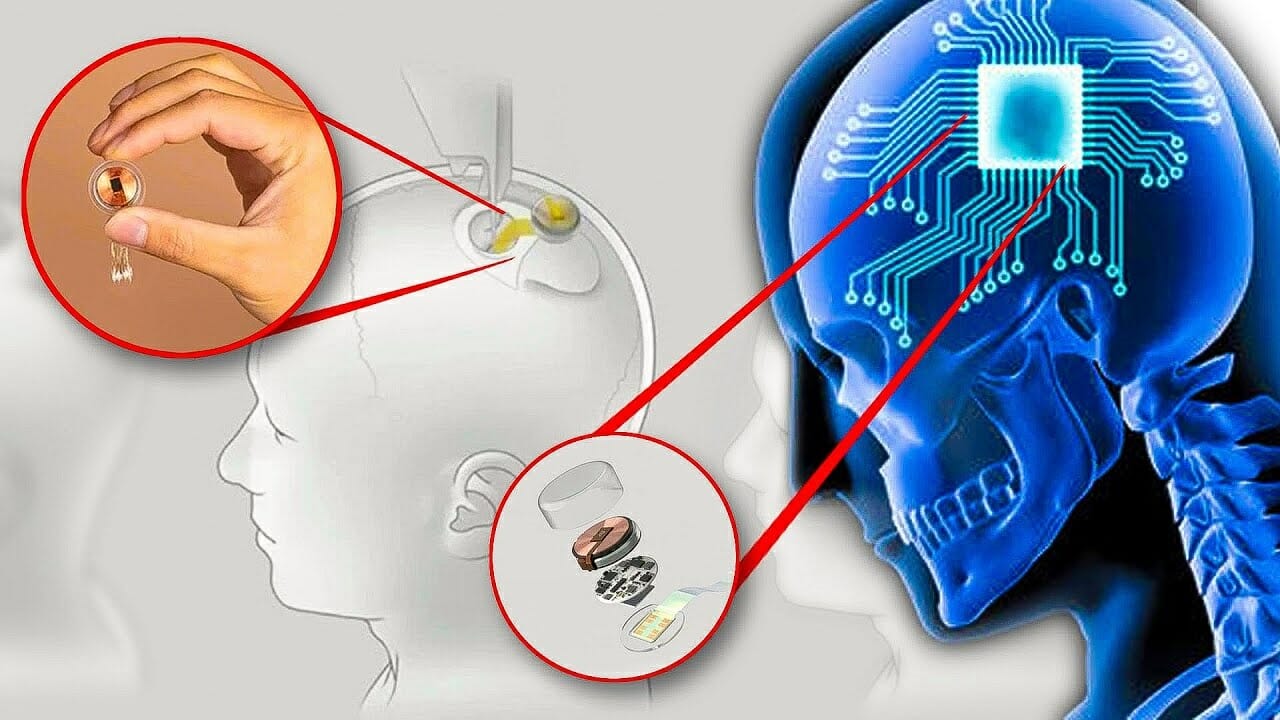
Neuralink, Elon Musk’s Company, Received Approval and Will Begin Implantation of Brain Chips in Humans Focused on Helping Patients with Paralysis.
Neuralink, a neurotechnology company co-founded by Elon Musk, recently received approval from the Food and Drug Administration, the “American Anvisa,” to conduct its first clinical study to perform brain chip implantations in humans.
The announcement was made this Thursday (25), however the extent of the approved study is not known. The startup stated in a tweet that patient recruitment for its trial is still open.
Brain Chips in Humans Aim to Help Patients with Severe Paralysis


Neuralink is part of the emerging brain-computer interface, or BCI, industry. This technology involves a system that deciphers brain signals and translates them into commands for external technologies.
-
The Earth will plunge into a few minutes of darkness in broad daylight in August 2026, when a total solar eclipse transforms the sky into one of the most impressive astronomical phenomena in recent years.

-
How the terraforming of Mars can transform the planet: artificial aerosols can increase the temperature by up to 35°C in 15 years, creating conditions for liquid water.

-
Scientists drilled nearly 8,000 meters into the ocean floor above the fault that caused the 2011 tsunami in Japan and discovered that a layer of clay 130 million years old was responsible for making the wave much worse than any model had predicted.

-
Thousands of years after causing the largest eruption of the Holocene, one of the world’s largest supervolcanoes is rebuilding itself beneath the sea south of Japan, receiving new magma and alarming scientists with its transformation.


Scientists have been studying BCI technology for decades and several companies have developed promising systems that plan to bring them to market. However, receiving FDA approval for a commercial medical device is not straightforward, as it requires companies to successfully conduct several extremely comprehensive rounds of testing and safety data collection.
Reuters reported in March that the FDA had rejected Neuralink’s application for human testing and pointed out dozens of issues that the company needed to address.
The brain chip company of billionaire Elon Musk, founded in 2016, is developing a brain implant called Link, aimed at helping patients with severe paralysis control external technologies using only neural signals.
This means that patients with severe degenerative diseases may eventually regain their ability to move cursors and type with their minds through a Bluetooth connection, according to the company’s website. The use of the chip requires invasive brain surgery.
Brain Chips in Humans Could Treat Mental Illnesses
The American press emphasizes that no company in this sector, like Neuralink, has yet obtained the final FDA approval stamp. However, by receiving approval for a study involving human patients, Neuralink is one step closer to the market.
In addition to helping patients with paralysis, experts believe that BCIs could help treat conditions such as blindness and mental illnesses. Elon Musk has expressed his intention for Neuralink to explore these future use cases, as well as potential applications for healthy individuals.
The positive news comes after a series of recent issues at Elon Musk’s company. In February, the U.S. Department of Transportation confirmed to CNBC that it had opened an investigation into Neuralink for allegedly packaging and transporting contaminated hardware unsafely.
The company, which will implant brain chips in humans, has been criticized by activist groups for its alleged experiments on monkeys that resulted in internal bleeding, chronic infections, paralysis, seizures, declining psychological health, and death.
Neural Technology Receives Advances
In a study conducted at the end of last year, neuroscientists were able to demonstrate that providing tuned data briefly within each person’s natural brain wave cycle before performing a learning task significantly boosts individual learning capacity. The study investigated the individual variations observed in individuals regarding learning new tasks and acquiring new skills in various contexts.
The hypothesis proposed by scientists at the University of Cambridge in the UK is that this variability in cognitive ability is linked to individual brain states.
According to Professor Zoe Kourtzi, senior author of the study, each brain has its own natural rhythm generated by the oscillation of neurons working together. To test their propositions, the team simulated these fluctuations using a visual flicker paradigm to engage each individual at their own brain rhythm.









-

Uma pessoa reagiu a isso.