





 Portuguese
  English
  Spanish
  3 min of reading
  0 comments


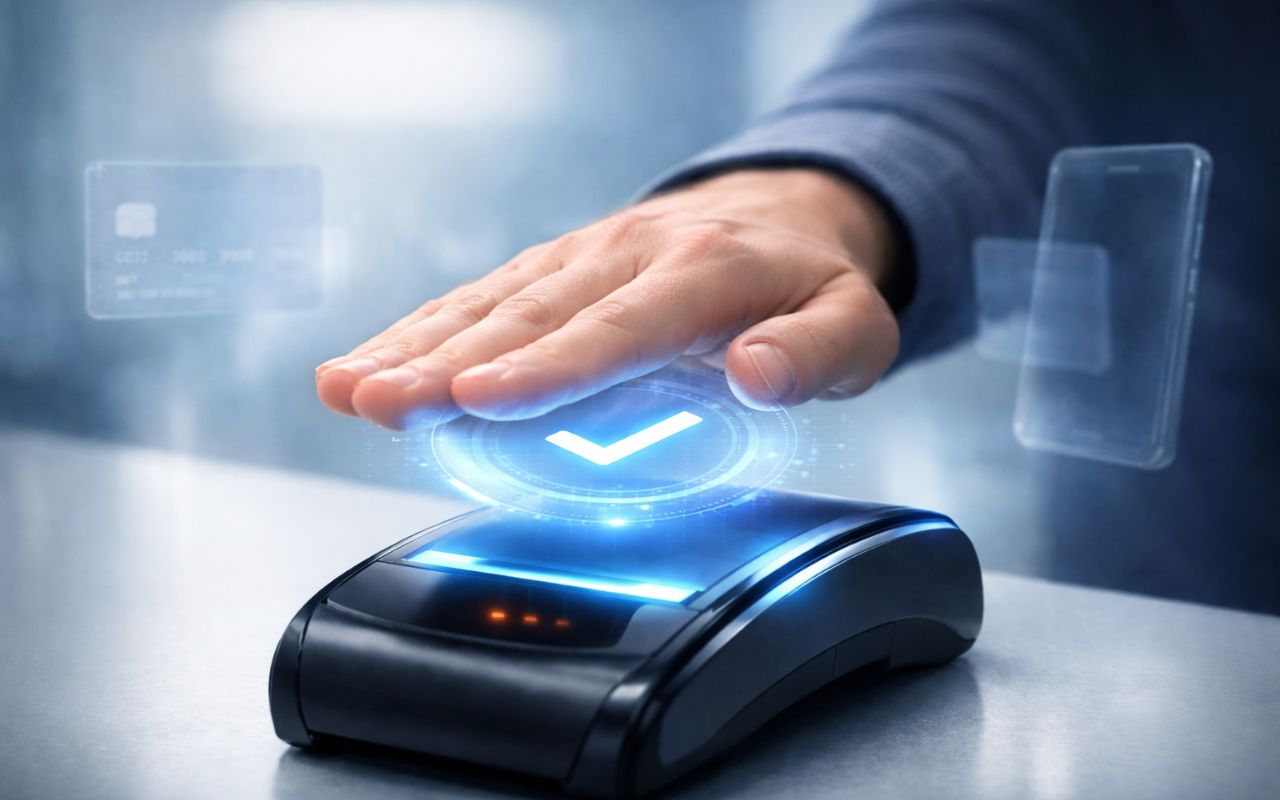
New technology allows payment with the palm of the hand, without card or phone, bringing more security and agility to consumers.
A new technology for payment is starting to gain traction in Brazil by allowing consumers to make purchases using only the palm of their hand. The solution, which is in testing phase by companies in the financial and technological sectors, eliminates cards, passwords, and even the use of a phone.
The system works through sensors that identify unique patterns in the veins of the hand, ensuring security and speed in the transaction. The proposal emerges as an alternative to make payment more practical, reduce queues, and minimize fraud.
New technology uses palm biometrics for secure payment and is in testing phase in Brazil
The operation of the new technology is based on the biometric reading of the palm of the hand. Sensors with infrared light capture blood flow and the pattern of the veins.
-
Scientist who “predicted” the pandemic issues new warning, says the world may be entering a phase of disintegration and urges us to prepare for what is to come.

-
NASA released a photo taken from the International Space Station showing a lightning bolt shooting upwards into space instead of falling to Earth, reaching nearly 100 kilometers in altitude at the top of a storm.

-
Forget the idea that your brain stops developing at 25: a study with over 4,000 people proved that it continues to rebuild itself until 32 and goes through five phases throughout life.

-
Researchers from USP have discovered how to use Brazilian arnica to produce silver nanoparticles without generating toxic waste, and the innovation already has a patent application and practical application underway in the market.
This information is transformed into an encrypted code. Then, the system associates this code with a payment method, such as a card or Pix.
In practice, payment occurs with the simple approach of the hand. The process takes a few seconds and does not require physical contact.
Experts point out that the new technology offers a high level of security. This is because the vascular pattern is internal to the body and virtually impossible to counterfeit.
Unlike passwords or facial recognition, the palm of the hand reduces fraud risks. Additionally, it eliminates the need to memorize codes.
On the other hand, the encryption of data also reinforces protection. This ensures greater reliability for users and companies.
Currently, payment with the palm of the hand is still in the experimental phase in the country. Companies in the sector have already begun controlled tests.
One of the highlights is the initiative by Positivo Tecnologia, in partnership with Tencent Cloud. The companies developed a terminal capable of integrating identification and payment.
The expectation is that the first equipment will reach the market in the second half of the year. Thus, the technology may begin to be used in retail.
More agility in service
In addition to security, the new technology brings gains in efficiency. The payment process becomes faster and simpler.
According to Norberto Maraschin Filho, vice president of Positivo, “the integrated technology at the point of sale will revolutionize customer service.”
He also highlighted that the solution reduces queues. This happens because it eliminates steps such as entering a password or scanning a QR Code.
Other companies are also testing
The innovation is not limited to a single company. Cielo, in partnership with Ingenico, has also conducted tests in Brazil.
In this case, the technology was used in a controlled environment. Real payments were made with cards linked to the biometrics of the palm of the hand.
Despite the advances, large-scale implementation still does not have a defined timeline. The system remains in the validation phase.
New technology depends on market adoption and regulation
For payment with the palm of the hand to become common, some challenges need to be overcome. Among them is the adoption by banks, companies, and consumers.
Additionally, regulation will be essential. The use of biometric data requires specific care regarding privacy and security.
Therefore, the advancement of the new technology will depend on trust in the system. And also on clear policies for data protection.
Even in the initial phase, the new technology already indicates a trend. The use of the palm of the hand may replace traditional payment methods.
The practicality of not relying on devices is one of the main attractions. Furthermore, security reinforces the potential of the solution.
See: Technology already exists in China
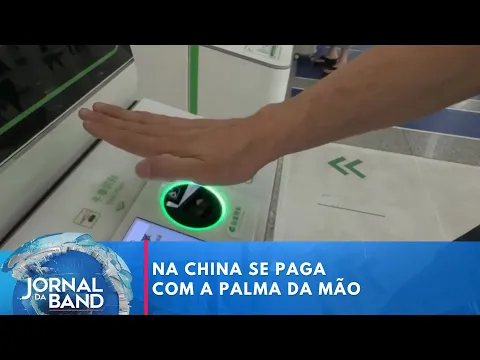

Source: SBT News









Seja o primeiro a reagir!