





 Portuguese
  English
  Spanish
  5 min of reading
  2 comments


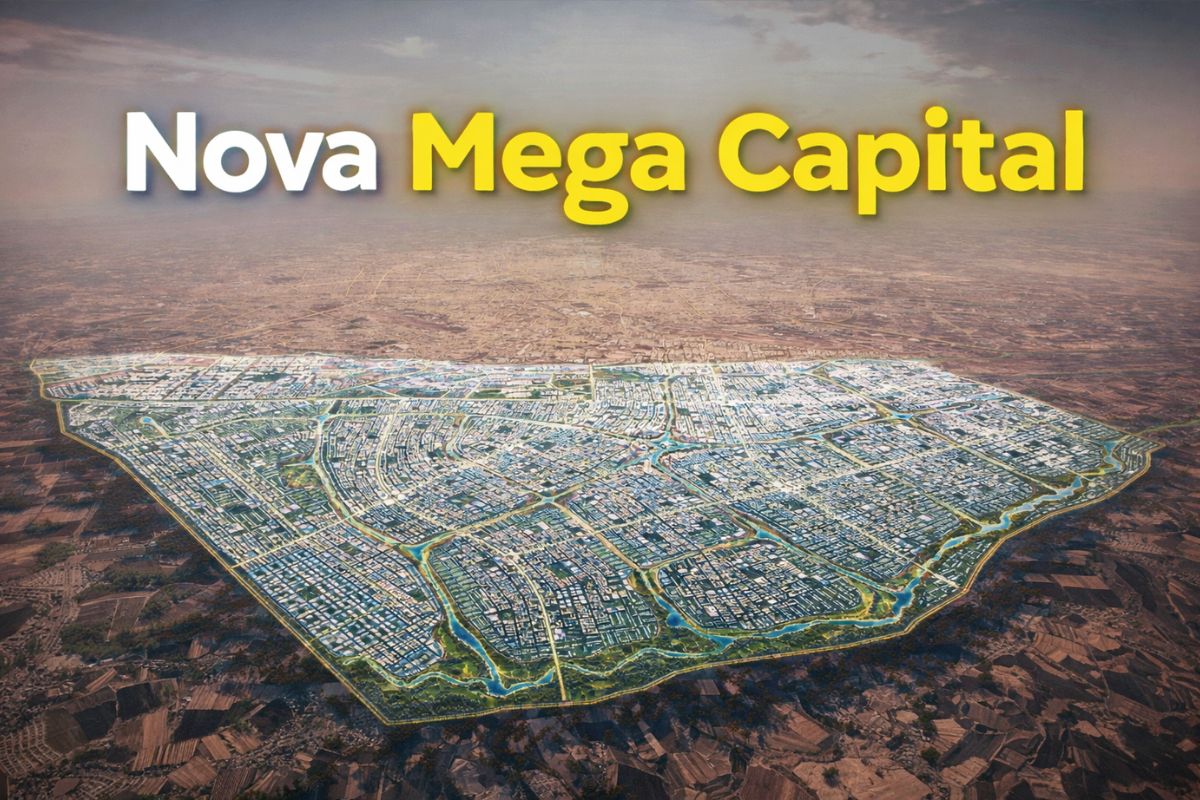


While Few Notice, Uzbekistan Is Planning a $30 Billion Megacity Next to Tashkent, With Super Neighborhoods in 15 Minutes, Navigable Canals, 575-Meter Towers, and Renewable Energy, Trying to Swap Soviet Isolation for a Global Showcase Planned for Millions of Young Residents by 2040, With Skilled Jobs and Universities.
Since 2016, when a new president took charge of Uzbekistan and initiated deep economic reforms, the country has transitioned from a closed and isolated economy to a target for foreign investors, with annual flows exceeding $4 billion and the ambition to build a $30 billion megacity as a political and financial showcase. At the same time, the capital Tashkent has seen its density nearly double since 1991, necessitating the annual construction of over 20,000 apartments, dozens of schools, and hospitals to accommodate a rapidly expanding urban population.
In 2023, Tashkent ranked only 157th out of 173 cities assessed in a global livability index, just a few steps from the end of the list, which reinforced the decision to design New Tashkent as an urban showcase. The plan aims to approve the first district of 6,000 hectares in 2024, complete the initial phase in 8 to 10 years, and transform the old capital into one of the 50 most livable cities in the world by 2030, anchored by this $30 billion built-from-scratch megacity.
Where Is the $30 Billion Megacity and What Does It Aim to Change

The new $30 billion megacity will be located about 20 kilometers east of Tashkent, occupying 25,000 hectares between the Chirchiq and Karasu rivers, an area equivalent to approximately one-third of Singapore and nearly doubling the urban footprint of the Uzbek capital.
-
This is the cost to build a simple 60 m2 house in 2026, including contingencies, foundation, finishing, labor, and hidden fees.

-
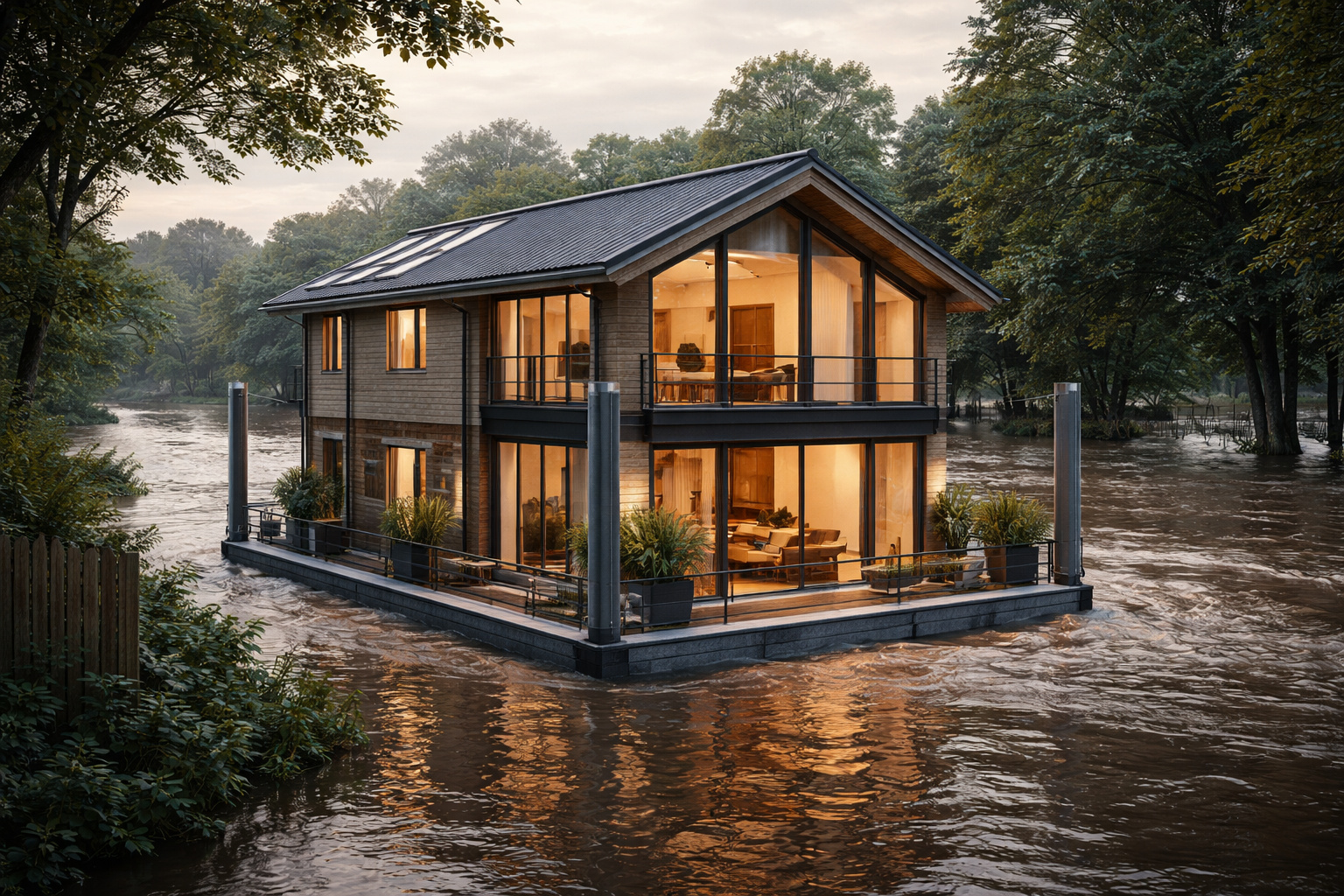
Amphibious houses with a floating dock system gain global attention by revealing technology that allows homes to rise with floods and avoid losses in high-risk areas.
-
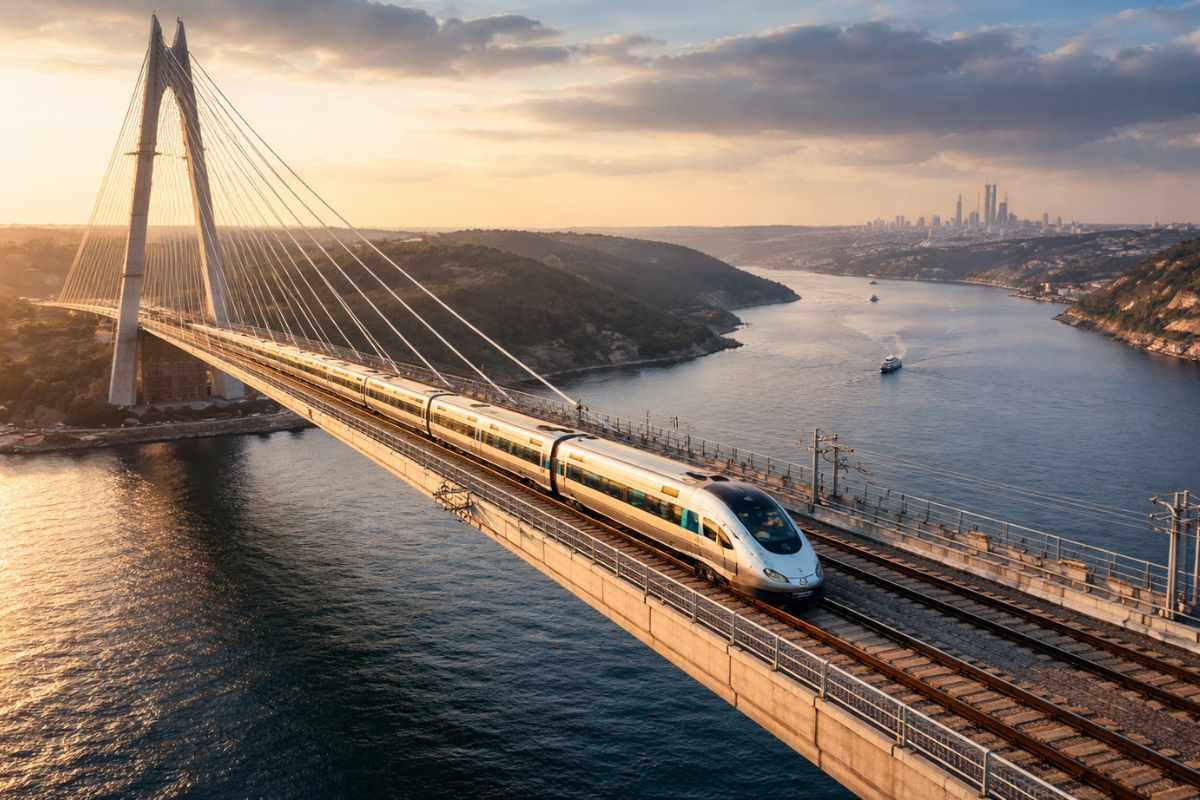
Between tunnels, bridges, and billions in investment, Istanbul is preparing to receive a 125-kilometer railway that crosses continents, enhances the circulation of goods and passengers, and changes the strategic outlook of Turkish transportation.
-
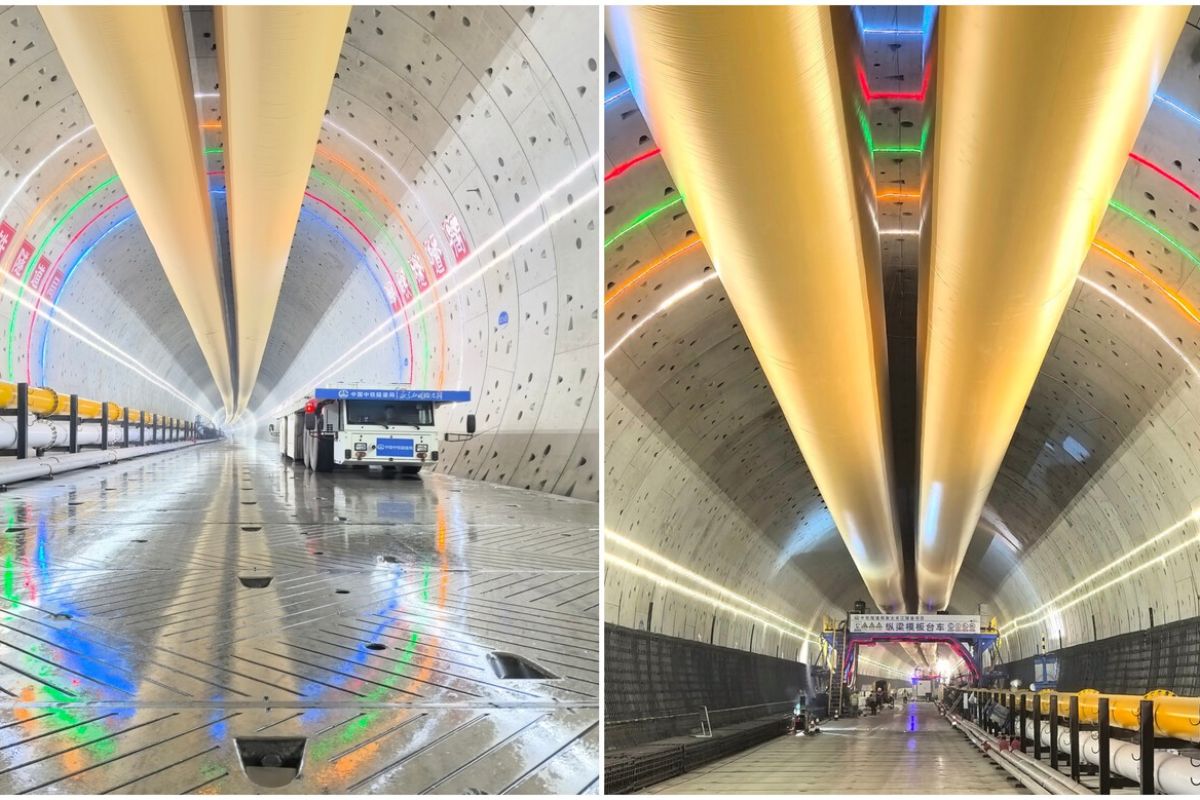
China completes the most critical section under the Yangtze River with the intelligent tunneling machine Linghang, excavating 11.32 continuous kilometers at depths of up to 89 meters and transforming the Chongming-Taicang tunnel into a landmark that redefines the scale of high-speed rail engineering in the 21st century.

The expansion has been planned to accommodate around 2.5 million new residents, raising the total population of the metropolitan area to around 7.4 million over two decades.
The stated goal is to reposition Uzbekistan on the Central Asian chessboard, a region squeezed between Russia, China, Iran, and the Middle East, where the country of 37 million people is trying to regain the prominence it once held on the ancient Silk Road.
The $30 billion megacity serves as a visual and economic response to the isolated Soviet past, created to signal that the country is open for business, tourism, and large-scale foreign capital.
How Will the Urban Design of the New $30 Billion Megacity Be

The urban plan follows the concept of a 15-minute city, divided into super neighborhoods known as Super Mahalas, inspired by the traditional Uzbek mahallas of alleys and inner courtyards.
Each Super Mahala will be about 400 meters wide, a distance that can be crossed on foot in approximately five minutes, concentrating housing, neighborhood commerce, basic services, and community areas.
Within each block, schools will be less than 500 meters from residences, and kindergartens will be about 300 meters away, with clinics, shops, and small public facilities distributed along pedestrian and cycling routes.
Private cars will not be allowed to cut through these neighborhoods, being restricted to the borders, in a design that combines urban grid with diagonal avenues, inspired by examples like Barcelona and Washington.
Canals Like Amsterdam, Green Areas, and Real-Time Digital Twin
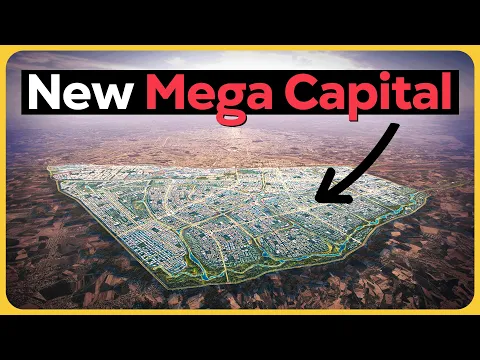

The $30 billion megacity has been nicknamed the “Amsterdam of Central Asia” because of the network of canals that runs through the entire urban plan, allowing passage through parks and neighborhoods along water edges without touching major avenues.
Approximately 23 percent of the total area will be allocated to public green spaces, not counting private courtyards and university campuses that will also have their own environmental goals.
In the technological plan, New Tashkent will be monitored by a complete digital twin, a virtual model that replicates in real-time every street, building, pipeline, and infrastructure.
This system will allow for the detection of floods, failures in the water network, and mobility issues early on, adjusting interventions before damages become costly.
The promise is that the $30 billion megacity will be managed as a living organism, with updated data and quick decisions about transportation, drainage, and energy.
Giant Twin Towers and Billion-Dollar Investments in Clean Energy
The centerpiece of the skyline will be a pair of twin towers standing 575 meters tall, designed to feature among the six tallest buildings in the world when completed.
Next to them, the Alisher Navoi Center, designed by an international firm, combines locally produced bricks with ventilation systems inspired by traditional wind towers of Central Asia, reinterpreted with contemporary engineering.
The investment in leisure also includes a water park and a tourist complex estimated at $250 million, aimed at both residents and foreign visitors.
In energy infrastructure, the $30 billion megacity bets on a 100 percent renewable matrix, with around 400 megawatts from solar plants, 1,200 megawatts from modernized hydropower plants, and trigeneration boilers that burn cotton waste to simultaneously generate electricity, heating, and urban cooling.
Jobs, Universities, and the Attempt to Reverse the Youth Unemployment Crisis
Uzbekistan faces a silent youth employment crisis: nearly 55 percent of young people finish school and then fail to secure a spot in university or formal work, while about 90,000 already graduated university students cannot find jobs in their study field.
Each year, another 250,000 citizens reach working age, but the economy increases the number of vacancies at a rate of approximately only 1 percent per year.
The bet on New Tashkent is that the $30 billion megacity will serve as a pressure release valve for this demographic strain.
The project includes entire university campuses built from scratch, with dormitories, classrooms, and laboratories ready to accommodate students starting in 2027, in addition to new ministries and technology and service companies based in the new area.
The idea is to transform vacant agricultural land into a hub for skilled jobs, urban services, and creative industry, reducing the need for youth emigration.
The Race Against the Water Clock in a Region Under Extreme Water Stress
Behind the ambitious plan lies a structural risk: Uzbekistan is one of the countries most affected by water stress in the world, with most freshwater resources already committed to agriculture and a significant part of the supply controlled outside its borders.
Internal studies project that by 2030, the deficit could reach 15 billion cubic meters, a volume sufficient to supply a global megacity for years.
Transforming 25,000 hectares of agricultural land into compact urban fabric requires potable water, sewage, park irrigation networks, and maintenance of canals reminiscent of Amsterdam, all in a semi-arid region.
The question is whether the $30 billion megacity will be able to balance urban ambition, water consumption, renewable energy, and environmental protection in a scenario of increasing scarcity, without generating a new social or ecological crisis in the heart of Central Asia.
With so much money, technology, and risk involved in bringing this $30 billion megacity in Uzbekistan to life, do you think the project can genuinely transform the region into a new power or is it likely to become an expensive symbol of difficult-to-sustain ambition?








Falou 30 bilhões, bilhões de vezes, 30B do que? Que ridículo!!!
Que matéria ruim ..cidade de 30 bilhões …bilhões do que ??????kkkk