





 Portuguese
  English
  Spanish
  4 min of reading
  0 comments



In A Country Of Contrasts, Five Brazilian Medium-Sized Cities Advance With Innovation Ecosystems, Creating Qualified Jobs, Efficient Urban Infrastructure, Robust Health And Education, Showing That Consistent Development Is Not Exclusive To Capitals And Keeping Residents By What They Deliver In The Day-To-Day.
The silent transformation of the interior no longer fits into clichés. Instead of losing people to the metropolises, Brazilian cities outside the traditional axis are retaining talent and attracting companies with a stable business environment, reasonable cost of living, less chaotic mobility, and educational networks that train labor for technology and industry.
The result is visible in the pace of construction, the emergence of innovation hubs, and the increase in formal employment. When residents find accessible healthcare, parks, safety, and qualified jobs in the same ZIP code, the decision to stay stops being emotional and becomes rational, sustaining virtuous cycles of investment and quality of life.
Why Look Beyond The Capitals
The new geography of work favors hubs with good logistical connectivity, active universities, and room to grow.
-
The largest food company on the planet, JBS, has just opened a 4,000 square meter laboratory in Florianópolis to develop customized proteins that modulate muscle mass gain, immune response, and metabolic performance.

-
After nearly 30 bids and competition among industry giants, a Spanish company purchases one of the largest airports in Brazil for almost R$ 3 billion and takes over the management of Galeão in a concession that will last until 2039.

-
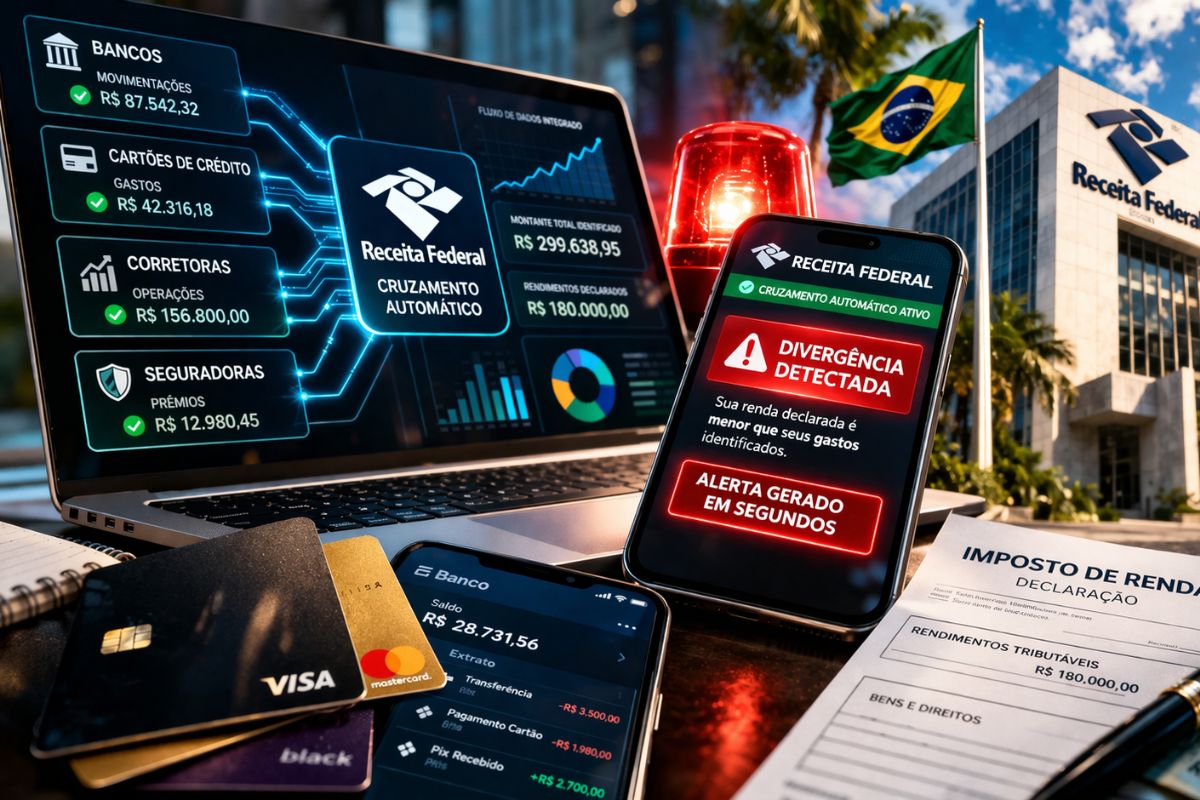
The Federal Revenue Service now automatically cross-references everything you declare with data from banks, credit cards, brokerage firms, and insurance companies, and any discrepancy between your income and your expenses triggers an alert in seconds.
-
Amid global tensions, Brazil blocks the United States’ proposal at the WTO and paves the way for a trade crisis and possible retaliations.


Companies are looking for Brazilian cities with less operational friction, the capacity to form and retain teams, and local governments that streamline processes.
For families, daily indicators weigh in: access to services, shorter commute times, opportunities for different age groups, and a social fabric that fosters belonging.
When these factors combine, the flow is one of entry, not exit.
Londrina, PR
The former coffee capital has become synonymous with economic diversification.
The high-tech agribusiness drives farm-to-table startups, connected to universities and laboratories that test solutions on a regional scale.
Within the urban perimeter, the city has consolidated services, logistics, and civil construction, creating job opportunities for technical and administrative profiles.
A predictable business environment and support networks for entrepreneurs help newcomers gain traction more quickly.
Juiz de Fora, MG
The transition from a classic industrial hub to an innovative base has been built with pragmatism.
The city preserved metallurgy and textile skills while adding layers of applied technology, sustainable energy, and bioeconomy.
With an active federal university and private educational networks, there is a continuous supply of talent.
The good location in the Southeast combined with established infrastructure supports new investments and enhances the career prospects for those who choose to stay.
São José dos Campos, SP
A national reference in aerospace and engineering, the municipality hosts anchor companies and a technology park that connects research, prototyping, and Industry 4.0.
This creates a multiplier effect in software, materials, pharmaceuticals, and clean energy.
The strategic position between São Paulo and Rio, combined with nearby highways and airports, reduces logistical costs.
Quality of life above average and smart city policies reinforce the retention of qualified professionals.
Petrolina, PE
In the semi-arid region, the combination of science, irrigation, and management transformed fruit cultivation into an export engine.
The tech agribusiness drives cold chains, traceability, and specialized services, expanding the job base.
The integration with neighboring Juazeiro in Bahia forms an urban agglomeration with universities, regional hospitals, and vibrant commerce.
Those who arrive find work, and those who live there find prospects, which makes it harder to leave.
Blumenau, SC
The textile tradition has become a platform for innovation.
Automated factories, design, and ICT go hand in hand, while the startup ecosystem found support in incubators and associations to scale.
The local entrepreneurial culture, coupled with solid education and safety indicators, creates a virtuous circle.
Quality of life and industrial competitiveness coexist, attracting investment and retaining residents.
What These Brazilian Cities Have In Common
In all of them, the tripod of university, company, and government communicates regularly.
There are cooperation rituals that shorten the path between idea and market, from calls for proposals to acceleration programs.
Another shared point is functional urbanism.
Mixed neighborhoods, nearby services, parks, and integrated health networks reduce opportunity costs and wasted time, invisible assets that keep families in place.
What Still Needs To Evolve
Progress brings new challenges.
Affordable housing, efficient intercity transport, and environmental preservation need to keep pace with growth to avoid bottlenecks.
It is also crucial to expand productive inclusion.
Without continuous training and sectoral diversification, prosperity remains concentrated, and part of the population does not benefit from the virtuous cycle.
How To Decide To Move To An Emerging Hub


Map the basics: job offers in your field, actual commute time between home and work, monthly cost, and availability of schools and healthcare.
Talk to those who already live in the city and test the routine for a few days.
Check the professional ecosystem: business networks, innovation events, and presence of suppliers.
These signals indicate if there is economic density to sustain medium-term plans.
The five Brazilian cities highlighted show that consistent development can thrive far from the capitals when planning, human capital, and coordination come together.
They retain residents because they deliver a good life and decent work at the same address, something that changes biographies and maps.
And you, which of these Brazilian cities would you put at the top of your list to live and work today, and why?







-

-

-

-

-

9 pessoas reagiram a isso.