





 Portuguese
  English
  Spanish
  6 min of reading
  1 comment


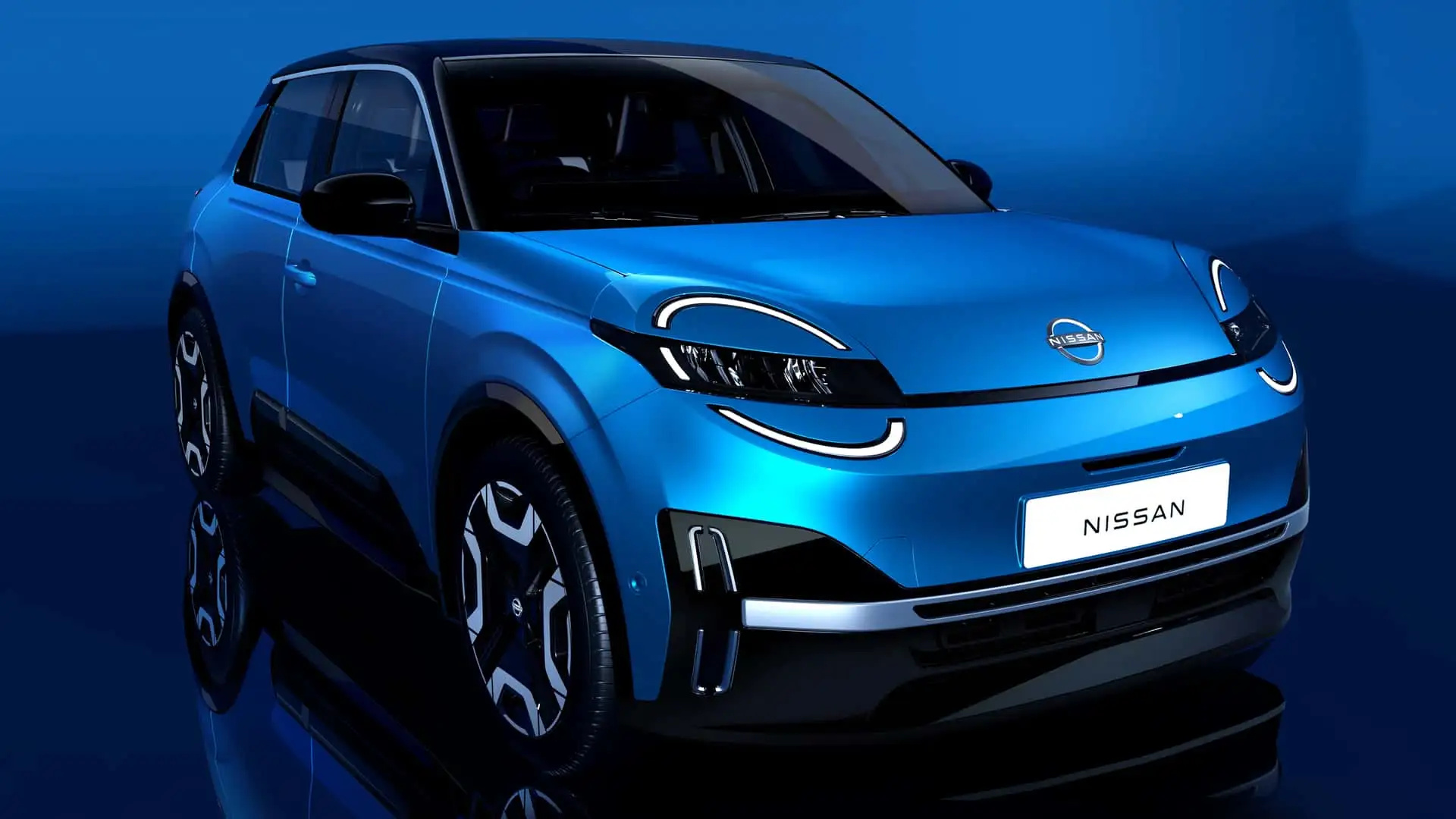


Partnership Between Nissan and Renault Repositions the March as Urban Electric in Europe. The Project Shares Platform with the Renault 5 and Emerges While the BYD Dolphin Mini Expands Relevance in Brazil and Redefines Competition in the Segment.
Nissan has confirmed the return of the compact known in Brazil as March in a new generation 100% electric, developed in partnership with Renault and with an initial launch planned for Europe.
This move comes as Chinese manufacturers expand their presence in the urban electric segment across different markets, including Brazil, where the BYD Dolphin Mini has gained traction among entry-level models.
In Europe, the car is sold under the name Micra.
-
The car stored for 38 years: when opening the barn door, what appears is breathtaking and looks like a scene from a movie!

-
Fiat works miracles in the Brazilian market, lowers the price of its 0 km hatch to R$ 69,990, reestablishes the model as the cheapest car in the country, and reignites the battle against Kwid and C3.
-
Chevette with cooking gas: How the gas cylinder ends up being used in cars clandestinely and why this makeshift solution can result in leaks, explosions, damaged engines, and seized vehicles.

-
Fiat launches the new 2027 Toro hybrid with 48V, 176 hp, an electric motor of 15.5 hp, a 0.85 kWh battery, up to 7% fuel savings, 8% fewer emissions, and possible exemption from IPVA.

In statements and institutional materials released in the continent, Nissan describes the project as the return of the Micra “as an EV,” with engineering based on the same architecture as the electric Renault 5 and focus on urban usage.
AmpR Small Platform and Nissan-Renault Alliance on the Electric March
According to the portal Garagem360, the partnership with Renault aims to share development stages and components, reducing project costs and shortening timelines.
Instead of adapting a model originally designed for combustion to accommodate batteries, the new electric March/Micra was conceived as electric from the start, based on the AmpR Small platform, also known as CMF-BEV, which serves as the foundation for the Renault 5 E-Tech Electric.

This type of solution, adopted by different automotive groups, is often pointed out by industry analysts as a path to increase scale and simplify the supply chain in compact electric vehicles.
Nonetheless, Nissan has indicated that it intends to maintain its own elements of visual identity and finish, even with the shared technical base.
European Production of the Electric Micra and Lack of Confirmation in Brazil
The production of the March/Micra electric for Europe has been linked to the industrial hub of Douai, France, within the Ampere ElectriCity complex, associated with the manufacturing of electric models from the Renault group and projects linked to the alliance.
So far, Nissan has not confirmed the sale of the model in Brazil.
Some coverage in the country refers to the project as “new March,” explaining that it pertains to the European Micra.
The strategy for importation, potential regional production, and the commercial decision for the Brazilian market, however, have not been announced by the automaker.
Batteries, WLTP Range, and Fast Charging in the Electric March
The information released for the electric Micra in Europe indicates two battery options, of 40 kWh and 52 kWh.
In European materials attributed to the brand, the announced range reaches 415 km on the WLTP standard in the configuration with the larger battery.
For the smaller battery, the reference is up to 320 km in the same cycle.
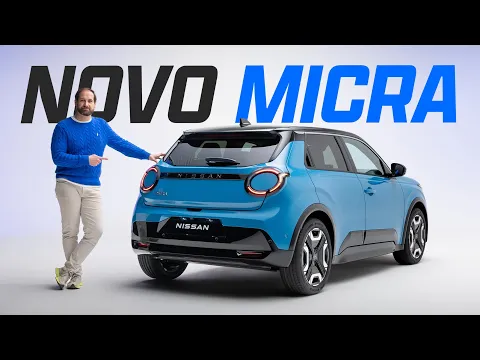

Nissan also mentions direct current charging with power that can reach 150 kW, with variations depending on the version, charger conditions, and factors such as temperature.
As this is a model based on a shared platform with the Renault 5, market expectations are that part of the charging behavior and electrical architecture will follow similar parameters, although the final limits per version will depend on the package approved in each country.
In specialized publications, there are references to differences in charging power between configurations, which reinforces that details such as the charging curve, time under real conditions, and variations by finish still need to be observed once the car is more widely marketed in Europe.
Digital Interior and Urban Proposal of the Nissan Electric March
In the mechanical package, international coverage of the electric Micra points to motors in ranges compatible with electric hatches in Europe, with variations by version.
In terms of proposal, Nissan has associated the model with urban mobility, featuring a connectivity package and digital cabin, characteristics that have become common in recent launches in the segment.

In this context, the electric March/Micra positions itself as a compact intended for everyday use in the city and medium-distance trips, in line with what the WLTP projects for its versions.
The way this proposal will be priced and equipped in each market tends to define the target audience more precisely.
BYD Dolphin Mini in Brazil: Inmetro Range and LFP Battery
In Brazil, the BYD Dolphin Mini has been regarded as one of the main players among entry-level electric vehicles.
According to public information from BYD itself, the model is presented with a range of 280 km based on Inmetro standards and a 38 kWh LFP battery, associated with the brand’s Blade technology.
The car has also frequently appeared in market reports due to its retail sales during specific periods in 2026, amidst BYD’s expansion in the country.
These numbers, pertaining to monthly snapshots and classification criteria, vary depending on the source and methodology used, but they help explain why the Dolphin Mini has become a reference when it comes to urban electric vehicles with a more accessible price point.
In terms of technical specifications, BYD discloses a motor of 75 hp in Brazil, with variations by version and local specifications.
This point is often cited to contextualize the model’s focus on cost of use and efficiency, rather than high performance.

Electric March vs. Dolphin Mini: Comparison Between WLTP and Inmetro
The direct comparison between the European March/Micra electric and the Dolphin Mini sold in Brazil requires caution because they are different markets, with distinct measurement cycles and potentially changing versions.
The WLTP, used in Europe, follows different parameters from the Inmetro standard applied in Brazil, which prevents automatic equivalence between range numbers.
Even with this difference, the data released in Europe indicates a range that, on paper, exceeds the Brazilian reference reported by BYD for the Dolphin Mini in national certification.
For the consumer, however, what usually matters is the complete package: real range in daily use, charging time, final price, and equipment package.
While the Dolphin Mini is already on sale in Brazil, with locally defined versions and specifications, the March/Micra electric, for now, remains a European product.
Therefore, any reading of a “direct confrontation” depends on an official decision by Nissan for the country, as well as the definition of versions and pricing strategy.
What Is Needed for the Electric March to Arrive in Brazil
The main point still open is the official confirmation of the Electric March offer in Brazil, with details such as homologation, versions, service network, and pricing positioning.
Without this announcement, the topic remains limited to a comparison of technical proposals released in different markets.
Nonetheless, Nissan’s decision to bring back the March/Micra in electric format, with a shared base and large-scale production in Europe, is being viewed by some in the industry as a response from traditional groups to the acceleration of Chinese brands in the entry segment.
Should the strategy include Brazil, the competition could reflect in choices of equipment, advertised range, and commercial conditions, depending on the positioning defined by each manufacturer.







Como os países abaixo do desenvolvimento, caso do Brasil são os quintais desses fabricantes automotivos, não oferecem essas alternativas.
Ofertam veículos caríssimos e cheios de nada, pros lascados.