





 Portuguese
  English
  Spanish
  4 min of reading
  9 comments


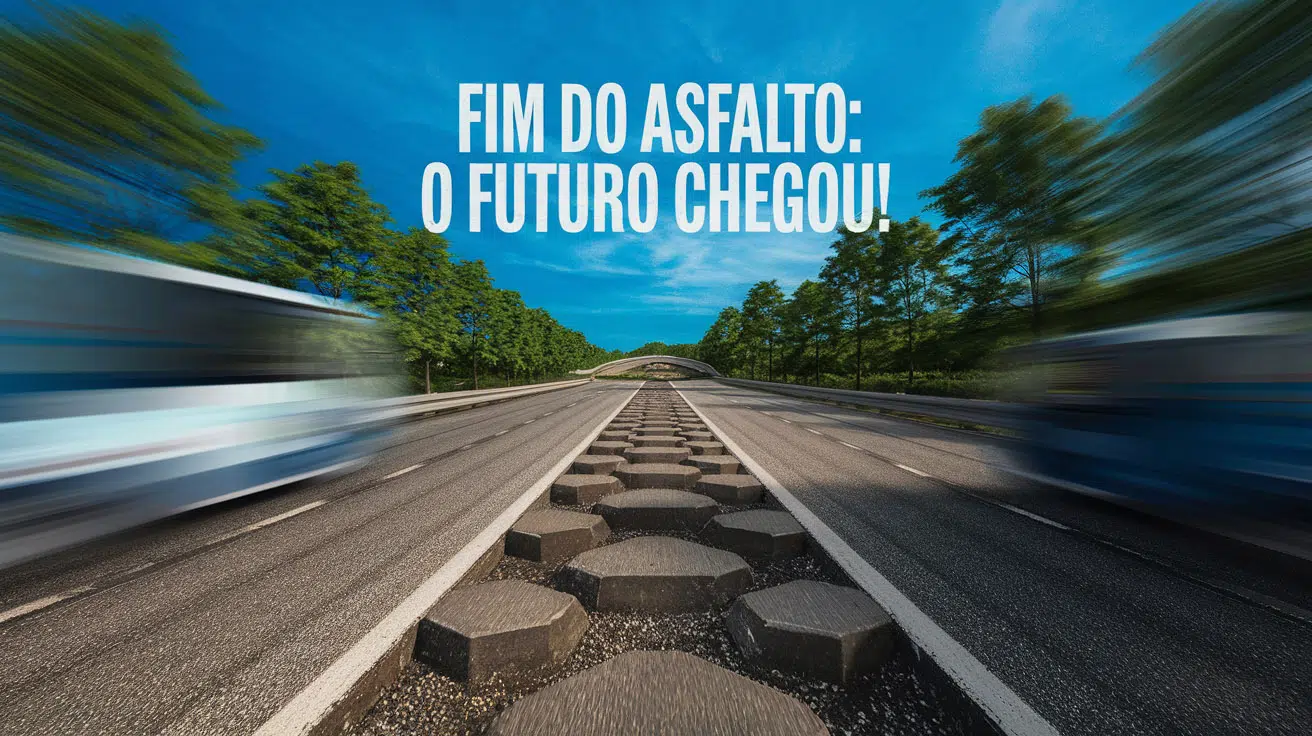


Asphalt May Be Counting Its Days! A New Concrete Technology Promises Twice the Durability and Is Already Being Considered in Joinville. Discover How This Change Can Transform Brazilian Highway Infrastructure and the Challenges That Still Need to Be Overcome for This Revolution to Gain Strength in the Country.
A silent revolution is taking shape on Brazil’s highways, and you may not have noticed.
For decades, asphalt dominated the country’s roads, but this hegemony may be counting its days.
An alternative that promises more durability and lower maintenance costs is gaining ground: concrete.
-
Pix in installments, international Pix, and contactless payment without internet: the Central Bank revealed the new features coming to the tool that is already used by almost every adult in Brazil.

-
Mercado Livre has just started selling medications with delivery in up to three hours to your door, and this move could completely change the way Brazilians buy medicines on a daily basis.

-
The lack of welders, electricians, and operators becomes a structural threat in 2025, with the construction industry and manufacturing already suffering from delays, cost pressures, and labor shortages in Brazil.
-
In Dubai, rising tensions from the war in the Middle East are causing super-rich individuals to leave the Gulf and direct their fortunes to a new financial refuge in Asia.

Beyond lasting longer than traditional asphalt, concrete offers advantages that go far beyond cost savings. However, this transformation does not happen overnight.
There are still financial, environmental, and technical challenges that need to be overcome for concrete to become the new standard. But why is this change so relevant?
Joinville City Hall Studies New Paths
In Joinville, the largest city in Santa Catarina, an ambitious proposal is under study: the construction of a new road in the southern area of the city to connect the neighborhoods of Adhemar Garcia, Ulysses Guimarães, and Paranaguamirim.
More than just serving the 56,000 inhabitants of the region, this new road promises to alleviate traffic and improve access to BR-280, one of the main highway corridors in the state.
The project includes the possibility of using concrete as the main pavement, which would represent a milestone for the city’s infrastructure.
The idea is to integrate sections of existing streets with new paths that would largely traverse rural areas and deactivated lands, such as the lagoons of the former sewage treatment plant in Jarivatuba.
But the challenges are not few. Most of the route is in areas outside the urban perimeter, which requires strict environmental licenses.
Furthermore, the financial viability of the project itself is a question mark, as large-scale construction requires significant investments.
The Eastern Ring Road and Its Impacts
Another ambitious project is the Eastern Ring Road, a route planned to divert heavy traffic from downtown Joinville.
This route would connect strategic neighborhoods such as Boa Vista, Comasa, and Jardim Iririú to Aventureiro, passing through more distant areas of the city.
The Eastern Ring Road would not only reduce traffic on central avenues but also create space for urban and economic development in the served areas.
However, as happened with the defunct Beira-Mangue proposal, environmental licensing could be a significant barrier.
Thus, both the new road in the southern area and the Eastern Ring Road share an uncertain fate: they depend on technical studies, financial resources, and the resolution of environmental issues to come to fruition.
Concrete vs. Asphalt: Why Change?
The use of concrete on highways is not exactly a novelty in Brazil.
Roads such as the Rodovia dos Imigrantes in São Paulo, and the Ring Road of Belo Horizonte have already adopted this material, showing impressive results.
Among the main advantages of concrete is its durability.
While traditional asphalt needs frequent repairs, especially in areas with heavy traffic, concrete can last up to 30 years without significant maintenance.
This represents considerable savings in the long run, both for public coffers and for users.
Another advantage is its resistance to heat and weather. Concrete does not soften at high temperatures, an important characteristic in a tropical country like Brazil.
Moreover, it better supports the weight of heavy vehicles such as trucks and buses, reducing the formation of potholes and deformations on the road.
According to studies by the Brazilian Association of Portland Cement (ABCP), the initial cost of concrete is indeed higher than that of asphalt.
However, when analyzing the life cycle of the pavement, concrete can be up to 40% cheaper.
Curiosities About Concrete Roads
To enrich the debate further, here are some interesting facts about concrete roads:
First Concrete Highway in Brazil: Avenida Paulista in São Paulo, inaugurated in 1891, was the first paved road with concrete in the country.
Global Application: Countries such as Germany, the United States, and China already widely use concrete on their highways due to its durability and efficiency.
Reduction of Emissions: Although the cement manufacturing process releases CO₂, concrete roads reflect more sunlight, reducing energy consumption for public lighting and decreasing the carbon footprint in the long term.
Minimal Maintenance: In the United States, concrete highways can operate for more than 40 years with minimal interventions, while asphalt requires resurfacing every 5 to 10 years.
Growing Sustainability: New technologies allow for the production of concrete with recycled materials, such as construction waste, making it a more environmentally friendly option.
Joinville and the Future of Brazilian Highways
With the projects in Joinville, the opportunity arises to elevate Brazil to a new level in highway construction.
But the main question remains: will the initial costs and the technical challenges justify the long-term benefits?
While other Brazilian cities still hesitate to adopt concrete on a large scale, Joinville could be a pioneer in this transformation.
The expectation is that if the studies are approved, the new projects will serve as models for other regions of the country.
For experts, the adoption of concrete in Brazilian highways is more than just a technical issue; it is a debate about innovation, sustainability, and planning. Although the challenges are many, the potential benefits are undeniable.







Existe uma reportagem sobre o asfalto do primeiro mundo no YouTube onde o hoje atual Senador Marcos do Val explica como é feito o asfalto nos Estados Unidos, isso a 7 anos atrás, ele erra na explicação, onde ele diz (malha de ferro) é ferro 5/8, segue o link abaixo para o entendimento, bora aprender isso aqui no Brasil….
A via que acessa o Aeroporto de Confins é em concreto….mas já está cheio de remendos em asfalto, o que é uma **** um visual horrível….
PROPAGANDA FAKE, DAS GRANDES. Alguém cita a BR 232 que liga RECIFE A CARUARU como exemplo de concretagem de pista de rolamento. EXISTEM PROCESSOS JUDICIAIS QUESTIONANDO A BAIXA QUALIDADE DESSA OBRA . A BR 232 DEPOIS QUE FOI DUPLICADA COM CONCRETO, AO TÉRMINO DA OBRA JÁ ESTAVA TODA QUEBRADA/ ****, O QUE DEU MOTIVO DE AÇÃO JUDICIAL QUE NUNCA FOI JULGADO. A PROPAGANDA É MARAVILHOSA, MAS A OBRA NÃO DURA NEM UM ANO E JÁ REQUER MANUTENÇÃO. VENHAM EM COMISSÃO AQUI PARA SE CERTIFICAREM. EM TEORIA, TUDO É MUITO BONITO E DURÁVEL , MAS NA PRÁTICA É UM DESASTRE. CUSTO BENEFÍCIO NEGATIVO PARA O ERÁRIO. VENHAM… 👍👹👹👹👹🙄🇧🇷