





 Portuguese
  English
  Spanish
  5 min of reading
  0 comments


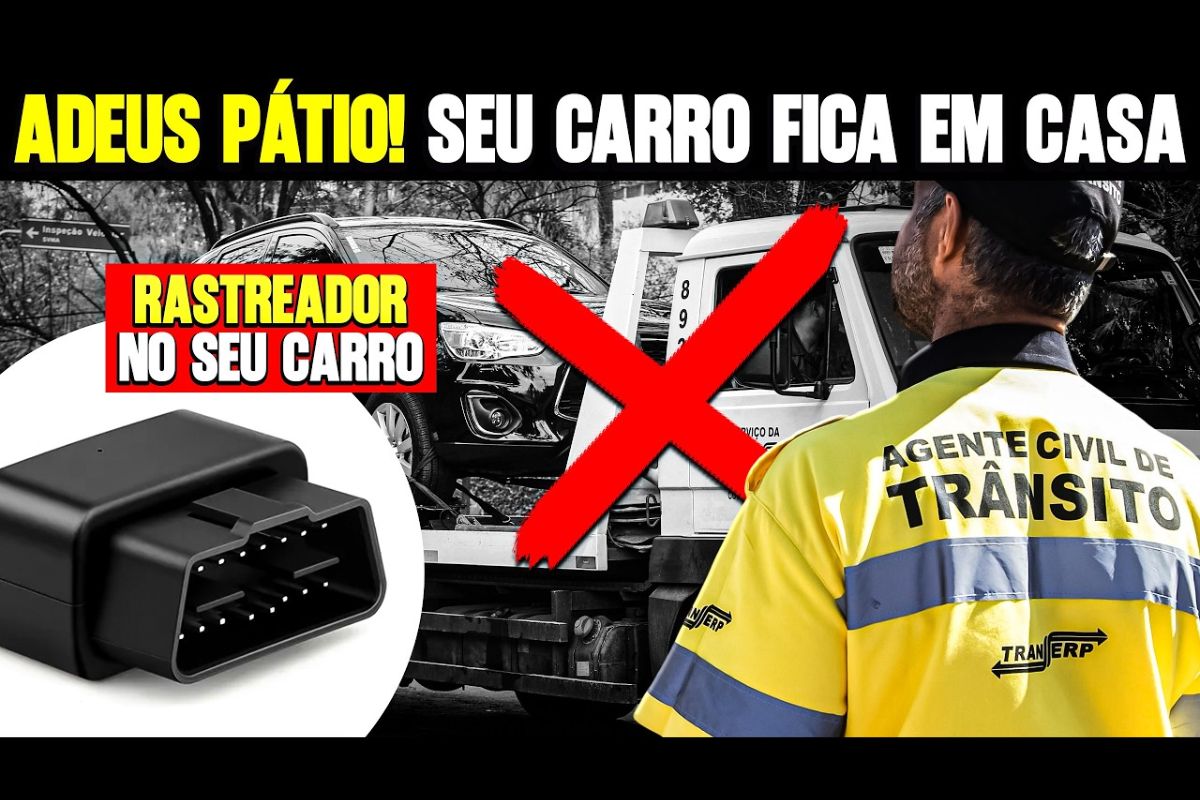
New Proposal in Congress Changes the Traffic Code to Authorize Electronic Removal with Tracker and Designated Address, Creating a Serious Penalty for Those Who Disregard the Authorized Route by the Regulatory Agency
The proposal under consideration in the National Congress may transform the way irregular vehicles are removed in Brazil. The Bill 3212 amends the Brazilian Traffic Code to allow drivers to opt for the so-called electronic removal, a new procedure that uses a tracker and designation of a residential address as an alternative to sending the vehicle to a physical lot. The measure, in addition to simplifying the seizure process, creates a new serious infraction for those who disregard the authorized route between the enforcement location and the informed address.
The change arises amid local experiences, such as the pilot project in Ribeirão Preto, in the interior of São Paulo, which has been testing the adoption of trackers to ensure that the vehicle remains stored at the designated address. The idea is to reduce logistical costs, avoid overcrowding of lots, and modernize the control of infractions, aligning with the trend of digitizing administrative procedures in traffic.
How Electronic Removal Proposed in Bill 3212 Works
According to the text of the project, the Traffic Code will stipulate that vehicle removal can occur in two ways: electronically, through tracking, or physically, at the discretion of the responsible traffic authority.
-
The Senate approves a bill that criminalizes misogyny, hatred, or aversion towards women, and includes the crime in the Racism Law with a penalty of up to 5 years.

-
Chamber Approves Bill That Allows Pepper Spray for Women Over 16 and Imposes Strict Rules for Purchase, Possession, and Use as Self-Defense

-
Chamber Approves Law to Combat Leucaena, Fast-Growing Plant That Dominates Land and Threatens Native Species in Various Regions of the Country

-
Asset Division: Know What Cannot Be Divided in Case of Divorce


The driver, with consent, can take the vehicle to the designated address — preferably their residence — where the vehicle will be retained until the pending issue is resolved.
In this model, a device is installed in the vehicle solely to ensure compliance with immobilization at the informed address, without any function of continuous tracking.
If the owner drives outside the authorized route, the infraction will be considered serious, with a fine multiplied by five, which today corresponds to approximately R$ 1,500, in addition to the possibility of direct removal to the impound.
Practical Impacts and Expected Benefits
The proposal promises to solve an old problem: the cost and bureaucracy of traditional removal.
The driver would keep the vehicle under their custody, gaining time to regularize documents, while the State would reduce expenses related to lots and tow trucks.
In the experimental model in Ribeirão Preto, for example, there is exemption from daily fees for the first three days and charging identical to the conventional process, which encourages adherence.
The project can reduce damages and thefts recorded in crowded lots, offering greater security to the owner and facilitating the release after payment of debts.
Experts also point out that the initiative can relieve the burden on traffic authorities and allow agents to focus on more relevant inspections, without eliminating punitive measures in case of non-compliance.
Legal Debate and Necessary Adjustments in the Traffic Code
The topic divides jurists and traffic law experts.
Some believe that Senatran (National Traffic Department) would not have the authority to authorize such procedures without legal provisions, while others argue that the current Traffic Code would already allow for extensive interpretation for the adoption of alternative models.
Thus, Bill 3212 aims to formalize the legal basis for electronic removal, eliminating doubts about its validity and standardizing the procedure nationwide.
Even with the potential to reduce costs and increase efficiency, the text may still be improved.
There are questions regarding the charging of daily fees when the vehicle remains at the owner’s residence, in addition to concerns about possible loopholes that may benefit illegal practices, such as the so-called “towing mafias”.
Adjustments in the final wording should ensure transparency and balance between the rights of the driver and public interest.
What Changes for the Driver and Traffic Authorities
If approved, Bill 3212 directly amends Article 271 of the Traffic Code, providing for electronic removal as an option to physical towing.
The driver can choose the new format upon formal consent and installation of the tracking device.
If they disregard the authorized route or use the vehicle before regularization, they will commit a serious infraction subject to a fine and immediate removal of the vehicle.
For traffic authorities, the proposal brings significant operational gains.
Fewer vehicles would need to be towed and stored, reducing public expenditures and allowing teams to focus on higher-impact infractions.
The model also opens up opportunities for technological partnerships, with approved trackers and digital control integrated into the databases of the Detran and Senatran.
Outlook and Next Steps for Bill 3212
The project is still under review in the National Congress and will go through technical committees before being presented in plenary.
The expectation is that, if approved, the new system can be gradually implemented, with subsequent regulations defining deadlines, equipment, and responsibilities.
Municipalities that are already testing similar models should serve as a basis for final adjustments.
Experts see the proposal as a natural step in modernizing the Traffic Code, but caution about the need for clear rules to prevent abuses and ensure equal application across regions.
The measure should also be accompanied by educational campaigns to guide drivers about their rights, duties, and penalties associated with the new removal modality.
The proposal of Bill 3212 represents a significant change in the Traffic Code, with the potential to modernize the removal system and reduce operational costs for the State and drivers.
At the same time, it opens discussions on legal security, electronic enforcement, and responsibilities of the driver, which will need to be precisely defined.
Do you agree with this change? Do you believe that electronic removal will bring more efficiency or could open loopholes for abuses? Leave your opinion in the comments — we want to hear from those who experience this in practice.










-

-

-

3 pessoas reagiram a isso.