





 Portuguese
  English
  Spanish
  7 min of reading
  0 comments


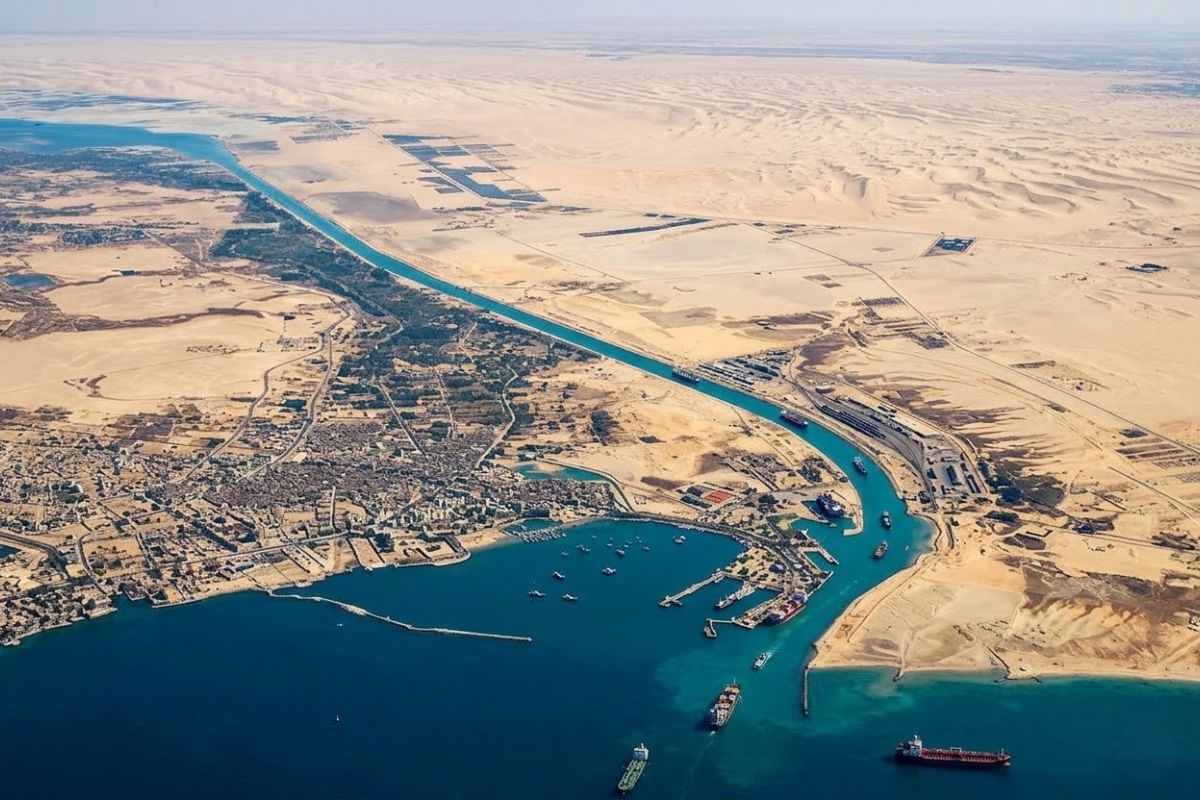
The Gigantic Artificial Wound Opened in Egypt Connects The Mediterranean Sea to The Red Sea via The Suez Canal, Avoids The Contour of Africa, Shortens Trips Between Europe and Asia, Sustains Oil, Gas, and Containers, and Exposes How A Single Corridor Can Disbalance Global Trade in Just A Few Days.
The gigantic artificial wound in the desert of Egypt is not just an impressive engineering feat. The Suez Canal, stretching 193 km between The Mediterranean Sea and The Red Sea, has become one of the most strategic passages on the planet because it drastically shortens the maritime route between Europe and Asia and concentrates a daily flow of goods that few corridors can rival.
This importance arises from its location and volume. Without locks and with direct navigation, the Suez Canal accounts for 14% of world trade in goods, in addition to 9% of all oil traded by sea and 8% of natural gas. It’s not just a cut in the desert. It’s a critical piece of the global commercial machinery.
The Cut That Transformed Egypt into a Mandatory Passage Between Two Seas
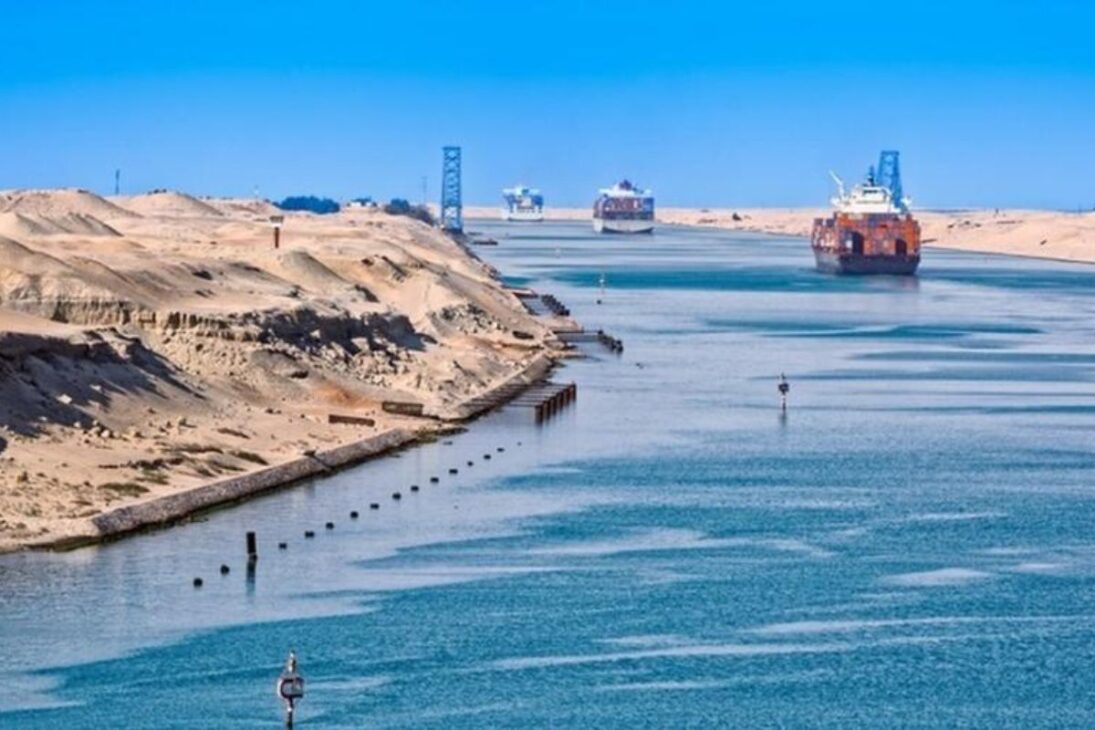
The strength of the Suez Canal lies in its map location. The passage is located in the Sinai Peninsula, in Egypt, at the confluence of Africa and Asia, very close to Europe. By directly connecting The Mediterranean Sea to The Red Sea, it eliminates the need to go around Africa, which would make trips much longer, more expensive, and riskier. It is this time and distance saving that sustains the value of the route.
-
A retired IT professional built a 22-meter boat in his backyard in Oklahoma with a school bus engine, light pole masts, and handmade watertight doors to become the redneck version of Jacques Cousteau.
-
China is building a city in Brazil: a complex with an investment of R$ 5.5 billion comes to light, but allegations involving workers draw attention.
-
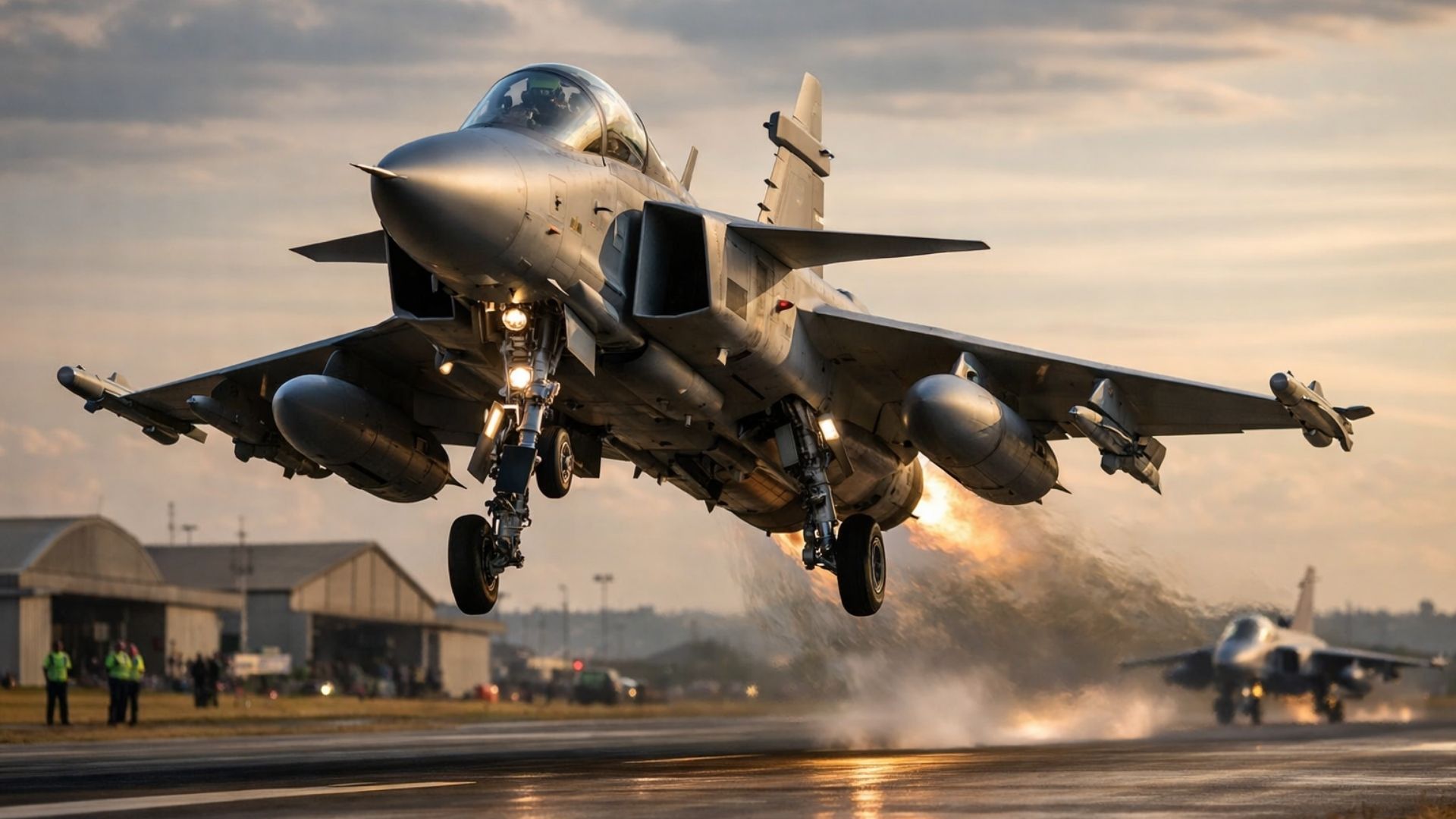
While Argentina buys old war equipment, Brazil is keeping an eye open and joins the select group of nations with advanced military technology by investing $5.2 billion, producing 36 Gripen fighters in the country, and reducing operational costs.
-
Brazil on alert? Why invading Brazil is a NIGHTMARE for the USA: 8.5 million km², 213 million inhabitants, Amazon covering 60% of the territory, trillion-dollar war, and resistance that even 13,000 aircraft could not control.


When a ship crosses this strip, it is not just shortening a path. It is using an infrastructure that alters freight costs, delivery speed, and the competitiveness of entire supply chains. Egypt has become a sort of portal between the West and the manufacturing centers of Asia, giving the Suez Canal much greater weight than that of a simple waterway.
This gigantic artificial wound also stands out for a rare characteristic: there are no locks in the route. Since the terrain is flat and the level difference between The Mediterranean Sea and The Red Sea is small, navigation can occur continuously. This makes crossing faster and reduces one of the most common bottlenecks in artificial canals.
That’s why the Egyptian waterway has never been just a national project. The Suez Canal functions as a global infrastructure. When it operates well, it accelerates the flow of ships between Europe, Asia, and even parts of the western United States. When it jams, the effect leaves the desert of Egypt and impacts logistical chains worldwide.
The Decade When Egypt Opened The Desert and Changed The Scale of Transport
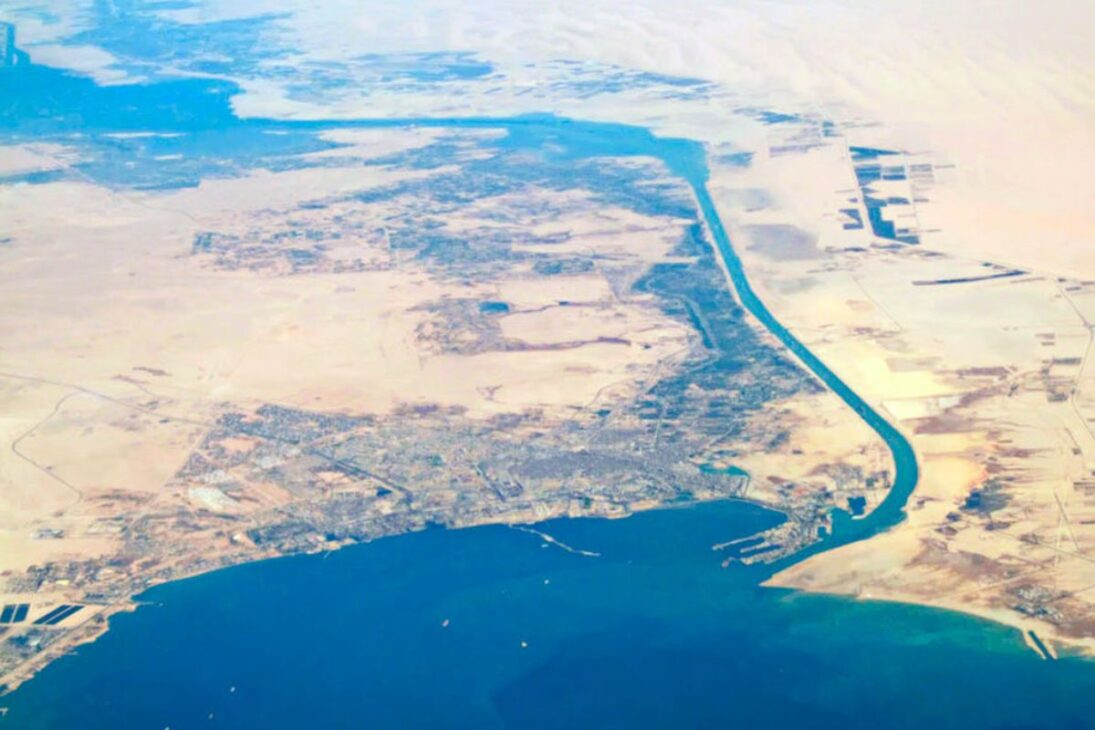
The modern construction of the Suez Canal officially began on April 25, 1859, and took ten years until its inauguration on November 17, 1869. The work required the removal of an estimated 2.613 billion cubic feet of earth, comprising 600 million on land and 2.013 billion through dredging. It was a colossal intervention for its time, done without the calculation and automation resources that today seem indispensable.
The project was led by the Universal Suez Ship Canal Company, created in 1858, and was born in an environment of imperialist competition and European commercial interest. Britain strongly criticized the undertaking, seeing it as a threat to its dominance in maritime trade. Later, when the Egyptian government faced financial difficulties and sold shares in 1875, the British bought 44% of the stake. This shows that the Suez Canal has always been more than engineering. Since its origin, it has also been an instrument of influence and power.
The initial phase of construction relied on forced labor. Thousands of people were forced to dig with pickaxes and shovels until, in 1863, the use of this system was prohibited. The change forced the company to bring in mechanical shovels, steam dredges, and coal-powered machines. This technological leap provided the missing push for the cut to advance at the necessary pace.
The result was the definitive opening of the passage between The Mediterranean Sea and The Red Sea. Originally, the Suez Canal was between 60 and 90 meters wide at the surface, 21 meters deep, and 7 meters deep. Today, the waterway operates at a depth of 24 meters, 365 meters wide, and has a transport capacity of 240,000 tons. The current cross-section is 15 times larger than the original. The work inaugurated in 1869 has never really stopped growing.
Mud, Dredges, and Bitter Lakes Explain Why This Gigantic Artificial Wound Worked
One of the biggest challenges appeared right at the Port Said section, 32 km from Lake Manzala. There, the bottom was made up of extremely soft clay, formed by deposits from the Nile, and the depth was only 1.5 meters. The problem was not just excavation. It was to create firm margins in weak soil and reuse the material removed. Without solving this unstable base, the Suez Canal ran the risk of sinking into the fragility of the terrain.
The solution was direct and ingenious. Much of the clay was removed, squeezed, and molded into blocks, which were then stacked. Thus, a small initial canal with a width of 3.65 meters was created, enough to allow the dredges to work. The remaining clay was left in the sun to dry before new layers were added, which increased the cohesion of the material. When finished, the banks were two meters above the water and were so firm that they began to be used as roads for heavy transport.
Engineers quickly realized that the work could only be completed with large-scale dredging. Therefore, they designed machines adapted to the different types of work. There were smaller dredges, with 15 horsepower, intermediate models, and large units of 75 horsepower. The largest were 33 meters long, 8 meters wide, and had drums raised 14 meters above the waterline. The dredging technology was, in practice, the muscle that allowed this gigantic artificial wound to cross the Egyptian desert.
Another decisive point appeared at Bitter Lakes. When the waters of the two seas met, there was a rapid dissolution of the salt crust in these lakes, which served as a large reservoir and regulator of sea level at the ends. The final filling of the Suez Canal occurred on August 15, 1869, and the 100,000 acres of Bitter Lakes were filled in seven months, not ten as anticipated. There was temporary use of locks to move water forward until reaching the other end, but the canal remained without permanent locks. It was a combination of calculation, adaptation, and technical persistence.
When The Suez Canal Jams, The Whole World Feels The Shock
The importance of the Suez Canal becomes even clearer when observing what happens during blockages. In March 2021, a 400-meter-long container ship became lodged diagonally in the passage. The explanation given was that the stacked containers acted like a sail during a dust storm, pushing the ship until it got stuck in shallow waters. The result was immediate: over 200 vessels were trapped waiting for passage. The stoppage of a single corridor was enough to halt part of the world economy for several days.
This interruption revealed the true size of global dependence on the route. With the Suez Canal blocked, companies began calculating detours around the Horn of Africa, where the journey is longer, more expensive, and exposed to greater risks, including piracy. Goods ranging from cars to electronics became stuck, and freight costs reverberated through entire chains. The blockage showed that this gigantic artificial wound is, at the same time, a logistical solution and a vulnerable point in global trade.
It was precisely to reduce this type of bottleneck that Egypt launched a major expansion in August 2014. The plan deepened the canal and created a parallel strip of 72 km, allowing two-way traffic in stretches previously limited to single-direction convoys. The work cost $8.4 billion and was inaugurated on August 6, 2015. Transit time dropped from 18 to 11 hours, and waiting time fell from about 11 hours to approximately 3 hours. Estimated capacity increased from 49 to 97 ships per day.
This expansion was also a response to competition with the Panama Canal, which had begun its own expansion in 2007 and completed it in 2016. The Suez Canal needed to maintain relevance in the face of the constant growth of container ships. By deepening the passage and enhancing fluidity, Egypt protected the competitiveness of a route that had already yielded $6.3 billion in 2021, the highest revenue ever recorded for the waterway. It’s not just about passing ships. It’s about preserving a circulation axis that sustains oil, gas, and goods on a global scale.
The gigantic artificial wound of Egypt continues to be one of the most decisive interventions ever made by humanity on the territory. The Suez Canal connects The Mediterranean Sea to The Red Sea, sustains a huge part of world trade, and proves that a 193 km cut can change routes, costs, strategies, and supply crises across multiple continents simultaneously.
In your view, what impresses you most about this passage: the boldness of having opened the desert or the fact that the world still depends so much on a single corridor?







Seja o primeiro a reagir!