





 Portuguese
  English
  Spanish
  4 min of reading
  9 comments


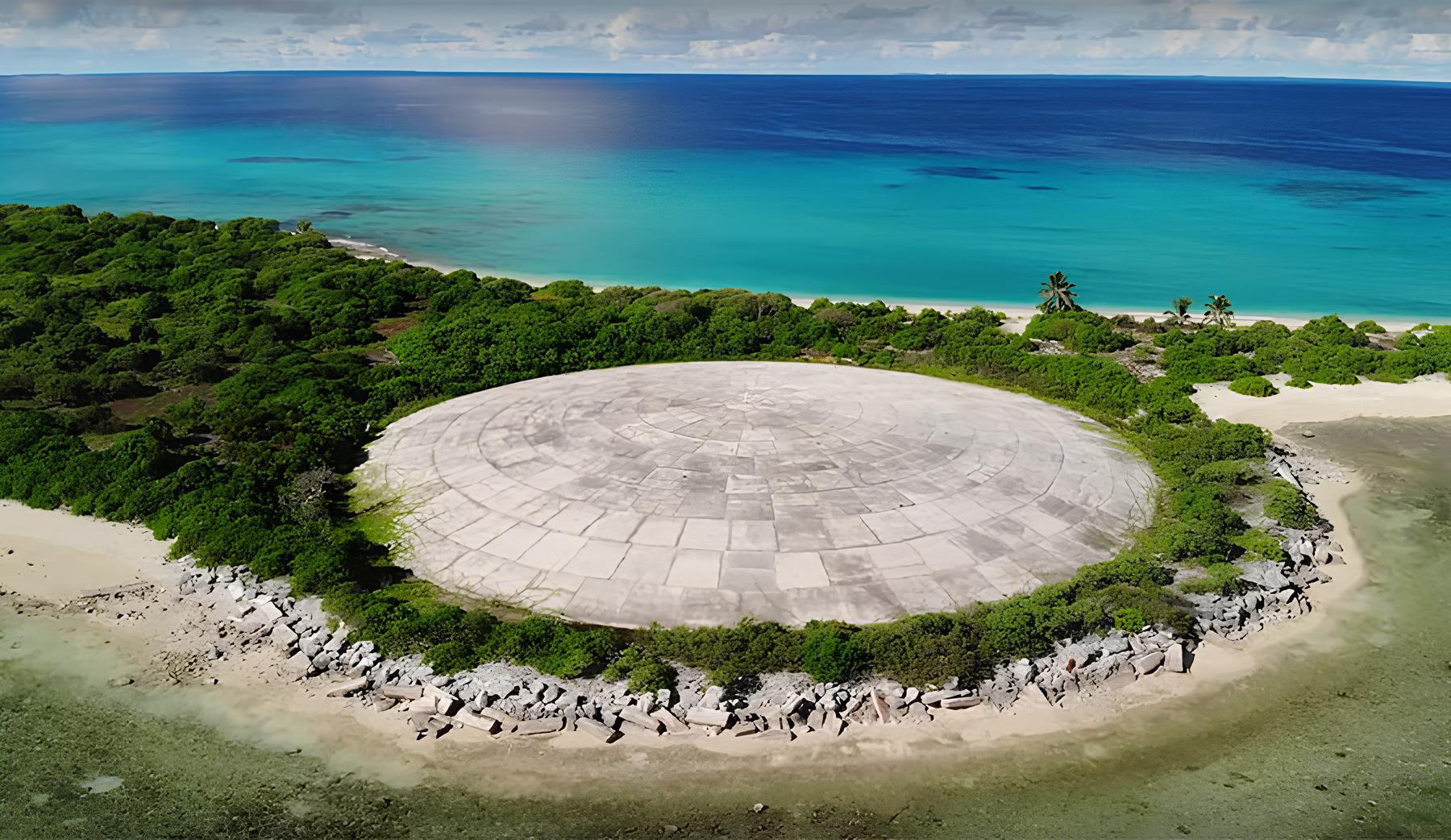


Cactus Dome Project Buried 73,000 m³ of Radioactive Waste in the Marshall Islands; Concrete Cracks, Sea Advances, and Environmental Risk Concerns Scientists.
Between the late 1940s and the 1950s, the Marshall Islands became one of the main nuclear testing fields for the United States. In the context of the Cold War, the archipelago was chosen for its remote location in the Pacific and the political control exercised by Washington over the territory after World War II. Between 1946 and 1958, the U.S. conducted 67 nuclear tests in the region, many of them with yields equivalent to hundreds of Hiroshima bombs. The result was a massive volume of soil, structures, equipment, and debris contaminated with radioactive material.
It was in this context that the Cactus Dome, also known as the Runit Dome, was born. Built between 1977 and 1980, the project had a clear goal: to isolate the radioactive waste generated by nuclear tests primarily conducted on the atolls of Enewetak and Bikini. Instead of removing the contaminated material to the mainland, the U.S. opted to bury it locally, sealing it under a concrete dome.
What Exists Inside the Cactus Dome: Impressive Numbers
The Cactus Dome houses approximately 73,000 cubic meters of chemical and radioactive waste, according to data from the U.S. Department of Energy (DOE).
-
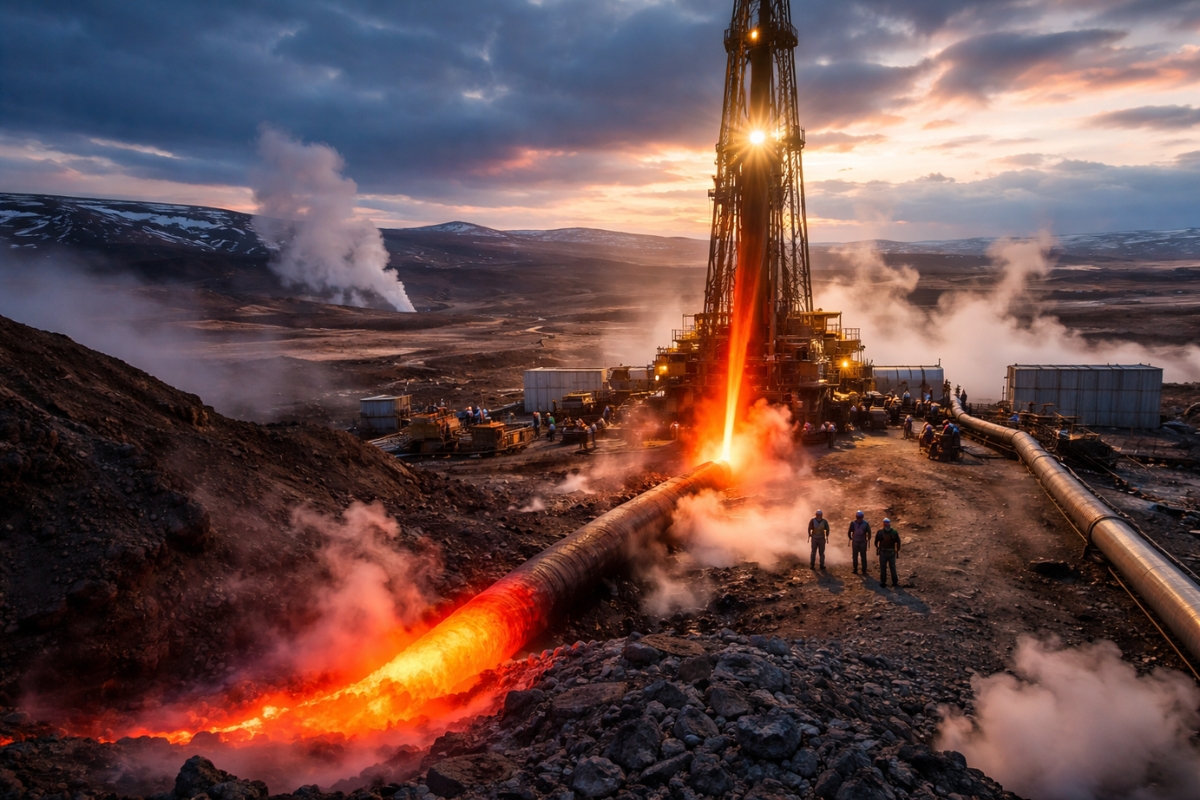
Iceland accidentally drilled into a magma pocket at 2,100 meters and revealed that the extreme heat beneath the crust could pave the way for a new source of continuous energy.
-
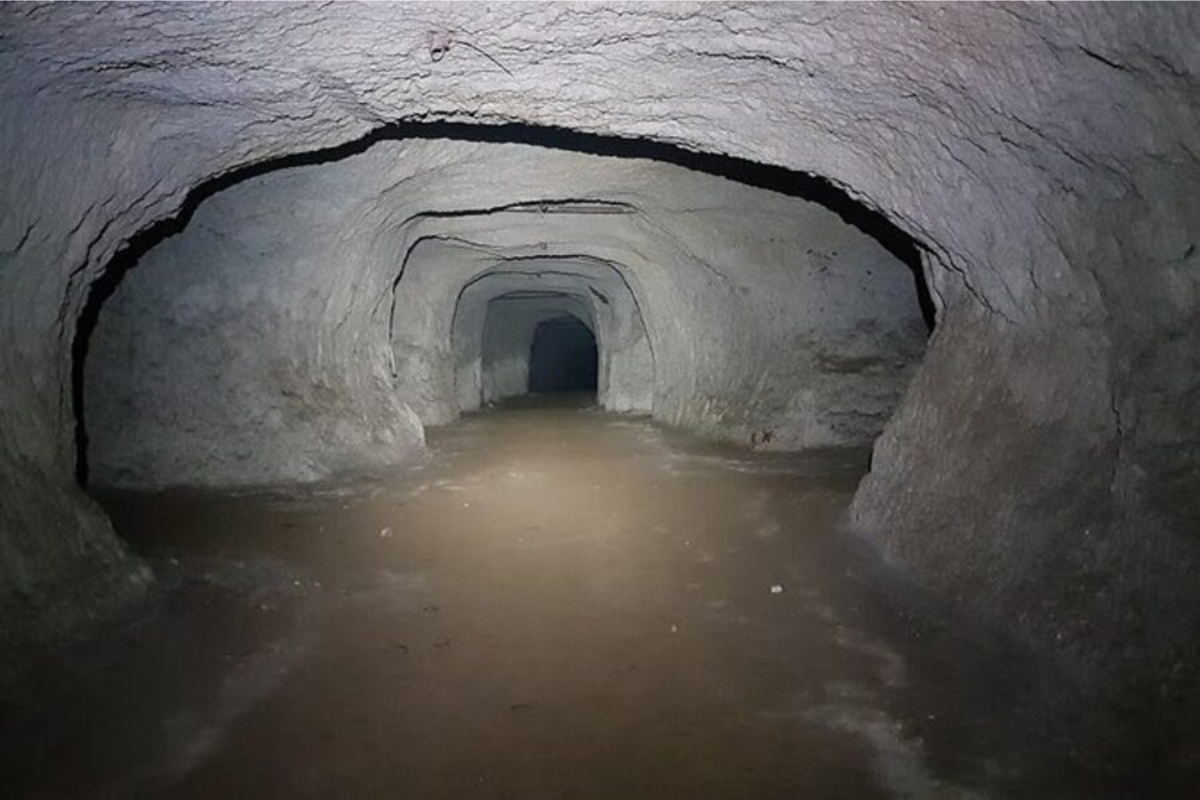
Discovery of a 15-kilometer labyrinth beneath the buildings of Rome raises alarm for collapses and reveals the largest underground network ever found in the Italian capital.
-
A rare storm phenomenon in the United States alerts meteorologists worldwide due to four different forms of water falling from the sky, which freeze immediately upon touching the ground, poles, cars, or trees.

-
He has been using a wheelchair for almost 10 years, lives alone, is independent, and decided to become a delivery driver for an app: Samuel makes up to 6 deliveries a day, covering routes of 1 km in his wheelchair and has even managed to do 2.5 km in a single run.


This volume includes soil contaminated with plutonium, cesium-137, strontium-90, fragments of concrete, metals, and structural remnants from the areas affected by nuclear explosions.

The dome has a diameter of about 115 meters and covers a crater left by a nuclear test conducted in 1958.
The concrete was placed directly over the contaminated material, without waterproofing at the base. In other words, the dome was not designed as a hermetically sealed system, but as a containment solution considered sufficient for its time.
Cracks, Infiltration, and Rising Sea Level
Decades later, what was seen as a definitive solution has come to be viewed as an increasing environmental risk. Studies conducted by researchers at Columbia University and technical analyses from the DOE itself indicate that the concrete of the Cactus Dome shows visible cracks, signs of structural wear, and infiltration of seawater.
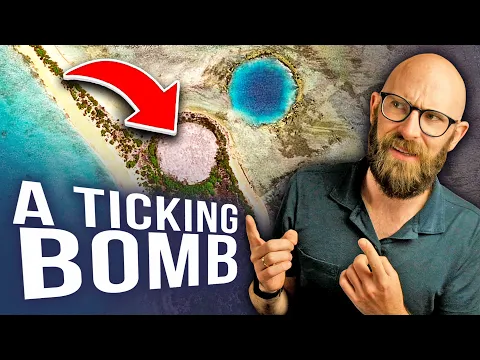
The problem is exacerbated by the rising sea level of the Pacific Ocean, one of the fastest on the planet due to climate change.
The Marshall Islands are among the most vulnerable territories to rising sea levels, with areas that barely exceed two meters in altitude. During high tide and storms, water already reaches the base of the structure, increasing the risk of internal corrosion and transport of radioactive particles into the marine environment.
Why the Risk Is Not Just Local
Although radiation levels measured outside the dome are generally considered low in the short term, scientists warn that the problem is not immediate, but cumulative and long-term.
The radioactive material stored there has half-lives ranging from decades to thousands of years. Plutonium, for example, can remain hazardous for over 24,000 years.
If the structure suffers more severe failures, contaminated particles may disperse into the ocean, affecting marine ecosystems, food chains, and human populations that depend on fishing for subsistence. The Pacific does not recognize national borders, which turns the Cactus Dome into an international environmental problem.
The Official Position of the United States and the Criticism
The U.S. government, through the DOE, acknowledges the existence of the dome and monitors its structural condition, but states that, so far, there is no evidence of significant leakage posing an immediate risk to human health.
Still, official documents admit that the Cactus Dome was not designed to last indefinitely and that there is no clear long-term plan for its replacement or structural reinforcement.
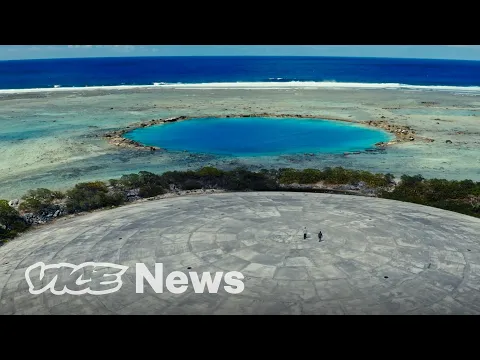
Critics point out that the choice to bury radioactive waste on a vulnerable island territory was a political, not technical, decision.
For the local population of the Marshall Islands, the dome symbolizes a legacy imposed without consent, whose environmental and social consequences fall on communities that have benefited little from the American nuclear program.
Human and Historical Impact in the Marshall Islands
In addition to the environmental risk, the Cactus Dome carries a deep historical weight. Entire communities were displaced during nuclear testing, and many residents suffered from radiation-associated diseases in the following decades. To this day, areas of the Bikini and Enewetak atolls remain uninhabitable or restricted in use.
The dome, visible from satellite images, has become a symbol of the hidden cost of the nuclear arms race. It is not just about cracking concrete, but about an environmental legacy that spans generations.
A Problem from the Past Pressing the Future
The advance of the sea, the degradation of concrete, and the long life of radioactive waste place the Cactus Dome at the center of a global dilemma: how to deal with nuclear waste produced in the 20th century on a rapidly changing planet? Scientists warn that ignoring the problem does not eliminate it — it just transfers the risk to the future.
The Cactus Dome project was envisioned as a definitive solution. Today, it exposes an uncomfortable truth: nuclear waste does not disappear with political time. They remain, pressuring structures, ecosystems, and decisions that will still have to be made.
And you, reader: Is the world prepared to face the nuclear liabilities of the last century, or is it just pushing this problem onto future generations?







El número de 73m3 está mal, eso por ejemplo entra en un espacio de 5×5 metros con una altura de 3metros.
Que lo mudan a los jardines de la casa blanca o acaso ya es la casa dorada del rey naranja.
Es imposible de arreglar ahora el problema. Igual a ninguno de los gobiernos poderosos les interesa. Ya saben que todos prueban bombas nucleares en el mar y en las islas del pacifico sobre todo y les da lo mismo si hay o no radiactividad en la zona después. Es igual para ellos porque si muere gente es considerada de tercera clase. Lo que para ellos sería gente descartable. No tienen conciencia humana mucho menos ambiental.