





 Portuguese
  English
  Spanish
  5 min of reading
  1 comment


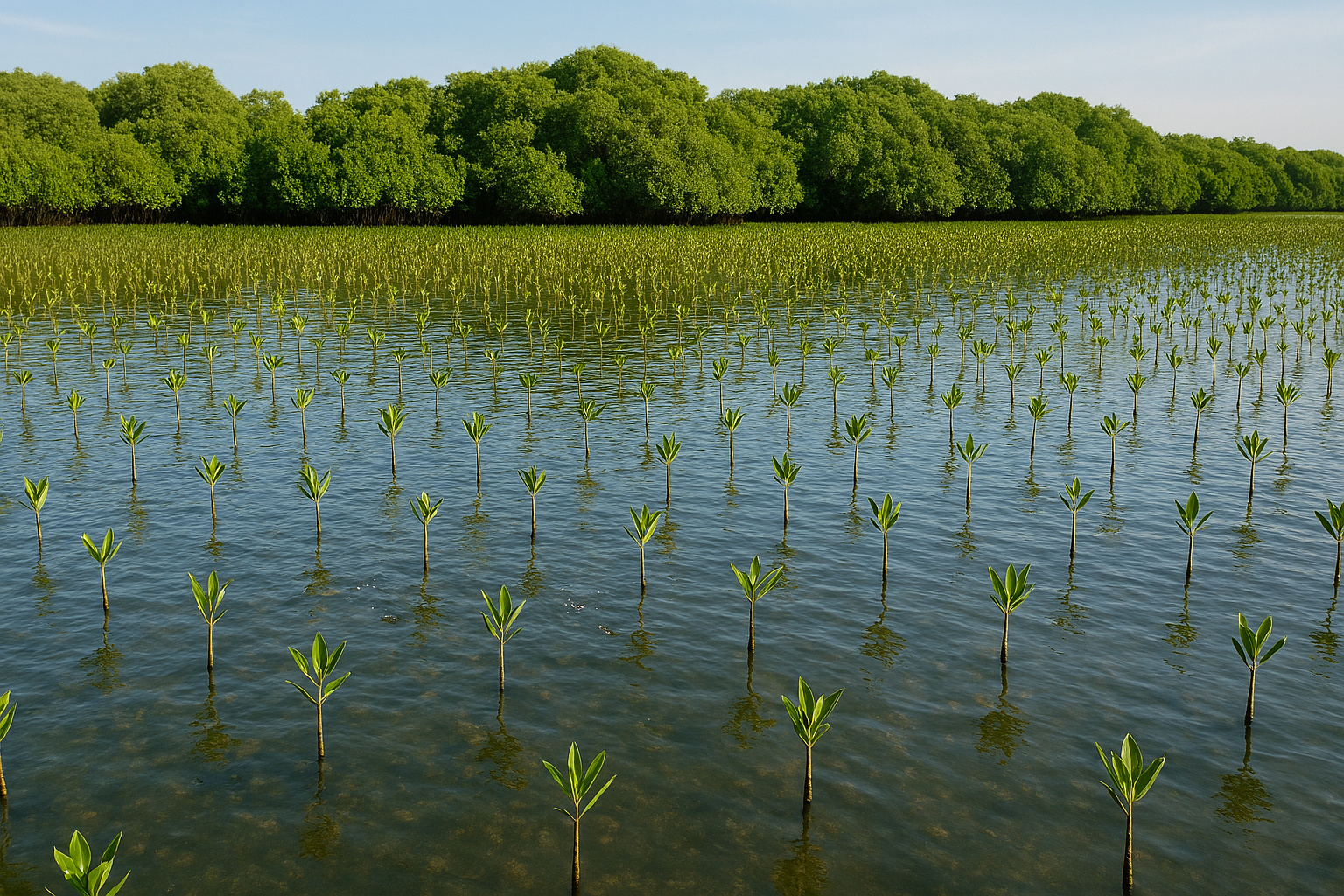


Senegal Plants 200 Million Seedlings, Restores 12 Thousand Ha of Mangroves, Boosts Fisheries and Signs Largest Recovery of This Ecosystem in Africa.
Few people imagine that a country located at the meeting point of the Sahel and the Atlantic has become a global reference in coastal recovery, but this is exactly what Senegal has achieved in the last two decades. Between 2006 and 2020, Senegalese organizations and international partners planted over 200 million mangrove seedlings, mainly of the species in the Rhizophora genus (red mangrove), in an area that now exceeds 12 thousand hectares in the deltas of Casamance and Saloum. This constitutes the largest continuous restoration of mangroves in all of Africa, with measurable ecological, economic, and social impacts documented by institutions such as FAO, UNEP, Oceanium Dakar, and IUCN.
What is impressive about this project is not only the volume of trees planted but also the technical outcome: fishing communities have reported recovery of shrimp, fish, and oysters, degraded areas have begun to stabilize with roots and sediments, and entire estuaries have stabilized against rising sea levels and erosion. At a historic moment when many countries are losing their wetlands, Senegal embraced a nature-based solution and succeeded.
An Ecosystem Threatened Between the Sahel and the Sea
The mangrove formations in Senegal are concentrated in two key regions:
-
With a cost per shot close to zero, the DragonFire laser could change naval warfare in 2027 and provide British ships with nearly unlimited defense against drones.

-
A British startup creates tires that generate electricity in electric vehicles when passing over potholes, speed bumps, and cracks.

-
Scientists have created robots made with living cells that have their own nervous system, swim on their own, explore the environment, and self-organize without any genetic engineering, and now they want to do the same with human cells.

-
Students create a solar-powered ambulance that operates without a plug, without fuel, and still keeps medical equipment running in remote areas.


- Saloum Delta, declared a UNESCO Biosphere Reserve and a World Heritage Site,
- Casamance, in the southern part of the country, close to the border with Guinea-Bissau.
Mangroves are ecosystems at the interface between rivers, the sea, and coastal forests, extremely sensitive to environmental changes. Before the restoration, Senegal faced three major problems:
- Excessive logging, used as fuel and for smoking fish.
- Sea level rise and salinization, which killed seedlings and reduced fertile areas.
- Decline in fish stocks, affecting the income of entire communities.
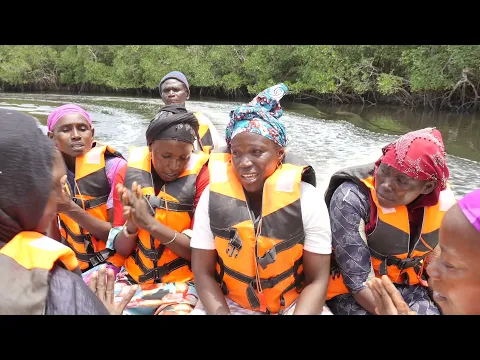

The loss of mangroves means losing natural nurseries for marine species, as more than 70% of commercially exploited fish, crustaceans, and mollusks in the Eastern Atlantic pass through mangroves at some stage of their life cycle.
At the same time, stored mangroves reduce wave speed, trap sediments, and filter nutrients, ecosystem services that traditional engineering has to pay dearly to replicate.
The Strategy That Became a Reference: Planting with the Community
Senegal adopted a dual approach:
- Ecological engineering, based on planting native propagules,
- Social mobilization, involving fishermen, women extractivists, and youth.
The most emblematic project was conducted by the NGO Oceanium Dakar, with support from Senegalese agencies, universities, fishermen, and international organizations. According to reports by the organization itself, annual campaigns mobilized tens of thousands of people, many of whom were female fishermen and shellfish gatherers directly affected by the collapse of the fauna.
The seedlings were planted in areas:
- flooded,
- protected from strong waves,
- with controlled salinity,
- near tidal channels.
The goal was to maximize survival rates, which exceeded 80% in some campaigns, according to data published in technical reports and cited in industry conferences.
In addition to planting, the project provided training in management, monitoring, and sustainable use, generating jobs and transfer of environmental knowledge.
Ecological Results: When Nature Responds
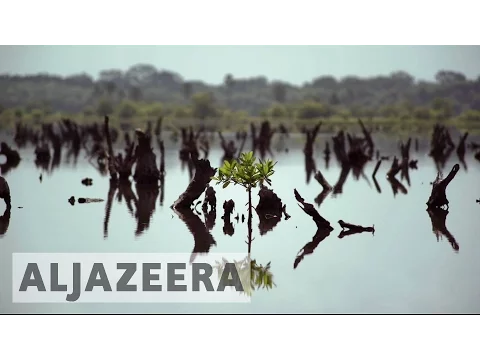
Mangroves grow slowly, but their effects are quick in the soil and water column. After just a few years of planting, researchers began to observe:
- Return of shrimp, which use roots as refuge;
- Increase in juvenile fish, which grow protected in shallow waters;
- Expansion of oysters and shellfish, which colonize roots and trunks;
- Greater deposition of sediments, stabilizing margins;
- Reduction of coastal erosion, especially in tidal areas;
- Improvement in water quality, due to natural filtering.
For communities that depend on fishing, this translates into real income. Data published by local organizations indicate that, in some villages in Casamance, the catch of shrimp and fish has grown noticeably, allowing for more working days and even the export of oysters.
It is worth noting an important technical detail: mangroves function as nurseries, not as factories for adult fish. That is, their ecological function is to ensure the reproduction and survival of juveniles, a key point to restore overfished stocks.
Blue Carbon: Senegal Joined the Global Climate Map
Another unexpected impact — and highly valued today — is the so-called blue carbon, the carbon sequestration carried out by marine and coastal ecosystems.
Mangroves excel in this regard: they store up to four times more carbon per hectare than many tropical forests, especially in anoxic soil, where decomposition is slow.
By restoring 12 thousand hectares, Senegal has become a real case of how nature-based solutions (NbS) can contribute to climate goals. Not by chance, the country has been cited in reports by FAO and UNEP as an example of climate adaptation, especially in coastal areas vulnerable to rising sea levels.
In times of climate negotiations and carbon markets, Senegal positions itself as a concrete case of ecological economy, with an environmental asset difficult to replicate artificially.
Social Benefits: When Restoration Becomes Public Policy
Unlike many environmental projects that are restricted to the ecosystem, the Senegalese restoration has transformed into socio-environmental policy. Women extractivists played a central role, especially in collecting and processing oysters and shellfish, activities traditionally carried out by women in the region.
Parallel programs helped to:
- Organize cooperatives,
- Create sustainable harvesting cycles,
- Improve food security,
- Generate export of local products,
- Expand environmental education.
In some communities, restored mangroves have also begun to provide honey, medicinal plants, and raw materials for handicrafts, creating new income streams.
Technology and Monitoring: Science to Stay on Track
The restoration did not end with planting. Senegalese and foreign universities, along with local agencies, use:
- Satellite imagery,
- Remote sensing,
- Sediment monitoring,
- Salinity lab tests,
- Hydrodynamic modeling,
- Fishing surveys.
The goal is to monitor:
- Seedling survival rates,
- Root expansion,
- Sediment retention,
- Fishing usage,
- Carbon sequestration,
- Interaction with communities.
With this framework, Senegal has been able to provide solid data for scientists, managers, and environmental investors.
Final Reflection: When the Future Does Not Depend on Machines, But on Roots
The case of Senegal contradicts a common notion: that recovering coastal areas is costly and requires concrete structures, such as dikes, walls, and breakwaters. Instead, entire communities relied on roots, sediments, tides, and patience.
Mangroves are not just trees; they are natural infrastructures capable of:
- Protecting cities,
- Producing food,
- Fixing carbon,
- Stabilizing margins,
- Purifying water,
- Sustaining local economies.
And all this without relying on sophisticated technology or expensive inputs.
The question that arises is simple: if Senegal, with limited resources and strong environmental pressures, was able to restore 12 thousand hectares of such a sensitive ecosystem, what is stopping dozens of other coastal countries from mimicking this example?
Perhaps the answer lies less in concrete engineering and more in the engineering of nature itself — a living technology that has been ready for millions of years, just waiting for someone to see its value.







Isto e maravilhoso!