





 Portuguese
  English
  Spanish
  6 min of reading
  0 comments


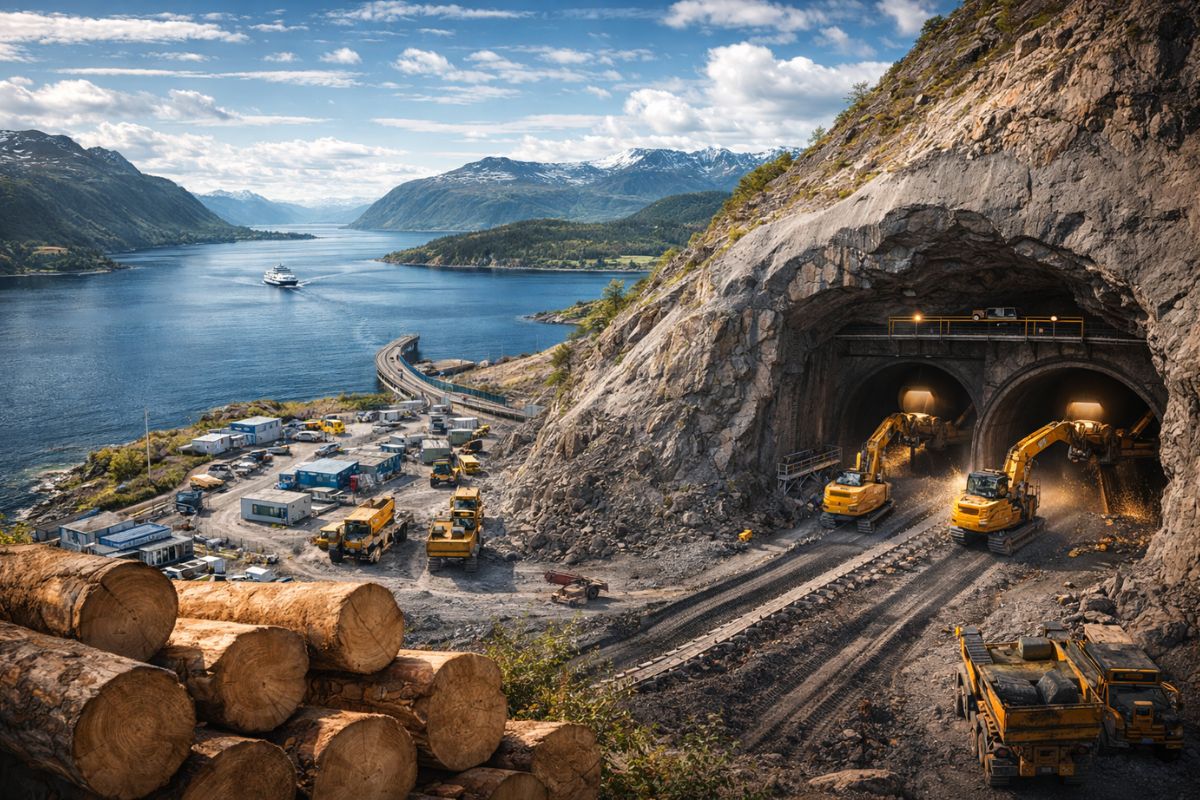
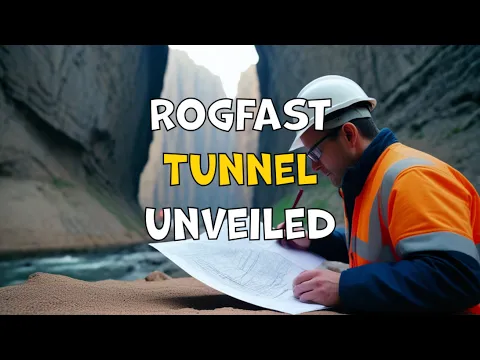
In Norway, The Greatest Work Of The Century, The 27 Km Rogfast Tunnel, Is An Underwater Road Tunnel Designed With Metric Control And Total Focus On Safety.
In Norway, the greatest work of the century is not just a new road, but an extreme engineering laboratory: the Rogfast, a 27 km tunnel excavated about 400 meters below sea level, under the Boknafjord. The structure will be an underwater road tunnel in two parallel galleries, designed to operate for decades under high water pressure, with stringent safety, ventilation, and evacuation controls.
With a budget of around 25 billion Norwegian crowns, approximately US$ 12.48 billion according to official project estimates, the greatest work of the century is part of Highway E39 and is expected to reduce the travel time between regions currently connected by ferries by about 40 minutes. However, before any surface benefit, the great challenge is to make this 27 km tunnel operate, day and night, in an environment that is naturally hostile to human presence.
How To Protect Those Traveling Through A 27 Km Tunnel At 400 Meters Deep
In a project like Rogfast, the first question is not “how much shorter will the trip be,” but how to keep people safe throughout the 27 km journey. Therefore, the greatest work of the century has been designed from the beginning with redundancy.
-
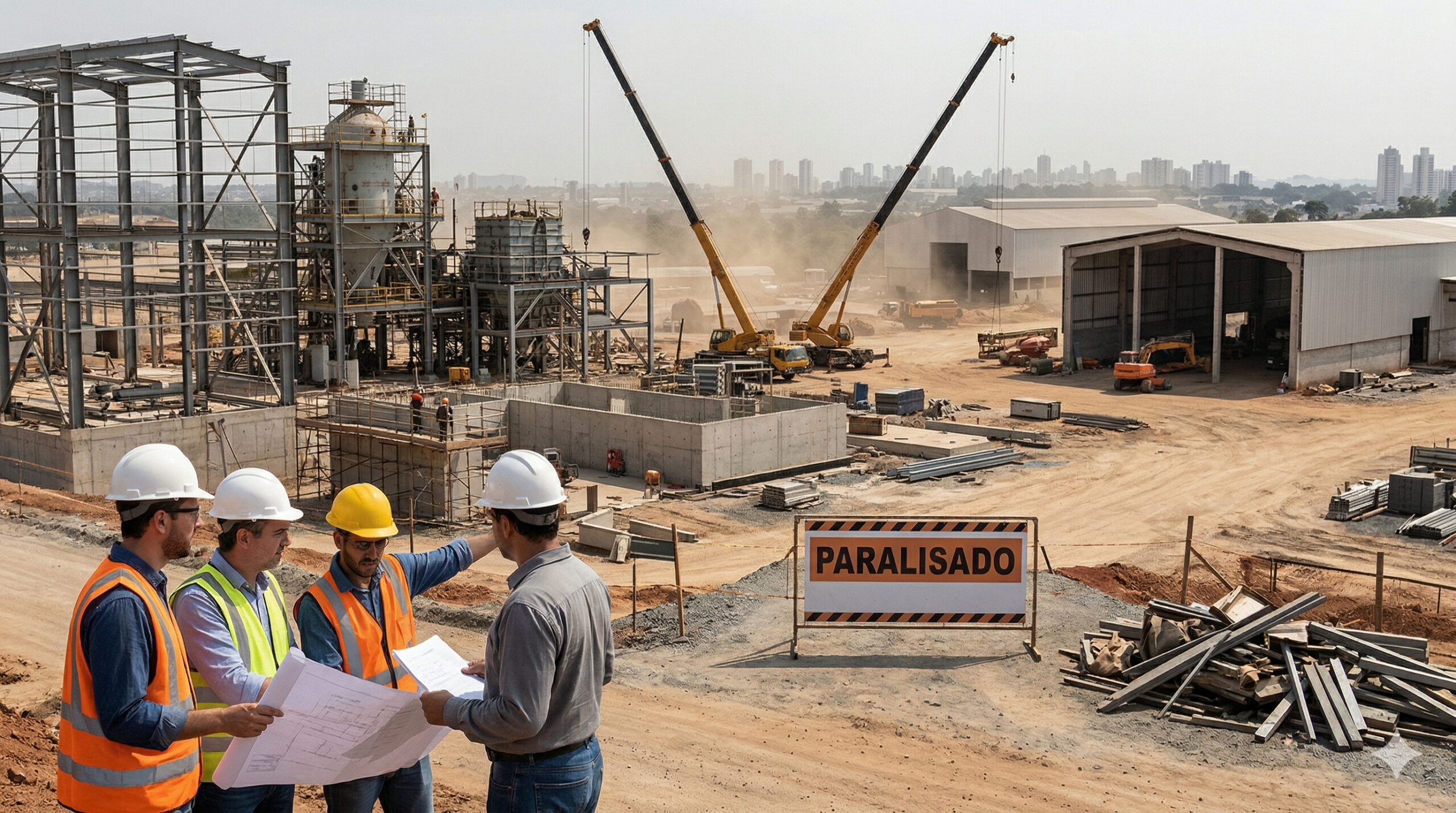
The lack of welders, electricians, and operators becomes a structural threat in 2025, with the construction industry and manufacturing already suffering from delays, cost pressures, and labor shortages in Brazil.
-
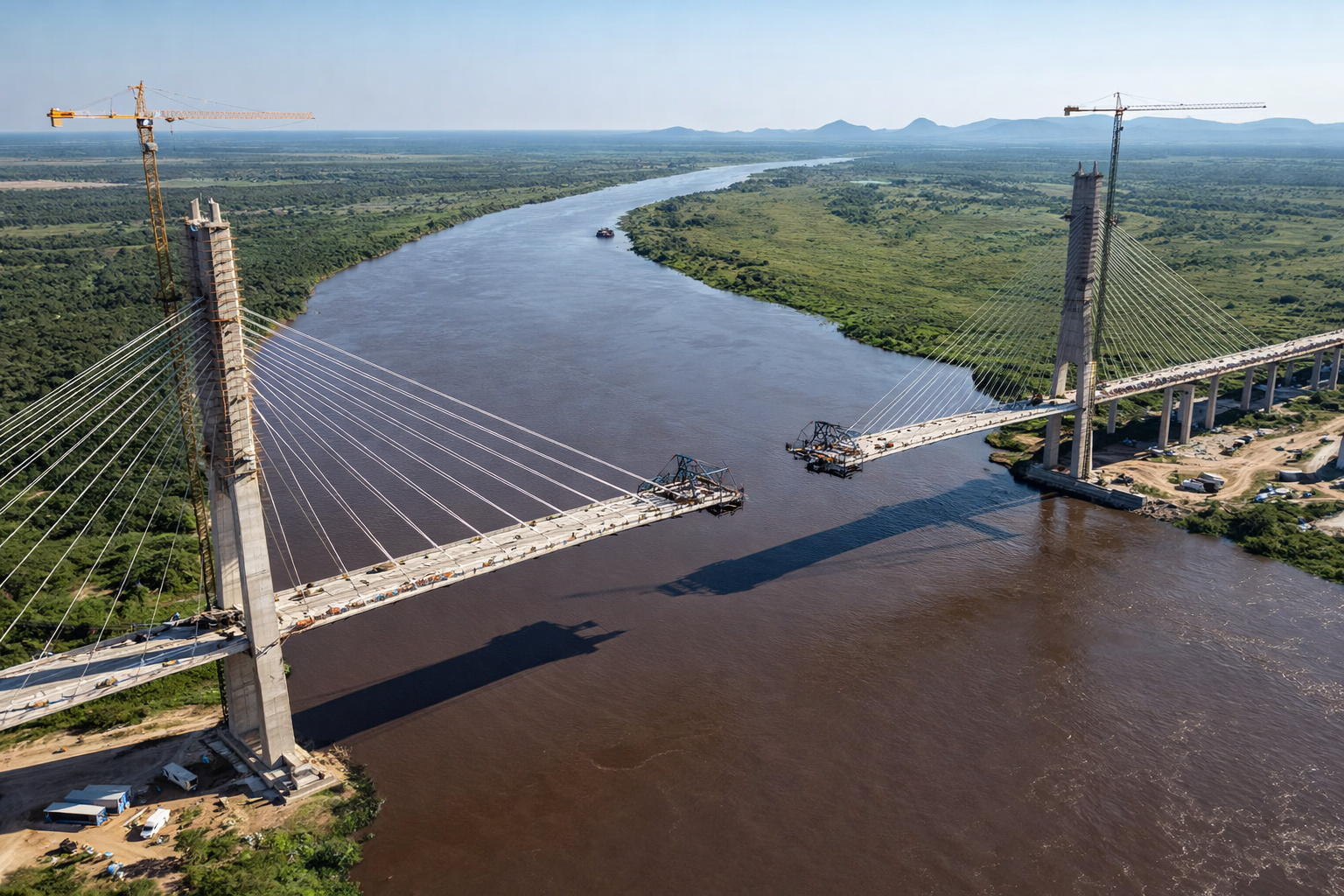
Brazil and Paraguay are just 46 meters away from a historic union on the bioceanic bridge that promises to revolutionize trade between the Atlantic and the Pacific.
-
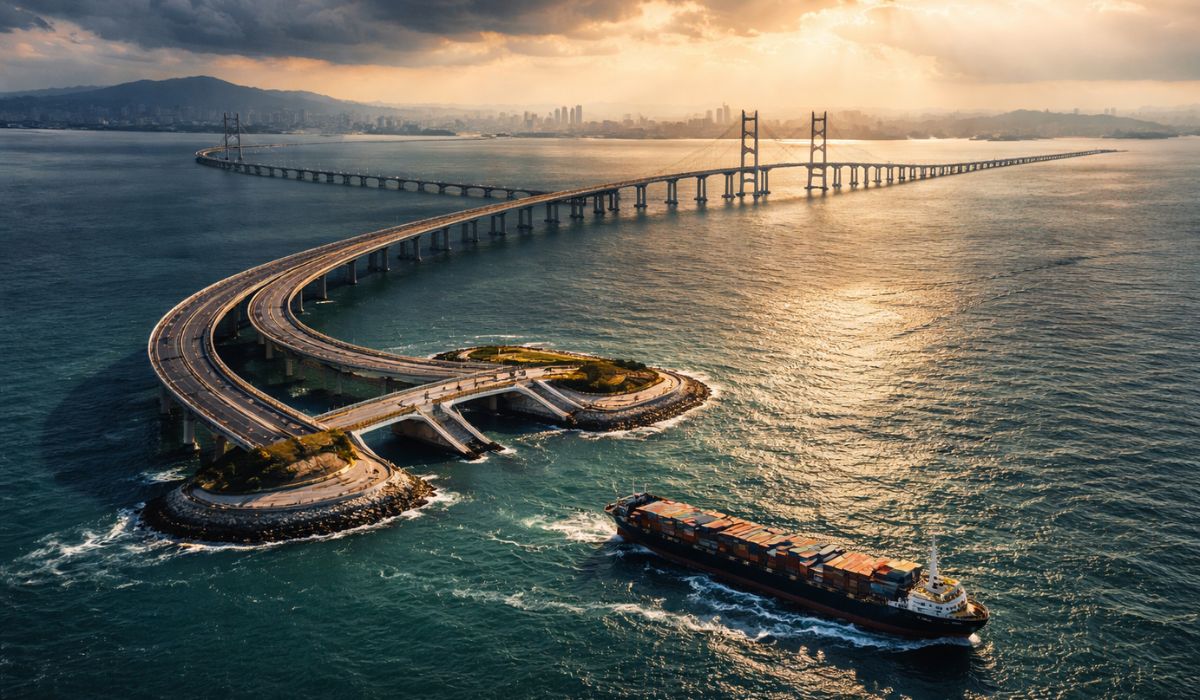
With 55 km over the sea, a cost of US$ 20 billion, and enough steel to build 60 Eiffel Towers, China’s largest project has connected Hong Kong, Zhuhai, and Macau in a colossal bridge that defies the logic of engineering.
-
A trick with joint compound transforms a Styrofoam ceiling into a plaster-like ceiling: leveled panels, wires and mesh at the joints, sand, paint, and change the environment while spending little today.


The Rogfast will have two parallel tunnels, each with two traffic lanes. This configuration allows separating travel directions and creating a “twin gallery” that serves as an escape route.
Cross passages spaced about 250 meters connect the two galleries, ensuring that any point along the route is relatively close to a lateral emergency exit.
In the event of a fire, accident, or blockage, the protocol is clear: users abandon their vehicles and walk to the nearest cross passage, accessing the neighboring tunnel, which becomes a refuge area and evacuation route.
The entire internal circulation logic was designed so that the escape route never depends on a single distant point, reducing exposure times in critical situations.
Excavation And Micrometric Alignment In An Underwater Road Tunnel

Building a 27 km tunnel from just one end would make the work slow and inefficient. In Rogfast, excavation occurs simultaneously from different working fronts, which need to meet inside the rock with a maximum deviation of a few centimeters.
To achieve this, the greatest work of the century relies on a combination of classical topography and high-precision technology. Laser scanners record millions of points of each advance of the excavated rock, creating a digital model very close to what is being physically opened.
This “digital twin” is constantly compared to the project layout, allowing corrections to be made before the error becomes too large.
The geometric reference is not only horizontal. Inclines, elevations, and curvature radii are monitored to keep ramps within comfort and safety limits, ensuring proper water drainage and visibility compatible with the expected speeds.
In an underwater road tunnel of this size, geometry ceases to be just a drawing and becomes a daily operational requirement.
Infiltrations, Water Pressure, And Cement Injection Sealing
Excavating at great depths means dealing with very high water pressure on the rock. In sections below 300 meters, natural fissures in the massif behave like preferred channels for leaks.
In Rogfast, infiltrations are not treated as exceptions, but as an expected part of geological behavior.
To control this phenomenon, the greatest work of the century uses cement injection in a grid of holes around the excavation front. The procedure, in simplified terms, works like this:
- holes are drilled around the contour of the tunnel
- a mixture of water and cement is pumped under pressure
- the paste penetrates into microcracks and fractures, reducing permeability
This process can be repeated multiple times in the same section. Permeability tests and continuous flow measurements indicate when the rock still allows excessive water ingress, requiring new rounds of injection.
The goal is not to completely eliminate the presence of water, but to reduce it to volumes that can be collected and directed by drainage systems without compromising the stability or operation of the 27 km tunnel.
Ventilation And Smoke Control At Great Depths
In a tunnel under the sea with dozens of kilometers, ventilation is a central part of the project. The circulation of vehicles generates heat, gases, and particles that need to be continuously removed.
Additionally, the system must be prepared to switch modes quickly in case of fire.
In Rogfast, the greatest work of the century combines longitudinal flow along the galleries with shafts rising to the island of Kvitsøy, in the central region of the project.
In normal operation, fans keep the air moving in a planned direction, diluting pollutants and renewing the environment. Air quality sensors monitor gas concentrations and trigger adjustments when necessary.
In emergencies, the logic changes. The ventilation redirects smoke to a specific section of the tunnel, creating a visibility gradient that allows users to move away from the affected area.
The shafts reaching the surface act as outlets for hot air and combustion products, helping to reduce the temperature and smoke density in the area where people are located.
Escape Routes, Subterranean Roundabout, And Internal Circulation Logic

In addition to the cross passages between the two galleries, Rogfast incorporates a rare solution in road tunnels: a double subterranean roundabout at about 260 meters deep, which connects the main highway to the island of Kvitsøy.
The choice of a roundabout, rather than a simple T-intersection, has technical reasons:
- distributing flows between the E39 and local access without creating excessive conflict points
- avoiding very abrupt changes in incline and decline in a reduced space
- organizing traffic in an environment where maneuvering options are naturally limited
This subterranean intersection also aligns with safety logic. By clearly structuring the available paths, engineering reduces the chance of unexpected stops or risky maneuvers in a sensitive section of the 27 km tunnel, which aids both daily operation and evacuation scenarios.
Monitoring, Continuous Operation, And The Role Of E39 In The Greatest Work Of The Century
Once excavation is complete, a phase as important as construction begins: operation. The greatest work of the century will be managed by an integrated system of cameras, sensors, radars, and control centers, prepared to identify any relevant anomalies within seconds.
Among the events monitored are stopped vehicles, queue formation, speed variations, smoke presence, ventilation failures, and unexpected changes in drainage parameters.
When any of these signals are detected, the control center can close accesses, change signage, adjust fans, and dispatch emergency teams, coordinating the response centrally.
In the context of Highway E39, Rogfast will reduce travel time by about 40 minutes between regions currently connected by ferries, according to official projections.
However, for engineering, this figure is a consequence, not a starting point. What makes Rogfast emblematic is the ability to maintain such a long underwater road tunnel in stable operation, at extreme depth, throughout its lifespan.
When looking at this greatest work of the century, the question that lingers is less about statistics and more about perception: knowing how the engineering and safety behind this 27 km tunnel under the sea in Norway work, would you feel comfortable driving through it or still hesitate to face so many kilometers in a completely underground environment?








-

-

-

-

13 pessoas reagiram a isso.