





 Portuguese
  English
  Spanish
  4 min of reading
  0 comments


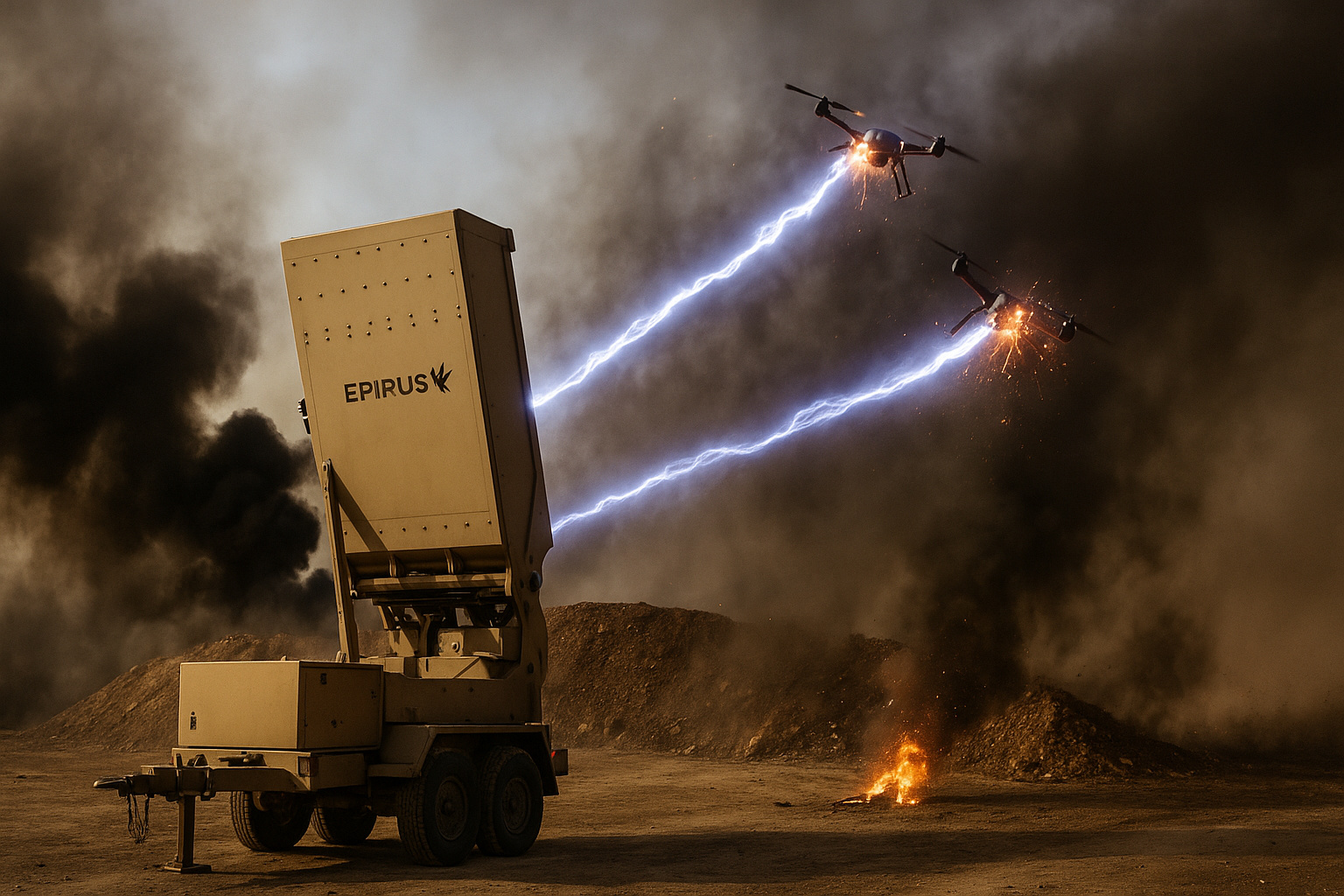
System Developed by Epirus Shows How Future Battlefields Will Be Dominated by Electromagnetic Waves Capable of Neutralizing Swarms of Drones Without Using Traditional Munitions.
Modern warfare is changing rapidly, and drones have become central figures in major armed conflicts around the planet. The massive use of these devices was evidenced in the wars between Russia and Ukraine and in the attacks between Israel and Hamas, where kamikaze, spy, and armed drones demonstrated their efficiency against high-value targets, such as tanks, anti-aircraft systems, ships, and even modern fighter jets.
In light of this scenario, various countries are investing in the creation of autonomous fleets of attack and surveillance drones. However, the growing threat of these aerial swarms has forced the development of innovative defense technologies that dispense with conventional armaments. This is where the new electromagnetic weapon developed by Epirus comes in.
Leonidas Electromagnetic Weapon: The Silent Revolution in Aerial Combat
In recent tests conducted at Camp Atterbury, Indiana (USA), Epirus revealed to the world the Leonidas, a portable defense platform that uses high-power electromagnetic interference to take down drones in seconds without firing a single projectile.
-
China creates hypersonic engine that can make planes and missiles fly more than 6 times the speed of sound with less weight, more range, and without system change.

-
Mysterious object on Mars divides NASA and Harvard after Curiosity image reignites suspicions about what was really found on the planet.

-
Giant structures 14 meters beneath Egypt are revealed by satellites and expose a millennia-old secret buried in Buto.

-
Children have been making clay pieces for 15,000 years in Southwest Asia, and fingerprints preserved on 142 ornaments helped archaeologists prove this.


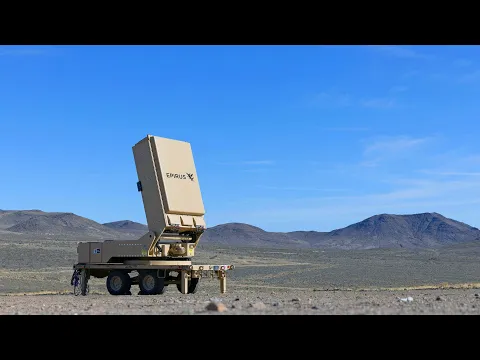

During the demonstration, the system was able to neutralize 49 drones simultaneously, using only directed electromagnetic pulses — a true revolution in electronic warfare. These pulses disrupt the circuits and navigation systems of the drones, causing them to fall from the sky like flies, without explosions or collateral damage.
How Leonidas Works: The New American Electromagnetic Weapon
The Leonidas operates like a “directed energy tower,” emitting HPM (High-Power Microwave) pulses that saturate the electronic circuits of flying devices. This means the weapon does not need to know where each drone is; it simply needs to direct energy to an area, and all targets within that operational zone are neutralized.
The system can be mounted on vehicles, used in fixed bases, or even in strategic civilian locations, such as stadiums, ports, power plants, airports, and urban centers, where the risk of drone attacks increases every year.
Cyber Defense and the Future of Invisible Wars
Founded in 2018, Epirus has already worked with the Army, Navy, and Marine Corps of the United States, providing state-of-the-art electronic warfare systems. The company has participated in operations in the Middle East and the Philippines, where drone challenges are common.
Now, with the new Leonidas electromagnetic weapon, the company aims to position the US as a global leader in what is called cyber warfare, where combat is not fought with bullets, but with bits, pulses, and invisible waves.
According to CEO Andy Lowery, this technology will be indispensable in protecting sensitive environments and critical infrastructure. He even met with Department of Homeland Security officials, such as Kristi Noem, suggesting that the White House may adopt the Leonidas system for its nearby defense.
Million-Dollar Investments and Future Projects
To expand its defense capabilities, Epirus announced new multi-million dollar investments in the development of even more precise and powerful technologies. The company aims to create mobile systems capable of identifying and attacking threats autonomously, with the integration of artificial intelligence and real-time responses.
With the growing adoption of drones in tactical attacks, the demand for defensive solutions based on directed energy is high. The Leonidas electromagnetic weapon stands out for being scalable, portable, and ideal for scenarios where minimizing collateral damage is crucial.
Comparison: Drones vs Electromagnetic Weapons
| Technology | Attack Drones | Leonidas (Electromagnetic Weapon) |
|---|---|---|
| Unit Cost | Ranges from US$ 1,000 to US$ 50,000 | Complete system estimated in millions of dollars |
| Mode of Attack | Explosives, Surveillance, Sabotage | Quiet electromagnetic pulses |
| Range | From 2 to 40 km, depending on the model | Varies with configuration, can cover entire regions |
| Precision | Guided by GPS and cameras | Wide, affects multiple targets at once |
| Collateral Risk | High (explosives and falling debris) | Low (interruption without physical impact) |
| Defense Against | Interference, lasers, missiles | Electronic systems, AI, and heat-seeking missiles |
A Warning to the World: Swarms Are the New Threat
The demonstration of the Leonidas electromagnetic weapon signals the beginning of a new era in modern military defenses. In a world where drones fly in coordinated swarms capable of overwhelming traditional systems, the ability to take down dozens or even hundreds of devices with a single energy pulse may become vital.
The arms race in the electronic warfare sector is just beginning — and countries like the US, China, Russia, Iran, and Israel are already investing in similar weapons.








-

-

-

-

4 pessoas reagiram a isso.