





 English
  Francês
  Alemão
  Italiano
  Japonês
  Norueguês
  Portuguese
  Spanish
  4 min of reading


The New Battery Can Store Electricity for Hours, Is Pressure and Shock Resistant, Supports Thousands of Charge and Discharge Cycles, and Years of Storage
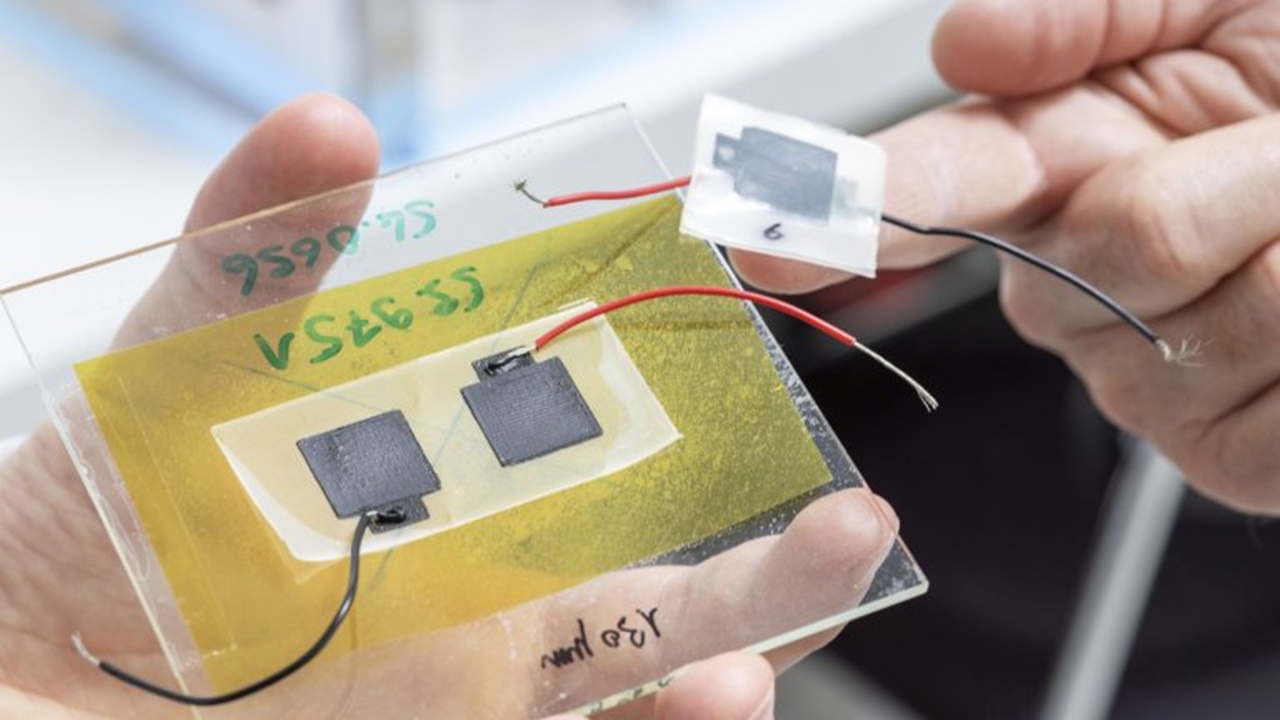
The number of microdevices for data transmission, for example, in packaging and transport logistics, will increase drastically in the coming years. All these devices need power, but the amount of batteries would have a significant impact on the environment. Researchers from Empa developed a biodegradable mini-capacitor that can solve the problem. It is made of carbon, cellulose, glycerin, and table salt, and works reliably.
Read Also
- Scientists Develop Transparent Electrode That Can Turn Windows into Solar Panels and Discovery Promises to Revolutionize Renewable Energy Generation Worldwide
- The First Global Concept for Cement-Based Rechargeable Batteries Emerges and Promises to Revolutionize Renewable Energy Generation in the Construction Industry
- Robot That Plants and Weeds Promises to Revolutionize the World of Renewable Energy in Agriculture
- The Most Powerful Tidal Turbine in the World Is Ready and Will Revolutionize the World of Renewable Energy
- Giant Offshore Turbines Will Reduce the Price of Wind Energy, Allowing Wind to Play a Greater Role in Renewable Energy Worldwide
- General Electric Presents Gigantic Floating Turbine That Promises to Revolutionize Wind Energy Implementation Worldwide
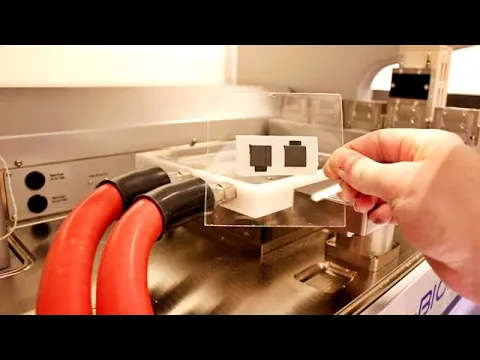
The manufacturing device for the battery revolution looks quite discreet: it is a commercially available modified 3D printer, located in a lab building at Empa. But the real innovation is in the recipe for the gelatinous inks, as this printer can dispense onto a surface.
The mixture in question is composed of cellulose nanofibers and cellulose nanocrystals, along with carbon in the form of soot, graphite, and activated carbon. To liquefy all of this, the researchers use glycerin, water, and two different types of alcohol. Additionally, they add a pinch of table salt for ionic conductivity.
-
‘Interlocking brick’ made of earth arrives in the construction industry with cost reductions of up to 40% on the project.
-
Espírito Santo will receive the largest engineering project in its history with the duplication of BR 262, which will have 50 viaducts, 28 bridges, and 2-kilometer tunnels cutting through the most challenging mountainous region of the entire state.

-
A project of nearly 9 million reais already has the first kilometer paved in Santa Catarina and promises to completely transform the access between Jaraguá do Sul and Rio dos Cedros in an area where tourism is growing at a rapid pace.

-
A couple builds a system to bring water from the spring to their land, climbs a hill with materials on their backs, and creates a simple, cheap, and sustainable solution to ensure their own water supply.



A Four-Layer Sandwich Made of Cellulose, Carbon, and Table Salt
To construct a functional supercapacitor from these ingredients, four layers are required, all flowing out of the 3D printer one after another: a flexible substrate, a conductive layer, the electrode, and finally, the electrolyte. The whole thing is then folded like a sandwich, with the electrolyte in the center.
What emerges is an ecological miracle. The lab’s mini-capacitor can store electricity for hours and can already power a small digital clock. It can withstand thousands of charge and discharge cycles and years of storage, even at freezing temperatures, and is resistant to pressure and shock.
Biodegradable Power Source
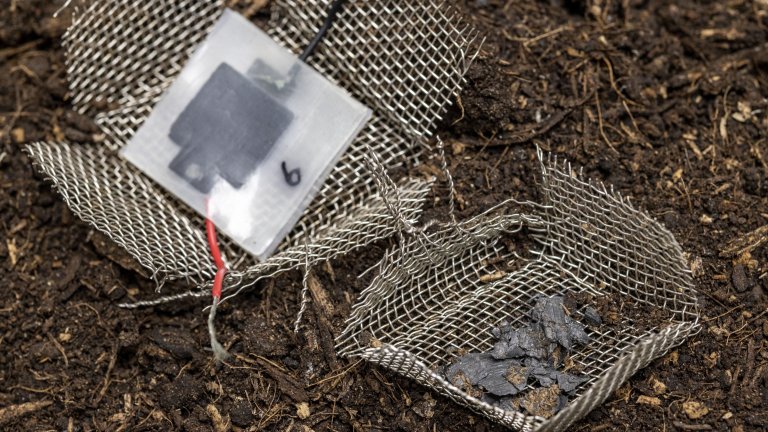
Best of all, when you no longer need it, you can throw it in the compost or simply leave it in nature. After two months, the capacitor will have disintegrated, leaving only a few visible carbon particles. The researchers have also already tried this.
“It seems very simple, but it was not at all”, says Xavier Aeby from the Empa Cellulose and Wood Materials Lab. It required a long series of tests until all parameters were correct, until all components flowed reliably from the printer and the capacitor worked. Aeby says, “As researchers, we don’t just want to play; we also want to understand what is happening within our materials.”
Together with his supervisor, Gustav Nyström, Aeby developed and implemented the concept of a biodegradable electricity storage device. Aeby studied microsystems engineering at EPFL and came to Empa for his PhD. Nyström and his team have been investigating functional gels based on nanocellulose for some time now.
The material is not only a renewable and environmentally friendly raw material, but its internal chemistry makes it extremely versatile. “The design of a biodegradable electricity storage system has been close to my heart for a long time,” says Nyström. “We requested internal funding from Empa with our project Printed Paper Batteries and managed to start our activities with this funding. Now we have reached our first goal.”
The Use of the Supercapacitor Made of Cellulose, Carbon, and Table Salt in the Internet of Things
The supercapacitor, made of cellulose, carbon, and table salt, could soon become a key component for the Internet of Things, hope Nyström and Aeby. “In the future, these capacitors could be briefly charged using an electromagnetic field, for example, so they could provide power to a sensor or microtransmitter for hours.”
This could be used, for example, to monitor the contents of individual packages during transport. Energy sensors in environmental monitoring or agriculture are also conceivable – there is no need to collect these batteries again, as they can be left in nature to degrade.
The number of electronic microdevices will also increase, due to the much more widespread use of near-patient laboratory diagnostics (“point-of-care testing”), which is currently growing. Small testing devices for bedside use or self-testing devices for diabetics are among them. “A disposable cellulose capacitor could also be suitable for these applications,” says Gustav Nyström.
Scientific Contact:
Xavier Aeby. Cellulose & Wood Materials. Phone +41 58 765 61 34 . xavier.aeby@empa.ch
Dr. Gustav Nyström. Cellulose and Wood Materials. Phone +41 58 765 45 83. gustav.nystroem@empa.ch
Editor / Media Contact: Rainer Klose Communications. Phone +41 58 765 47 33. Redaktion@empa.ch
Aeby, X., et al. (2021) Fully 3D Printed Disposable Paper Supercapacitors. Advanced Materials. doi.org/10.1002/adma.202101328.
Source: https://www.empa.ch/







Seja o primeiro a reagir!