Portuguese
  Spanish


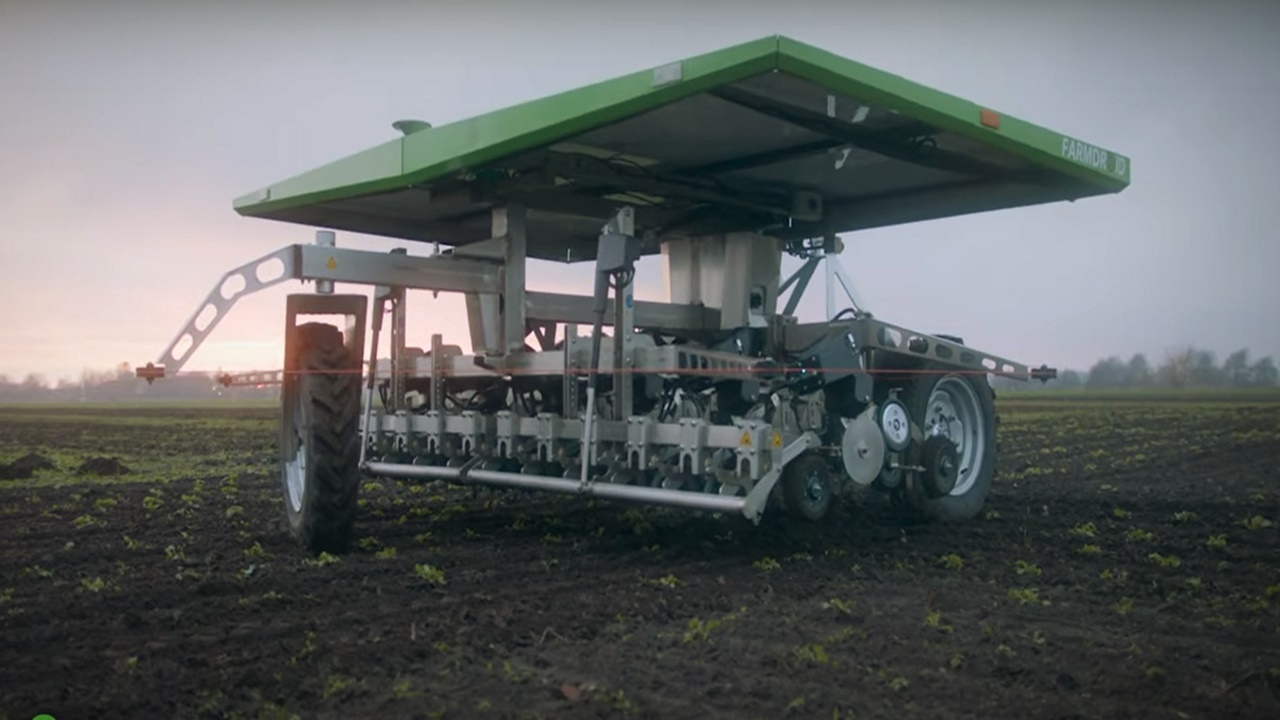

Renewable Energy: Solar-Powered Weeding Robot Has Capacity to Work 24H Without Recharging. Currently, There Are Over 50 of Them Spread Across Europe
Currently, the world is trying to drastically reduce the emission of polluting gases. Aiming to revolutionize the world of renewable energy in agriculture, many scientific projects are being developed to reduce the size of machines, extend the level of automation, and, no less importantly, utilize solar energy to harm the environment less and less. To this end, a solar-powered robot that plants and weeds has been developed, capable of cutting weeds with precision and carefully tilling the soil between rows of delicate plants.
Read Also
- New Portable Wind Turbine Generates Energy Anywhere, and Can Operate Together with Solar Panels
- Giant Offshore Turbines Will Lower the Price of Wind Energy, Allowing Wind to Play a Greater Role in Renewable Energy Worldwide
- Portable Bladeless Wind Turbine for Urban Spaces Could Revolutionize Renewable Energy Generation Worldwide
- World’s Most Powerful Tidal Turbine Is Ready and Will Revolutionize the World of Renewable Energy
- General Electric Renewable Is Manufacturing the World’s Largest and Most Powerful Wind Turbine to Be Installed in the Largest Offshore Wind Farm in 2023
The new weeding robot was created by the company Farmdroid and is recommended for crops of up to 20 hectares in organic farming. In this context, weeding also helps reduce the use of chemicals and pesticides.
And it doesn’t stop there; the seeding uses GPS technology to determine the position of each seed individually. Additionally, the equipment operates with four solar panels and external batteries, allowing the robot to work 24H without the need for recharging.
-
Robots Clean Solar Panels in Desert Power Plants Without Water, Preventing Energy Losses

-
Brazil’s Offshore Wind Energy Potential Worth $1 Trillion Stalled by Long-Delayed Agreement

-
World’s Largest Engie Solar Plant in Brazil Highlights Billion-Dollar Energy Waste Issue: Company Considers Batteries and Bitcoin Mining to Avoid Wasting Production

-
Air Products Cancels $2.9 Billion Clean Hydrogen Megaproject in Louisiana, Shuts Down Arizona Unit, Highlighting High Costs of U.S. Energy Transition


Currently, there are over 50 solar-powered weeding robots functioning in six countries across Europe. If you are considering acquiring one, you will need to shell out about R$427,000. Think it’s expensive? The developers assure that, at most, after two years of using the model, the owner will already see a return on investment.


Bladeless Turbines Could Revolutionize Wind Farms and Change the World of Renewable Energy
Vortex Bladeless, a technology startup based in Spain, is developing wind energy turbines that do not require blades (or propellers). One of the goals is to be able to use these turbines in urban and residential spaces, where the impact of ecological parks would be too large, as they do not threaten bird migration patterns or wildlife.
Resembling a “giant straw,” the bladeless turbines, according to their creators, came to change the world of renewable energy.
The appearance may be misleading, but even without propellers, the Vortex can convert breezes into energy, but in a different way. Instead of using the circular motion that blades create, the new turbine utilizes what is called vorticity, an aerodynamic effect that produces a pattern of swirling vortices. Vorticity has been considered the biggest enemy of architects and engineers, who try their best to work around these wind whirlpools in certain types of constructions. However, the founders of Vortex Bladeless, David Suriol, David Yáñez, and Raul Martín, saw this as an opportunity.