





 Portuguese
  English
  Spanish
  3 min of reading
  0 comments


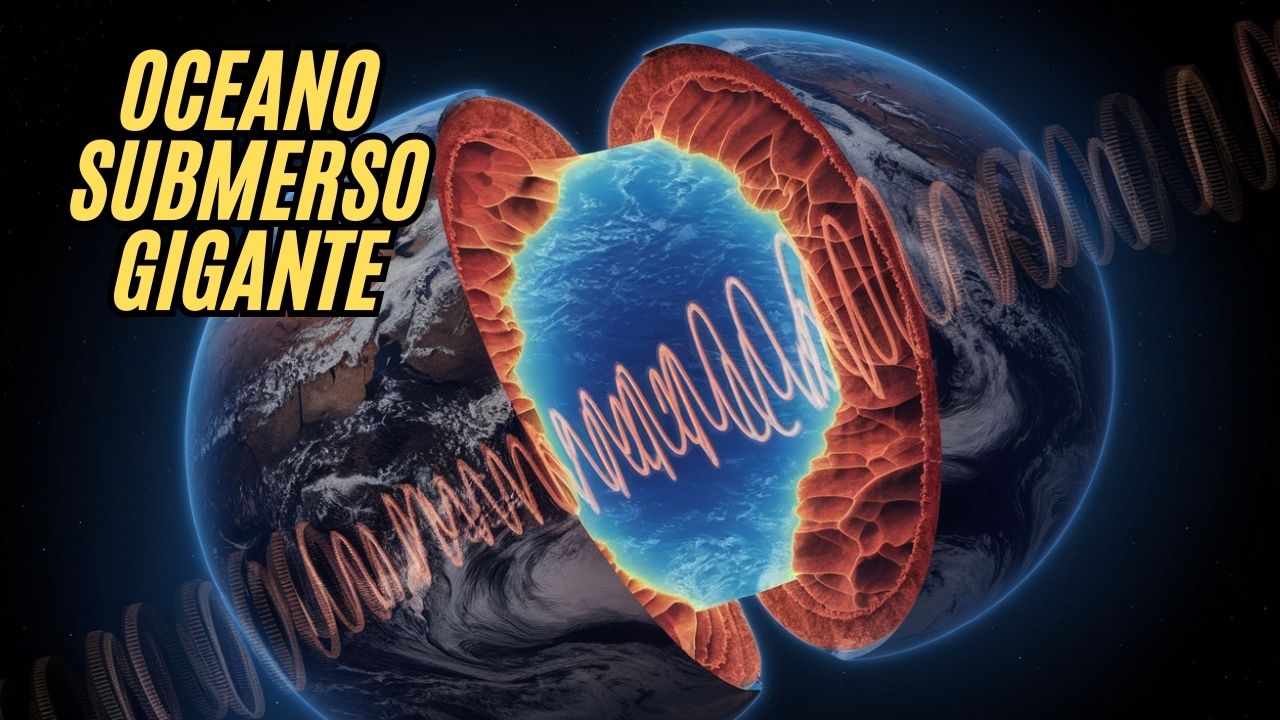
Researchers Uncover a “Hidden Ocean” in the Lower Mantle of the Planet, Expanding Our Understanding of Terrestrial Water Resources.
A new discovery has surprised the scientific world: researchers have identified a gigantic submerged ocean located about 640 km deep beneath the Earth’s crust. This subterranean reservoir, found in the lower mantle of the Earth, contains an amount of water that exceeds up to three times the volume of the oceans we know on the surface.
The research, titled “Dehydration Melting at the Top of the Lower Mantle”, revealed that the water is stored in a peculiar state, trapped within the rocks. This state is neither solid, liquid, nor gas, but something that scientists describe as “sponge-like.” Although the rocks contain only 1% water, the impact of this volume is colossal.
How Was the New Discovery Made?
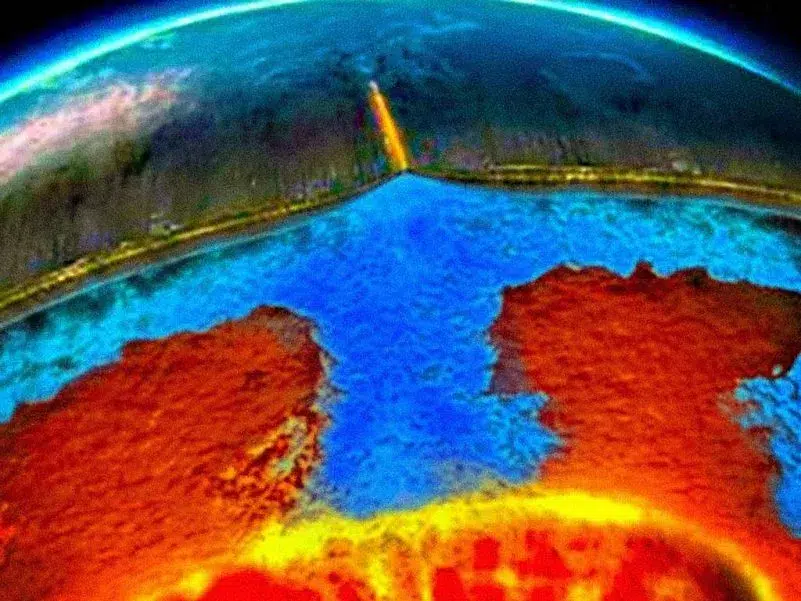
The study began with detailed analyses of seismic waves generated by earthquakes. These shockwaves, captured by seismometers, provided valuable clues about the Earth’s interior. Anomalies in the propagation of the waves indicated that large volumes of water were trapped in the depths, hidden within the rocky layers of the lower mantle.
-
The narrowest house in the world is only 63 centimeters wide, but inside it can accommodate a bathroom, kitchen, bedroom, office, and even two staircases.

-
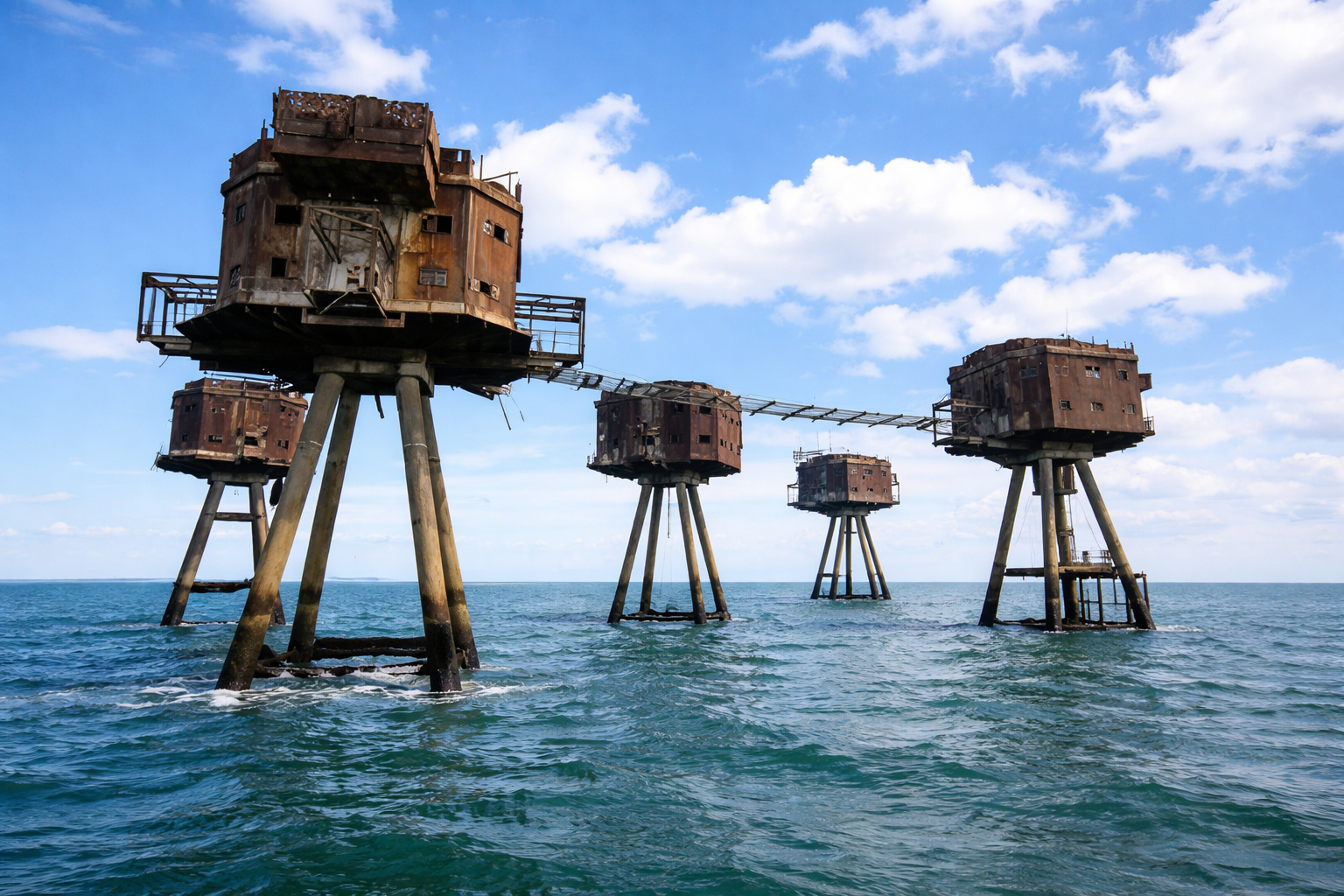
In the middle of the sea, these enormous concrete and steel structures, built by the British Navy to protect strategic maritime routes, look like they came straight out of a Star Wars movie.
-
For years, no one could cross a neighborhood in Tokyo because of the tracks, but an impressive solution changed mobility and completely transformed the local routine.

-
With 15 floors, an unusual building in Curitiba uses concrete, pilasters, and exposed roofs to create the effect of stacked houses.


This method, called seismic tomography, works like a kind of ultrasound for the planet. By interpreting the speed and behavior of the waves, scientists were able to map the composition and physical state of the Earth’s inner layers, leading to the incredible conclusion of the existence of this vast submerged ocean.
Geological and Environmental Implications
The discovery of this submerged ocean has the potential to revolutionize several areas of science. Its influence can be felt in the movement of tectonic plates, in volcanic activity processes, and even in the global water cycle. Understanding how this water is stored and interacts with the minerals in the mantle could bring new insights into the evolution of the Earth.
Another intriguing question is how the water reached these depths. The “sponge-like” state of the rocks indicates a complex interaction between water and minerals over billions of years. Understanding this dynamic could help decipher not only the history of the Earth but also that of other celestial bodies, like Mars, which exhibit similar geological characteristics.
The Future of Research
The scientific team is just beginning to explore the implications of this new discovery. The next steps involve more detailed studies to accurately map the extent of the reservoir and understand how it interacts with the planet’s internal processes. Advanced modeling will be essential to simulate these dynamics and predict their geological impacts.
Furthermore, there is great expectation that this research will provide answers to ancient mysteries about the origin of water on Earth and other planets. This “hidden ocean” may not only change our view of how the planet operates but also open new doors for environmental and space studies.
With these discoveries, the field of geology enters a new chapter, where what lies beneath the surface is as fascinating as what we see above it. Ultimately, this submerged ocean not only transforms the way we understand our planet but also offers clues about the universe that surrounds us.





-

Uma pessoa reagiu a isso.