





 English
  Francês
  Alemão
  Italiano
  Japonês
  Norueguês
  Portuguese
  Spanish
 4 min of reading


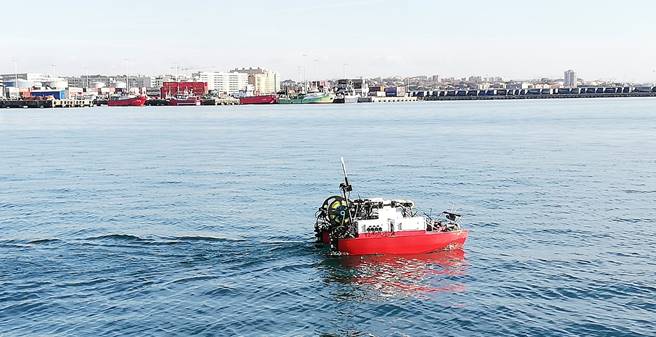
Innovative Project by Neoenergia Has Arrived in Brazil. The Vessel Built in Portugal Was Taken to the Itapebi Hydroelectric Plant in Bahia.
Neoenergia promotes innovation, generating benefits for the electric sector. The company developed an autonomous vessel to measure solid discharges suspended in reservoirs of hydroelectric plants. The autonomous vessel was designed in Portugal as part of a R&D project to automate hydrological monitoring of rivers.
Read Also
- Electric Motorcycle Priced Like a Cellphone and With a Range of 120km Promises to Revolutionize the Transformation of Combustion Engine Vehicles to Electric Models Worldwide
- Swedish Multinational in Partnership with Volkswagen Develops the First 100% Recycled Nickel, Manganese, and Cobalt Battery, Set to ‘Save’ the Major Dilemma of Electric Cars
- The Largest Niobium Producer on the Planet, CBMM, is Seeking Solutions in Dubai, UAE, for the Company’s Revolutionary Graphene Projects Worldwide
- Winds in Brazil Surpassed the Year’s Expectations, and Neoenergia Records a Higher Than Expected Increase in Wind Power Generation at Its Parks in the Northeast
The need to obtain this data is becoming increasingly important due to erosion and sediment transport issues in rivers. This will increase the precision and safety of sediment sample collection, which is currently done manually worldwide. The project is part of the Research and Development (R&D) Program regulated by the National Electric Energy Agency (Aneel).
Vessel Revolutionizes the Measurement of Solid and Liquid Discharges
The vessel was developed to complement studies conducted with data obtained from another autonomous vehicle dedicated to measuring liquid discharges. These studies are carried out by the Federal University of Juiz de Fora (UFJF) in partnership with the Institute of Engineering Systems and Computers, Technology and Science (INESC TEC) and the University of Porto, Portugal.
-
Rio Grande do Sul accelerates energy transition: State invests in renewable technologies and consolidates decarbonization strategies and pathways to attract billions in new industrial investments.

-
With 160,000 m² of collectors, an area larger than 20 football fields, Silkeborg, in Denmark, hosts a solar thermal plant that heats 19,500 homes and could become the largest solar heating plant in the world.

-
A study reveals the expansion of renewable energy procurement in Brazil and shows how companies are taking advantage of opportunities to reduce expenses, ensure energy efficiency, and strengthen strategic environmental commitments.

-
Mato Grosso do Sul excels in the sugar-energy sector: the state reaches a milestone of 22 operating mills and accelerates the production of clean energy in MS with a focus on sustainability.


The existing measurement methods will depend on the characteristics of each river – current speed, sediment concentration, and river size. The new equipment can adapt to various rivers and was developed to collect integrated or point sediments across the section, capable of collecting equal volumes of water vertically, ensuring more accurate samples.
“Our project is yielding the development of cutting-edge technologies, benefiting the entire hydroelectric generation segment with the possibility of more precise analyses. This vessel revolutionizes the measurement of solid and liquid discharges, which is essential for understanding reservoir conditions,” states José Paulo Werberich, Superintendent of Operations and Hydraulic Engineering at Neoenergia.
After Testing, the Vessel Built in Portugal Can Be Used at Other Plants Controlled by Neoenergia
These equipment are even more relevant in the current context of water crisis, as they not only provide greater reliability in results for low flows but also allow for safe independent flow recording of the river. All data is recorded on the onboard computer and can be transferred to the company’s information system, facilitating performance analysis, archiving, and historical data consultation.
The vessel has already arrived in Brazil and was taken to the Itapebi Hydroelectric Plant (BA), where it will be tested in field measurements, conducted quarterly, as determined by a joint resolution of Aneel and the National Water and Basic Sanitation Agency (ANA). After testing, the vessel may be used at other hydropower generation assets controlled by the company – Baguari (MG), Baixo Iguaçu (PR), Belo Monte (PA), Corumbá (GO), Dardanelos (MT), and Teles Pires (MT/PA).
The vessel designed in Portugal has its trajectory programmed through geo-referencing, to collect samples at predetermined points in the reservoirs. At these locations, a sampler attached to the autonomous vehicle is launched into the water, capable of reaching depths of up to 20 meters, designed to always position itself along the same vertical line of the river’s cross-section in relation to the vessel, providing more reliability to the work.
Subsequently, the analysis of the captured material can be performed automatically using a microscope developed in the same R&D project. This granulometric analysis – that is, assessing the size of suspended particles – allows for the evaluation of reservoir conditions, such as siltation.
The R&D project built in Portugal, which led to the development of the vessel and the microscope, began in 2017. In addition to this equipment, other technologies were created, such as the vessel developed to measure flow and water quality. Additionally, it was possible to nationalize a geo-referencing technology at a cost approximately ten times lower than the market price.







Seja o primeiro a reagir!