





 Portuguese
  English
  Spanish
  4 min of reading
  0 comments


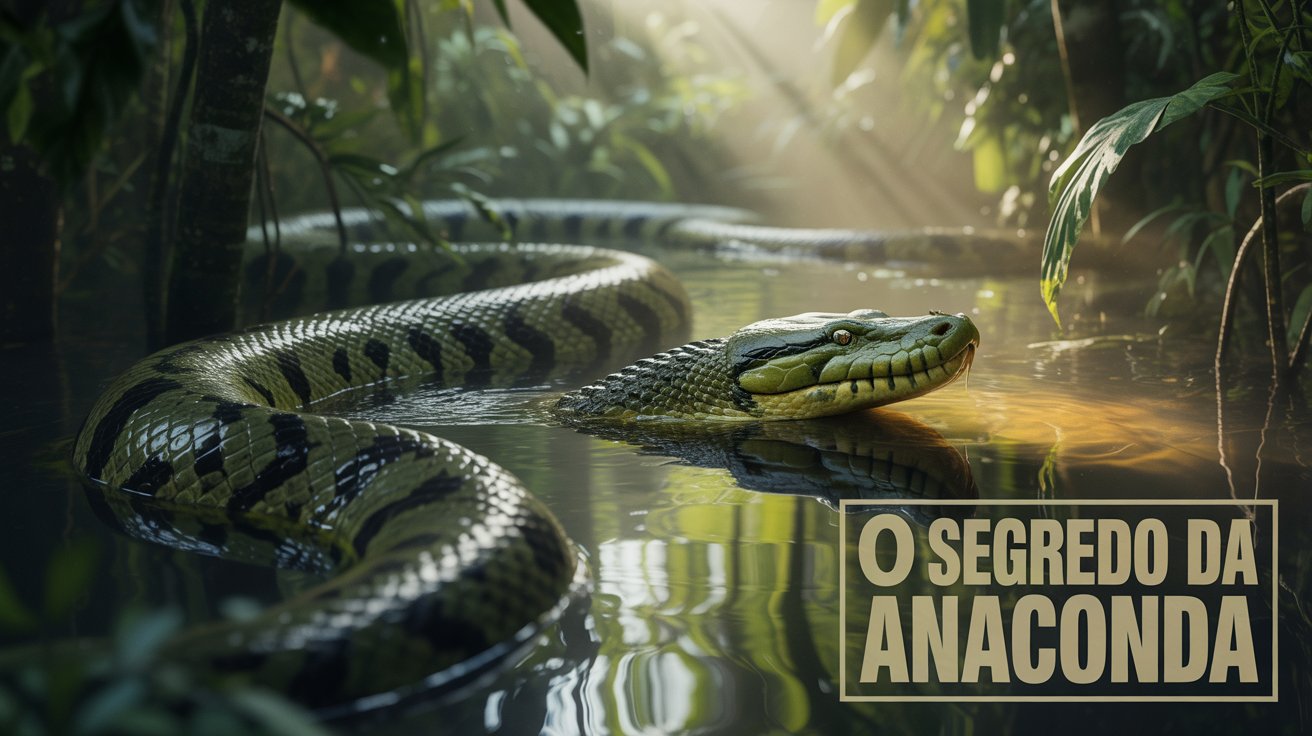
Scientists Confirmed the Existence of a New Species of Green Anaconda in the Equatorial Amazon, with Impressive Size and a Genetic Difference Greater than Between Humans and Chimpanzees, Revealing an Unprecedented Chapter of the Region’s Biodiversity.
An international team of researchers identified a new species of green anaconda, named Eunectes akayima, in the equatorial Amazon, measuring 6.3 meters in length and weighing over 200 kilograms in an adult specimen.
The finding indicates a genetic divergence of 5.5% from the known species Eunectes murinus, a proportion higher than the average difference estimated between humans and chimpanzees.
The result reconfigures what science understood about the grouping of anacondas and expands the map of Amazonian biodiversity.
-
These living root bridges and ladders are over 700 years old and help indigenous people survive in one of the rainiest regions in the world.

-
From sertanejo star to international investor: Ana Castela invests millions in a mansion in the USA, creates a themed accommodation in Orlando, and shows that the “boiadeira” also wants to grow away from the stage.

-
The 10 most stunning motorhomes in the world: a $3 million trailer with a rooftop nightclub and garage for a Ferrari, “palaces on wheels” with Italian marble, private cinema, and five-star hotel luxury for billionaires.

-
Trump wanted to spend $400 million on the White House, but the courts prohibited the million-dollar construction.


The identification was led by researchers affiliated with universities in Australia, the United States, and South America, in cooperation with local communities.
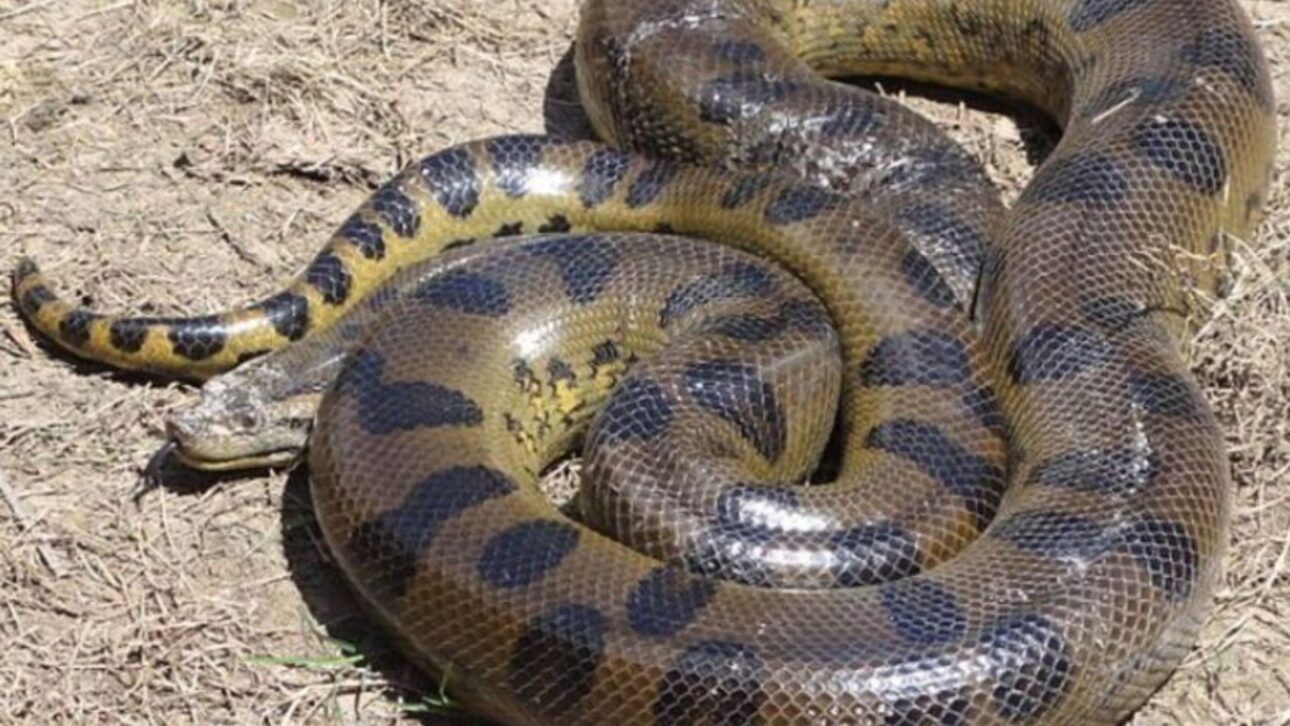
The authors describe that the new species of anaconda has external markings similar to the already cataloged green anaconda but differs robustly when analyzed using molecular genetic techniques.
In scientific jargon, “genetic divergence” expresses, in percentages, how much two populations or species have distanced themselves in their DNA composition.
In this context, 5.5% indicates evolutionary lineages separated for millions of years and that do not mix naturally today.
What Changes with the New Classification
From the study, the Amazon officially hosts two related species of green anaconda.
On one side, Eunectes murinus, widely distributed in South America.
On the other, Eunectes akayima, which the authors associate mainly with floodplain areas, streams, and seasonal floodplains in the northern Amazon basin.
This distinction, previously invisible to the naked eye, reinforces the importance of DNA methods to reveal hidden biological boundaries.
Wildlife management depends on accurately delineating species.
If distinct populations are treated as one, conservation plans may fail by not considering specific vulnerabilities.
The new species of anaconda may occupy more restricted habitat ranges, facing additional pressures from deforestation, watercourse pollution, and seasonal hydrological alterations.
Recognizing the unique identity of Eunectes akayima allows for monitoring population trends, mapping ecological corridors, and preventing conflicts in areas under pressure from human activities.

Record Size and Top Predator Behavior
The analyzed specimen of 6.3 meters and over 200 kg places the Amazonian giant anaconda among the largest reptiles on the planet by mass.
As a top predator, the species hunts mammals, birds, amphibians, and fish.
Being non-venomous, it uses constriction: it wraps around the prey and compresses the torso until breathing ceases.
This method is typical of boas and requires powerful musculature, something consistent with the size of the Amazonian giant anaconda and life in low-visibility aquatic environments.
Genetic Difference Greater than Between Humans and Chimpanzees
The comparison with primates helps to contextualize the result.
When researchers state that the genetic difference is greater than between humans and chimpanzees, they are not saying that species of anaconda are “more different” in behavior or anatomy, but rather that the percentage of divergence in DNA exceeds a reference point familiar to the public.
This metric derives from specific regions of the genome analyzed to measure evolutionary separation time.
In this case, estimates suggest that Eunectes akayima and Eunectes murinus separated about 10 million years ago, evolving in parallel in distinct habitats.
How to Differentiate Two Almost Identical Snakes?
For the average observer, the new species of anaconda maintains olive-green coloration, dark spots, and a cylindrical-conical body, which confuses visual identification.
Without easy morphological markers, field diagnosis depends on geographical context and, primarily, genetic testing.
This type of “cryptic species” — indistinguishable externally but separated genetically — is increasingly recognized in tropical forests, where micro-habitats and river barriers can isolate populations for long periods.
Implications for Environmental Education and Nature Tourism
The news is likely to increase interest in scientific expeditions, observation tourism, and environmental education projects focused on flood-prone environments.
This requires strict protocols for animal welfare and safety for communities, guides, and visitors.
By reinforcing that the Amazonian giant anaconda is non-venomous, unnecessary panic is avoided and the understanding of its ecological role as a regulator of food chains is promoted.








Seja o primeiro a reagir!