





 Portuguese
  English
  Spanish
  5 min of reading
  0 comments


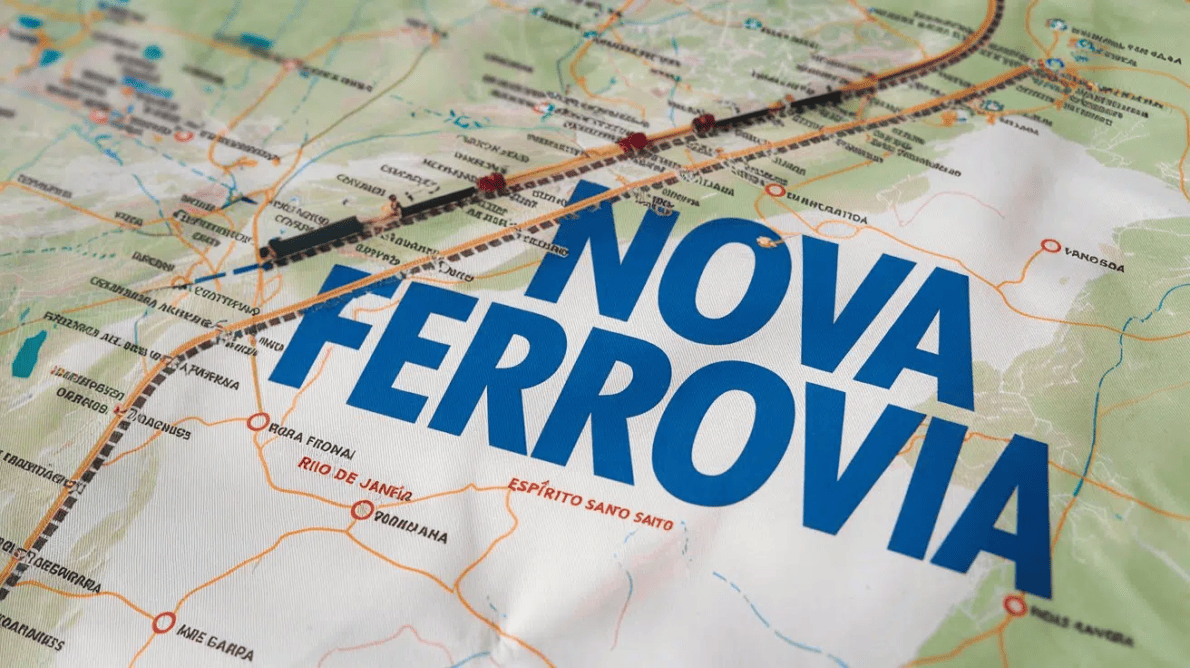
Construction of the New Railway Linking Rio de Janeiro to Vitória Promises to Change the Logistics Between the States, but the Impact Goes Far Beyond Infrastructure. Find Out How This Project Can Transform Markets and Boost New Opportunities for Brazil.
An ambitious railway project promises to transform logistics and integration between the Southeast and Espírito Santo.
This is the Railway 118 (EF-118), a new railway line that will connect Rio de Janeiro to the capital of Espírito Santo, Vitória.
The federal government expects to launch the project tender by 2025, with an estimated investment of R$ 3.38 billion.
-
These living root bridges and ladders are over 700 years old and help indigenous people survive in one of the rainiest regions in the world.

-
The largest food company on the planet, JBS, has just opened a 4,000 square meter laboratory in Florianópolis to develop customized proteins that modulate muscle mass gain, immune response, and metabolic performance.

-
After nearly 30 bids and competition among industry giants, a Spanish company purchases one of the largest airports in Brazil for almost R$ 3 billion and takes over the management of Galeão in a concession that will last until 2039.

-
From sertanejo star to international investor: Ana Castela invests millions in a mansion in the USA, creates a themed accommodation in Orlando, and shows that the “boiadeira” also wants to grow away from the stage.


The official announcement was made by the Minister of Transport, Renan Filho, during an appearance on the program “Good Morning, Minister,” broadcast by Canal Gov, when he responded to a question from the newspaper A Gazeta.
According to the minister, the railway will be part of the Southeast Railway Ring, a set of lines aimed at improving the railway network between the most industrialized states in the country, facilitating cargo flow and bringing strategic markets closer.
Project Connects Large Railway Networks and Boosts the Economy
The new railway is expected to become a strategic route by linking two important existing systems: the MRS Logística network in São Paulo and Rio de Janeiro and the Vitória a Minas Railway (EFVM), operated by Vale.
By interconnecting these systems, the EF-118 will allow greater fluidity in the transportation of iron ore, grains, fuels, and industrial products.
According to Minister Renan Filho, the project aims to facilitate railway transport between Espírito Santo, Rio de Janeiro, and consequently São Paulo, promoting a more sustainable and efficient alternative to road transport.
Furthermore, he stated that the bidding for the railway concession is expected to take place by December 2025, in a joint effort with the National Railway Transport Secretariat, led by Leonardo Ribeiro.
Details of the Route and Segment Division of the Railway
The EF-118 will be constructed in three main segments, each with distinct execution responsibilities. The expectation is that the new railway corridor will be over 570 kilometers in length.
Here are the details:
• Northern Segment (or Anchieta Branch): comprises about 80 km between Santa Leopoldina and Anchieta, both in Espírito Santo. This segment will be built by the mining company Vale as a counterpart for the early renewal of the EFVM concession.
The company has already announced an investment of R$ 6 billion in this specific segment.
• Central Segment: will have approximately 170 kilometers and will connect the Port of Açu, in São João da Barra (RJ), to Anchieta (ES). This stretch is considered vital for transporting goods intended for export via the port.
• Southern Segment: with about 325 kilometers, will link São João da Barra to Nova Iguaçu (RJ). This segment is considered a brownfield project — meaning it will reuse existing lines from the Centro-Atlântica Railway (FCA). Its execution depends on a later trigger from the federal government, being treated as an additional investment.
Work on the Railway Integrates Investment Package with Indemnification Funds
The federal government also plans to start, still in 2025, the duplicating works of BR-262, the highway linking Vitória (ES) to Belo Horizonte (MG).
Part of the resources will come from the judicial agreement established after the rupture of the Mariana dam in 2015, one of the largest environmental disasters in the country.
This initiative signals the government’s intention to use compensations for past tragedies to boost the development of national infrastructure, making transport routes in the Southeast safer and more modern.
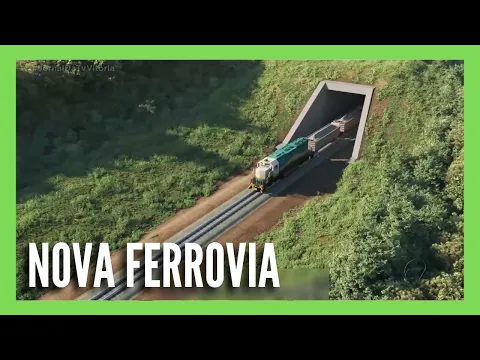

Railway Integration Can Revolutionize Cargo Transport
In addition to directly benefiting the states of Espírito Santo and Rio de Janeiro, the new railway is expected to have a positive impact throughout Brazil.
Greater railway integration can reduce logistics costs, increase the competitiveness of the national industry, and lower carbon emissions by replacing road transport with rail.
According to logistics experts, the railway is likely to become one of the main alternatives to truck transport, whose dependence has become a bottleneck in various production chains, especially during times of rising diesel prices and road congestion.
The Port of Açu, for example, should benefit directly from the connection with the new railway. The terminal is considered one of the most promising in the country and has been consolidating itself as a logistics hub for oil, gas, and mineral exports.
Current Overview of Railways in Brazil
According to updated data from the National Land Transport Agency (ANTT), Brazil has about 30,000 kilometers of railways, but only 15,000 are in full operation.
The rest suffers from neglect, lack of maintenance, or obsolescence.
The federal government is trying to reverse this scenario with concession and authorization programs for the private sector, such as the Pro Trilhos Program, launched in 2021. Since then, more than 80 requests for the construction of new railway lines have been filed, totaling a potential of an additional 20,000 kilometers.
However, challenges such as environmental licensing, expropriations, and financing still hinder the more rapid expansion of the railway modal. The EF-118, for its part, is treated as one of the priority projects due to its advanced studies and support from the private initiative.
Expected Socioeconomic Impacts
The construction of the EF-118 may also generate thousands of direct and indirect jobs, especially during the construction and operation phases.
Additionally, cities like Anchieta, Santa Leopoldina, and São João da Barra may experience economic growth with the arrival of railway infrastructure.
With greater mobility and reduced logistics costs, small and medium producers in the Southeast region will also gain more competitiveness in both domestic and foreign markets. Regional tourism may also be boosted, with future projects for shared use of the railways for passengers on tourist routes.
Do you believe that the new railway will indeed reduce Brazil’s dependency on highways, or are there still many challenges ahead? Share your opinion!





Seja o primeiro a reagir!