





 Português
  Inglês
  Espanhol
  3 min de leitura
  1 comentário


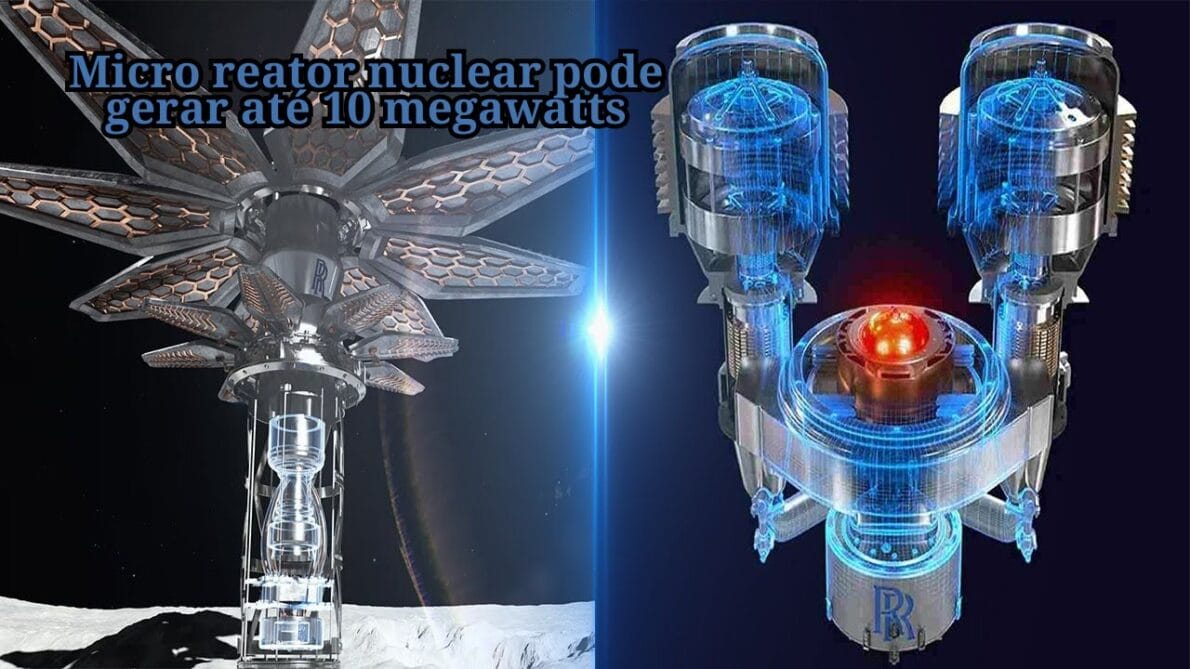

A New Energy Source Emerges on the Horizon of Space Exploration, With the Potential to Radically Transform Operations in Space. The Revelation of the Micro Nuclear Reactor by Rolls-Royce During a Conference in the United Kingdom Left the World Speechless, Although the Project is Still in the Preliminary Phase.
The idea of a micro nuclear reactor that can generate up to 10 megawatts of energy brings impactful comparisons. To give you an idea, the International Space Station (ISS) can only produce 120 KW with solar panels. This new energy source would be several times more powerful than any system currently available in space.
The Challenges and Potentials of This New Energy Source
Despite being a revolutionary new energy source, the micro nuclear reactor raises several questions. One of the major challenges is whether this type of technology could be safely launched into space, considering the radioactive material involved. The conversion of energy is also a critical point: what kind of process will be used to transform thermal energy into electrical?
Conventional reactors, such as those used in submarines and warships, operate by converting heat generated by nuclear fission into electricity through steam turbines. However, transporting this technology to space requires ingenious solutions. A micro nuclear reactor, however, could be miniaturized and optimized for extreme environments, such as the surface of the Moon or Mars.
-
Renewable energy advances over protected areas in Brazil, and a survey by the Energy Transition Observatory reveals silent impacts that challenge environmental conservation and pressure sensitive traditional territories.

-
Rio Grande do Sul accelerates energy transition: State invests in renewable technologies and consolidates decarbonization strategies and pathways to attract billions in new industrial investments.

-
With 160,000 m² of collectors, an area larger than 20 football fields, Silkeborg, in Denmark, hosts a solar thermal plant that heats 19,500 homes and could become the largest solar heating plant in the world.

-
A study reveals the expansion of renewable energy procurement in Brazil and shows how companies are taking advantage of opportunities to reduce expenses, ensure energy efficiency, and strengthen strategic environmental commitments.


A Power That Exceeds Expectations
The project presented by Rolls-Royce highlights that, with adjustments and improvements, the micro nuclear reactor could provide energy continuously for up to 10 years, which would be crucial for long-duration missions and permanent space bases. This technology would not require frequent refueling, making its maintenance in space easier.
Despite the uncertainties, there are already precedents for nuclear sources in space. The iconic Pioneer 10, launched in 1972, used radioisotope generators to reach the edge of the solar system. However, this system generated only 100 watts, which is insufficient for modern applications. The new nuclear reactor promises significantly greater efficiency.
Safety Implications and the Future of Space Exploration
There are still concerns about the safety of sending a new energy source nuclear to space. Handling radioactive materials during a space launch always carries risks, and the need for an efficient energy conversion system is crucial for the success of this project.
Despite the challenges, expectations are high. Could the micro nuclear reactor be the solution for future colonies on other planets? Would it be ready to provide large-scale energy in a safe and sustainable way?
Do you think this technology will really take off? Would this be the necessary step to take us to new frontiers in space? Leave your opinion in the comments!










Reatores nucleares precisam de água para operar e esse mono reator não usa. Está mais para Fake News.