





 Portuguese
  English
  Spanish
  5 min of reading
  73 comments


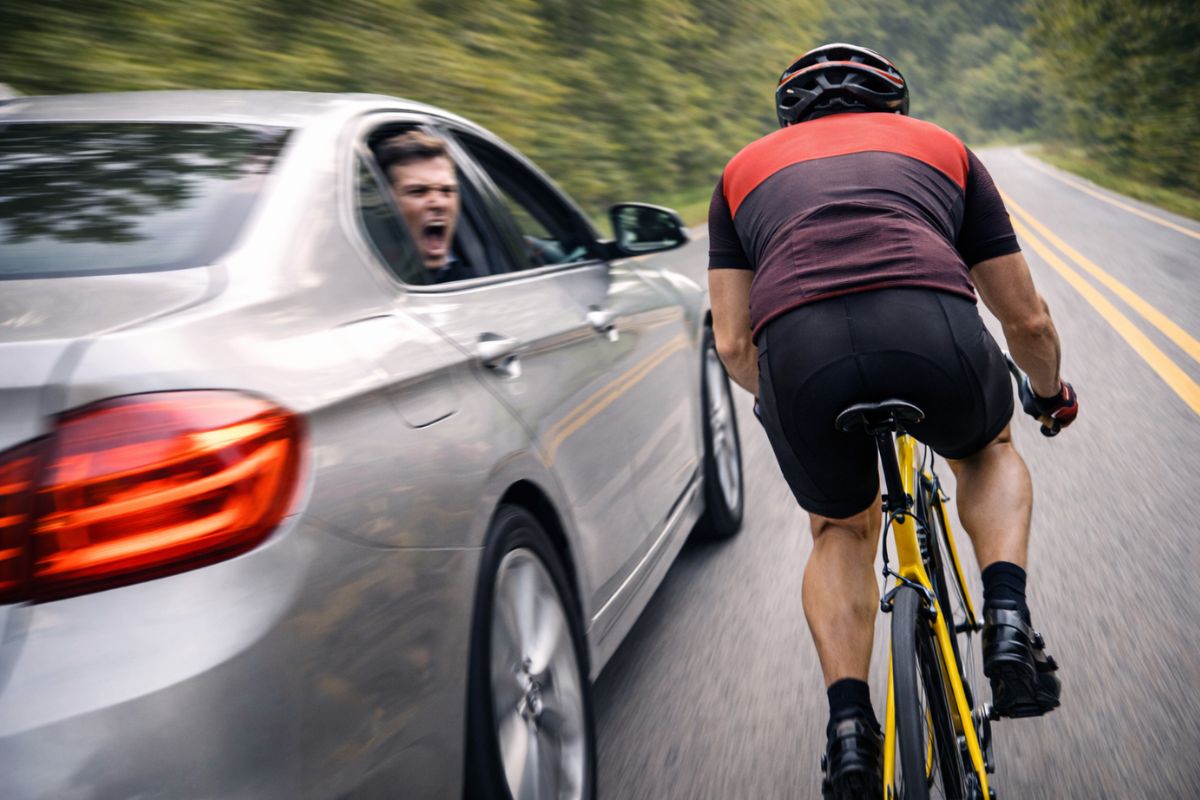


In Effect Since 2021, the New Cyclist Law in Brazilian Traffic Renders Close Passing a Very Serious Infraction, Requires a Minimum Distance of One and a Half Meters, Adds Points to the CNH, and Strengthens Cyclist Safety on Busy Avenues and Highways in Cities Across Brazil Today
Since 2021, when the latest changes to the Brazilian Traffic Code came into effect, the new cyclist law began to treat close passing as a high-risk behavior, requiring a minimum distance of one and a half meters and a clear reduction in speed whenever a driver decides to pass alongside a moving bicycle. The rule applies on urban roads and highways, including sections without designated bike lanes or cycle tracks.
As of December 23, 2025, many drivers still ignore that the new cyclist law classifies this maneuver as a very serious infraction, with a heavy fine, seven points on the CNH, and the potential to accelerate the accumulation of points that leads to suspension of the license, especially when added to other serious infractions in the recent traffic history in large and medium cities.
What Changed with the New Cyclist Law
Before the change, passing cyclists was often treated as generic careless driving, without specific emphasis in the text of the law.
-
The Senate approves a bill that criminalizes misogyny, hatred, or aversion towards women, and includes the crime in the Racism Law with a penalty of up to 5 years.

-
Chamber Approves Bill That Allows Pepper Spray for Women Over 16 and Imposes Strict Rules for Purchase, Possession, and Use as Self-Defense
-
Chamber Approves Law to Combat Leucaena, Fast-Growing Plant That Dominates Land and Threatens Native Species in Various Regions of the Country

-
Asset Division: Know What Cannot Be Divided in Case of Divorce


With the update to the Traffic Code, the new cyclist law began to explicitly describe the obligation to preserve the safety of the cyclist during any approach, passing, or deviation maneuver.
The central point is simple and straightforward: drivers need to recognize cyclists as vulnerable road users, meaning someone who does not have metal bodywork, airbags, or protection systems in case of an impact.
Therefore, the CTB began to associate a lack of care in this situation with a higher level of accountability, classifying it as a very serious infraction when passing occurs without lateral space and without adequate speed reduction.
Minimum Distance of One and a Half Meters and Speed Reduction
The practical guidance of the new cyclist law can be summarized in two basic commandments for the driver: maintain a minimum distance of one and a half meters and reduce speed in a way compatible with the safety of the cyclist.
This is not just about “slightly moving away” from the handlebars, but about making a planned pass, similar to what is done in relation to another vehicle.
In practice, this means that the driver should:
wait for a section with sufficient visibility to complete the pass safely
partially change lanes, when possible, to create real lateral space
reduce speed to a value that allows reacting if the cyclist makes an unexpected maneuver
avoid squeezing the cyclist against the curb, drainage channels, or parked vehicles, a typical situation for serious lateral collisions
Whenever there is not enough physical space to respect the minimum distance of one and a half meters, the technical guidance is clear: do not pass and wait for better conditions, even if that means a few extra seconds on the route.
Fines, Points on the CNH, and Risk of Suspension
By turning this behavior into a very serious infraction, the new cyclist law places close passing on the same level as other high-risk traffic actions.
In practice, a driver who disrespects the distance or passes without reducing speed is subject to a heavy fine and seven points on the CNH, which shortens the path to the limit that leads to the suspension of the right to drive.
Although suspension does not occur automatically in a single episode, the combination of very serious infractions in a short period can quickly suspend the license, especially for those who already have other violations, such as speeding, running a red light, or using a cellphone while driving.
In contexts of intensive monitoring, a series of traffic blitzes can reveal this accumulation of points and lead to temporary blocking of the document.
In addition to the main penalty, a driver caught in a risky situation against cyclists may be required to participate in recycling courses and educational actions, a prerequisite for recovering the right to drive after suspension.
How Drivers and Cyclists Should Behave on the Same Road
The new cyclist law does not place all responsibility on one side, but reinforces that the heavier vehicle has a greater duty of care.
For the driver, this means planning the route considering the presence of cyclists and low-speed vehicles, avoiding aggressive behaviors such as “closing” bicycles at intersections, accelerating immediately after passing, or honking intimidatingly.
For the cyclist, the practical rule involves:
riding, whenever possible, in bike lanes, cycle tracks, or authorized shoulders
maintaining a predictable trajectory, without unnecessary zigzagging between parked cars
signaling direction changes with the arm, when the situation allows
using safety equipment and visibility items, such as helmets and proper lighting, especially at night
Even with these recommendations, the legislation makes it clear that the physical vulnerability of the cyclist remains greater, which is why the risk classification falls more severely on the motorized vehicle driver in conflict scenarios.
Monitoring, Campaigns, and Competition for Space in Cities
The effectiveness of the new cyclist law depends on two main factors: constant monitoring and traffic education campaigns.
In many cities, the topic still appears sporadically in street actions, educational banners, or specific blitzes for cyclist protection, but the frequency of these initiatives is often low considering the daily volume of conflicts between cars, motorcycles, and bicycles.
When there is an integrated operation of traffic authorities, the results tend to be noticeable: drivers adjust their behavior upon realizing that close passing results in immediate fines, and cyclists feel more encouraged to use bicycles as a means of transport, not just for leisure.
On the other hand, long periods without monitoring reinforce the perception of impunity, and the rule comes to be seen merely as “legal text” distant from the reality of the asphalt.
In large metropolitan areas, where the competition for road space is intense, the challenge involves better organizing cycling routes, clearly signaling points of conflict, and integrating the new cyclist law into a broader mobility plan, which includes public transport, bus corridors, and calming traffic areas.
In your opinion, does the new cyclist law that requires one and a half meters, imposes a fine for very serious infractions, and adds seven points to the CNH already changing driver behavior in your city, or is there still a lack of monitoring and education for true respect for cyclists in daily life?










Sou usuário de patinete elétrica e transito em vias urbanas de Belo Horizonte. Salvo poucas excessões, o motorista de BH não respeita a distância mínima e demais condutas de proteção ao vulnerável.
Até que fim que agora passaram a enchergar o lado do ciclista..
Nunca vi ciclista consciente se acidentar. Parei de pedalar devido limitações pessoais, mas todos acidentados que presenciei, seja pessoalmente ou em noticiários eram **** donos da razão e denhoresce senhoras donos do mundo. (Tem varios vídeos no YouTube demonstarndo o quevo ego dos imbecis faz com eles), portanto para quem respeita as regras nada muda. Respeito a distancia de motoqueiros e de bikers, mas se forem se enfiar no meio do trânsito sem respeitar essa distância vão arcar com as consequências, simples assim.
“Se enfiar no meio do trânsito sem respeitar essa distância vão arcar com as consequências, simples assim.”
Você realmente não leu nada do que está escrito na lei, vai acabar perdendo a carteira.