





 Portuguese
  English
  Spanish
  5 min of reading
  218 comments


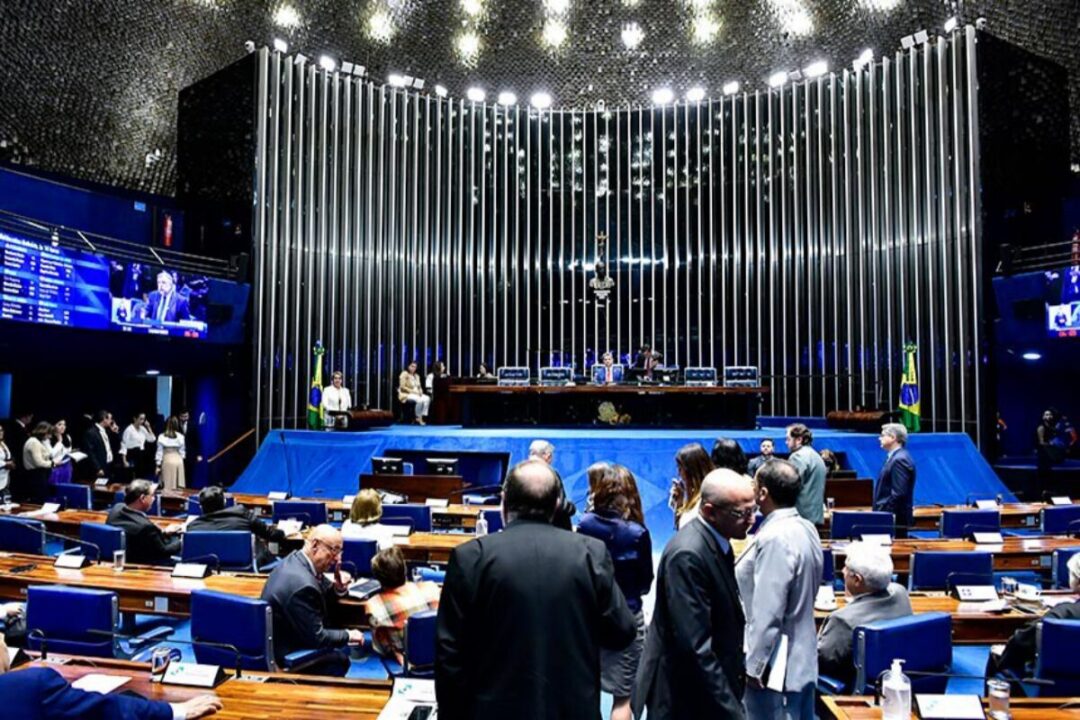

New Government Law Is About to Impact the Career of Millions of Brazilians Who Are Public Servants: Future of PEC 32 Promises to Replace Old Decree and Promote Historic Administrative Reform
The federal government is about to promote ahistoric administrative reform, which promises to profoundly impact the career of everypublic servant. With anew lawin the works, which will replace the olddecreefrom 1967, the goal is to modernize the public service and make it more efficient. While theSenateand society debate the future ofPEC 32, the government is already implementing changes that could redefine the structure of public service.
Want to know how this reform could affect your future as a public servant? Keep reading and discover all the details of this transformation!
New Government Law Prepares Measures That Could Impact Public Service Careers
The government is determined to move forward with a new law that promises to deeply impact the career of public servants. The goal is to reform the decree that has lasted for 57 years, aiming for an administrative reform that brings more efficiency to public administration.
-
Employee Fired After Accumulating 114 Days of Medical Leave in One Year, Labor Court Upholds Company’s Decision

-
Employee Fired While Treating Depression Wins in Court and Vale Is Required to Rehire Him Following Decision Based on the CLT and INSS Benefits

-
Workers Should Be Aware! March 6 Will Be The Fifth Business Day Of March And The Final Deadline For Companies To Pay Salaries According To The CLT

-
2026 FGTS Anniversary Withdrawal Is Released According to Birth Month, Sets Amounts by Balance Range, Establishes Deadlines for March and April, and Changes Rules in Case of Dismissal

Since its creation in 1967, theDecree-Law No. 200governs the organization of federal public administration. However, the Ministry of Management and Innovation in Public Services (MGI) points out that this legislation is outdated. The new proposal aims to align the functioning of public service with the Federal Constitution of 1988, modernizing the role of public servants and the management of careers.
In partnership with the Attorney General’s Office (AGU), the government formed a committee composed of renowned experts, including jurists, servants, and academics. They have until April 2025 to finalize the text that will replace the old decree. This team intends to create a new legislative framework that brings significant changes to public careers, focusing on efficiency and service to society.
Moreover, the MGI already issued Portaria No. 5,127 in August 2023, which defines guidelines for the restructuring of careers in public service. This portaria establishes norms that must be followed by federal agencies when presenting their proposals for restructuring positions and career plans.
José Celso Cardoso Jr., Secretary of People Management at the MGI, emphasizes that the portaria is the first major normative milestone since the Statute of the Civil Servant (Law 8,112/1990). According to him, the administrative reform has already begun, albeit incrementally.
In fact, several infraconstitutional measures have been implemented since 2023. Among them is the unified national public competition, which aims to select the best profiles of public servants for the current needs of the country. Another initiative is workforce sizing, an action that seeks to optimize the use of servants in different areas.
PEC 32: The Shadow Over the New Reform
The Proposed Constitutional Amendment (PEC) No. 32, introduced in 2020, promised a major reform in the public sector but was shelved before reaching the Chamber’s Plenary. The PEC, proposed during the previous government, aimed to reduce public spending on servants, but its approach was widely criticized by various sectors.
Experts argue that PEC 32 focused primarily on cost-cutting, without considering the strategic importance of public servants in executing policies that serve the population. Additionally, there were concerns that PEC 32 could affect the impartiality of hiring and open the door to the outsourcing of essential state functions, such as health and education.
The new proposal for administrative reform, however, goes far beyond PEC 32. According to Michelle Fernandez, a professor at the University of Brasília (UnB), the PEC was born with a narrow and outdated vision. “The focus was fiscal, while the new proposal aims to modernize the service provided to society,” the expert emphasizes.
Sheila Tolentino, a researcher at Ipea, adds that the new law should prioritize the quality of service delivered to citizens, not just cost-cutting. For her, the current reform aims to improve the functioning of the government and strengthen trust in public servants.
Economic Impacts and Divergent Opinions
The National Confederation of Trade in Goods, Services, and Tourism (CNC) argues that reforms like PEC 32 could generate significant savings for public coffers. According to the entity, controlling expenses is essential to reduce public debt and improve Brazil’s fiscal scenario.
However, experts like Félix Garcia Lopes Jr., a sociologist and researcher at Ipea, contest this view. He points out that spending on public servants in Brazil is not disproportionate, as some criticisms suggest. According to data from the Atlas of the Brazilian State and the OECD, Brazil has fewer public servants per capita than developed countries.
This data shows that about 11 million Brazilians work in public service, which represents less than 13% of the country’s workforce. In contrast, in OECD countries, this proportion is 20.8%. Moreover, most servants are allocated in essential areas such as health, education, and security, primarily in municipalities and state governments.
Consequently, indiscriminately cutting the number of servants, as suggested by PEC 32, could harm the service provided to the population. About 60% of public servants in Brazil work in municipalities, while another 30% are in state governments, primarily in the areas of health, education, and security.
At the federal level, the scenario is different. Approximately 1.2 million servants are linked to the Union, with just over half being active. Most of them work in education, particularly as university professors. Meanwhile, the highest salaries are concentrated in the Judiciary and Legislative branches.
New Law, New Path for Public Service
In light of these disparities, the federal government continues to advance its proposal for administrative reform, focusing on creating new legislation that goes beyond cost-cutting. The idea is to promote a more efficient public service that can better meet the demands of the population.
This new administrative reform is still under construction, but the first steps have already been taken with the establishment of the expert committee and the issuance of new guidelines for people management in the public sector. Now, it remains to wait for the next steps and monitor the impacts these changes will bring to public servants and society as a whole.
Thus, the expectation is that the new law will bring a balance between administrative efficiency and the appreciation of the servant, ensuring that Brazilian public service continues to fulfill its fundamental role in serving the population.
Source Agencia do Brasil










Sou funcionário público do executivo e muitos não sabem que a gente faz muito com pouco, falta tudo, inclusive funcionários pra atender a população, os governantes não estão preocupados no atendimento e com qualidades e colocam a culpa nos servidores que ganham os menores salários pelos seus gastos desenfreados, a reforma deveria começar de cima, dos políticos e juízes que tem mordomia e vive vida de rei, dos militares com suas aposentadoria milionária que se estende pra família toda, aí sim seria uma reforma justa, mais neste país quem pode mais chora menos!!
Uma reforma tem que começar pelo judiciário legislativo e executivo pois os maiores salários não são os concusados e sim parlamentares juízes políticos etc…
Uma reforma que só atinge aos assalariados não adianta nada pois é fácil como falam do servidores públicos mais não dividem em classes que mostre os verdadeiros LADRÕES que se apoderam do nosso dinheiro
Quer fazer o certo ??? Faça o levantamento de salários e ganhos desses senhores que se acham intocáveis e mostre todos os dias na mídia só assim o povo acorda e vai para cima.
Maiores salários são de colarinhos brancos juízes políticos.
Nexe com eles que sobrará muito para o País.
Estive em um hospital essa semana, 70 internados na sala amarela, para 04 técnicos de enfermagem, 02 enfermeiros e 01 médico.
Ainda querem cortar funcionários.
Para o bom funcionamento do STF, cada ministro tem a sua disposição, mais de 80 funcionários, poderia ser assim para os médicos.