





 Portuguese
  English
  Spanish
  5 min of reading
  3 comments





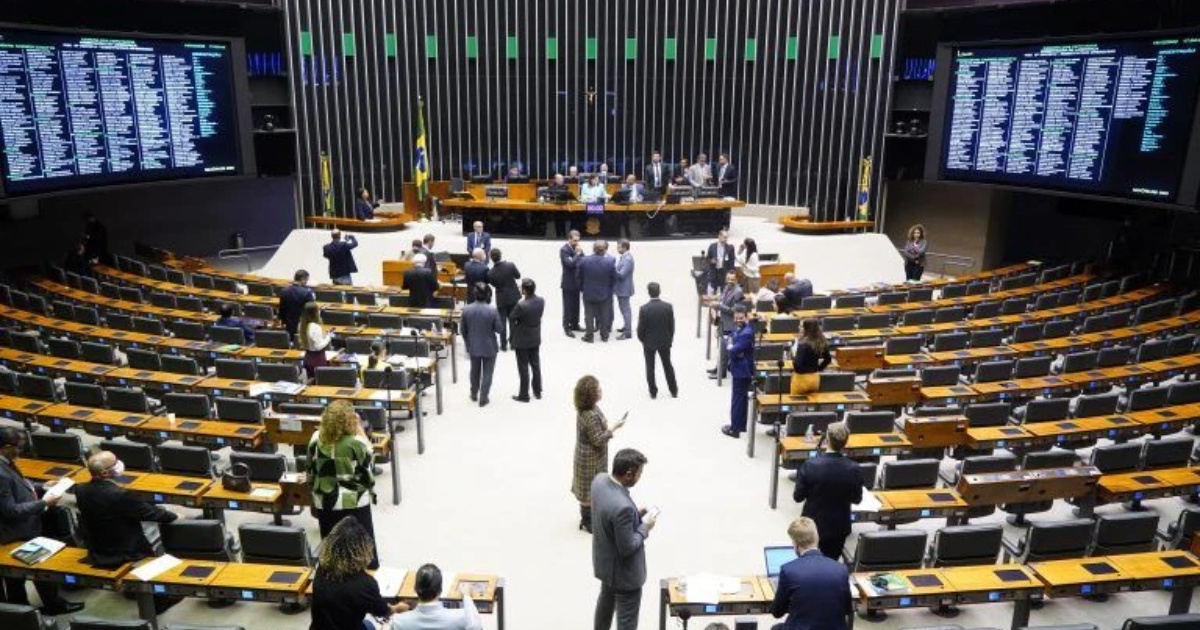
Chamber Approves Bill That Changes Discount Rules for INSS, Allowing Banks to Deduct Advances Directly from Benefits, While Unions and Associations Are Prohibited from Automatic Collections. The Text Now Goes to the Senate.
Despite the title, what exists so far is a bill approved by the Chamber that authorizes direct discounts on INSS benefits to settle “operations of advance on pension benefits”.
The text is part of a package to combat fraud, prohibits associative discounts from payroll, and goes for analysis by the Senate.
In the plenary, the deputies also maintained the provision that the Monetary Council (CMN) will define the ceiling for interest on payroll loans, which is currently under the responsibility of CNPS.
-
With the arrival of Law 11.788, internships are now recognized as professional experience.

-
The Brazilian Civil Code states that a property owner has the right to cut the roots of a neighbor’s tree that invade their land, as long as it does not harm the tree itself. The owner must notify the neighbor before taking such action.

-
Engineer is sentenced to repay R$ 148 thousand after holding public positions in three municipalities in Rondônia with incompatible schedules, and the decision is upheld by the Court of Justice.

-
Chamber approves project that creates mandatory Life Insurance for police officers, firefighters, guards, and traffic agents.

What Changes for Retirees and Pensioners
The approved substitute prohibits the charging of union and association fees directly from the INSS payroll, even with the beneficiary’s authorization.
At the same time, it reopens space for banks to deduct, from the benefit itself, amounts advanced to the insured in operations with discount — receiving today for a smaller amount, with a settlement in payment.
Experts consulted in Congress note that the text does not set a specific cost ceiling for this advance in the body of the law, which has sparked debate about possible increases compared to payroll loans.
Furthermore, the bill tightens the contracting of payroll loans starting from the future law.
It requires biometric authentication or multiple factors, prior communication to the beneficiary, and automatic blocking of the benefit after each operation.
The unblocking will depend on a new procedure.
The operation by phone or through proxy is prohibited.
Another sensitive point is the transfer of competence to define the ceiling for payroll loans: it leaves the National Social Security Council (CNPS) and goes to the CMN, a decision based on the argument that it is a credit policy.
This change was highlighted and is one of the structural alterations of the text.
How the Vote Went
The Chamber approved the base text and subsequently rejected highlights.
An attempt to suppress sections of the substitute was defeated by 259 votes to 126, keeping the central part of the text.
The PSB also presented a highlight to exclude the permission for discounts on advances, but was also defeated.
The score and the nature of the highlights are recorded in the official record of the deliberative session. Thus, the proposal goes to the Senate.
What the Deputies Said
Parliamentarians from both the base and the opposition differed on the risk of indebtedness.
Deputy Rogério Correia (PT-MG) stated in plenary that, without explicit cost and timeline safeguards, the advance could “become another credit, more expensive than the payroll loan.”
According to him, there would be no limit tied to income nor an obligation to settle the following month.
The argument echoed the criticism that the modality, if widely regulated, could allow longer terms and higher charges than traditional payroll loans.
In defense of the text, rapporteur Danilo Forte (União-CE) stated he had communicated with the Office of the Chief of Staff.
He recorded in shorthand that he had received from the office a version with the expression “without financial burden for the beneficiary”.
However, he acknowledged that the final arrangement approved does not specify this safeguard.
Forte also argued that the definition of the payroll loan ceiling should fall to the CMN as it is a technical credit decision.
Context: Frauds and the History of INSS “Vale”
The legislative offensive occurs amid the Operation Without Discount, launched by the Federal Police and the CGU, which investigates unauthorized associative discounts on benefits and estimates R$ 6.3 billion diverted between 2019 and 2024.
The case led to a revision of the rules and reopened the debate on automatic debits in the payment of pensions and benefits.
At the end of 2024, the government implemented Meu INSS Vale+, a zero-interest advance of R$ 150, deducted in the following month.
In February 2025, the limit was increased to R$ 450.
After reports of improper fees charged by authorized institutions, the INSS suspended the program in May 2025.
The Minister of Social Security even stated in the Senate that the initiative should be abolished.
Public reports attribute to Febraban the communication of irregularities, citing charges of up to 5%, which contradicts the design of the program.
Financial Sector and Entities
During the Vale+ crisis, banking federations made requests to the government for increased protection for beneficiaries and for governance over correspondents.
In a May meeting, Febraban and ABBC filed a letter to the new president of the INSS proposing measures such as “Do Not Disturb Me” for calls and annual audits.
In the current debate of the project, ABBC expressed concern about the risk of overindebtedness and advocated for the complete suppression of advances with payroll discounts.
Why the Debate Returns Now
By prohibiting associative discounts and simultaneously authorizing discounts on advances, the bill attempts to close a door to frauds and open another way for direct settlement of obligations with banks.
Without an explicit ceiling in the text for the new modality, critics evaluate that the operation may cost more than the regulated payroll loan and increase delinquency among the elderly.
This if the regulatory framework does not come with limits and transparency.
In parallel, the transfer of the payroll loan ceiling to the CMN shifts decisions to monetary and credit policy, outside the CNPS.
Next Steps in the Senate
The Senate will evaluate the bill approved by the deputies.
Senators may maintain, adjust, or suppress the provision for discounts on advances with payroll.
They may also refine the authentication requirements and the post-contractual blocking for payroll loans.
Any changes will have to return to the Chamber if there are substantive alterations.
Until then, nothing changes for the beneficiary: the authorization only takes effect if the text is approved by the senators and sancionado.
In summary, Congress attempts to respond to frauds and, at the same time, reorganize the credit market aimed at retirees and pensioners — but the final design will depend on the Senate.
Do you think that advances with direct discounts should have a cost ceiling in the law, or should this be left only to the regulation of the financial system?









É uma falta de respeito com os idosos, que já contribuíram tanto, para esse país.
Coitados de nós aposentados, que absurdo descontar qualquer valor não autorizado.
Isso é roubo!!!!
Não vai facilitar mais os roubos no NSs descontando direto?
Coitados dos aposentados, olha o rombo que os pobres já sofreram e com uma aposentadoria que mal dá para sobreviver,
Só quer **** c os pobres coitados dos aposentados…. eles podia tomar **** e devolver os valores que roubaram da gente c dignidade… pq foram 5 anos mim roubando e só quer devolver migalhas monte de **** sem coração ♥ fico indignada c tudo isso é ninguém faz nada…. depois ainda acha que a gente é ****… affff