





 Portuguese
  English
  Spanish
  4 min of reading
  15 comments


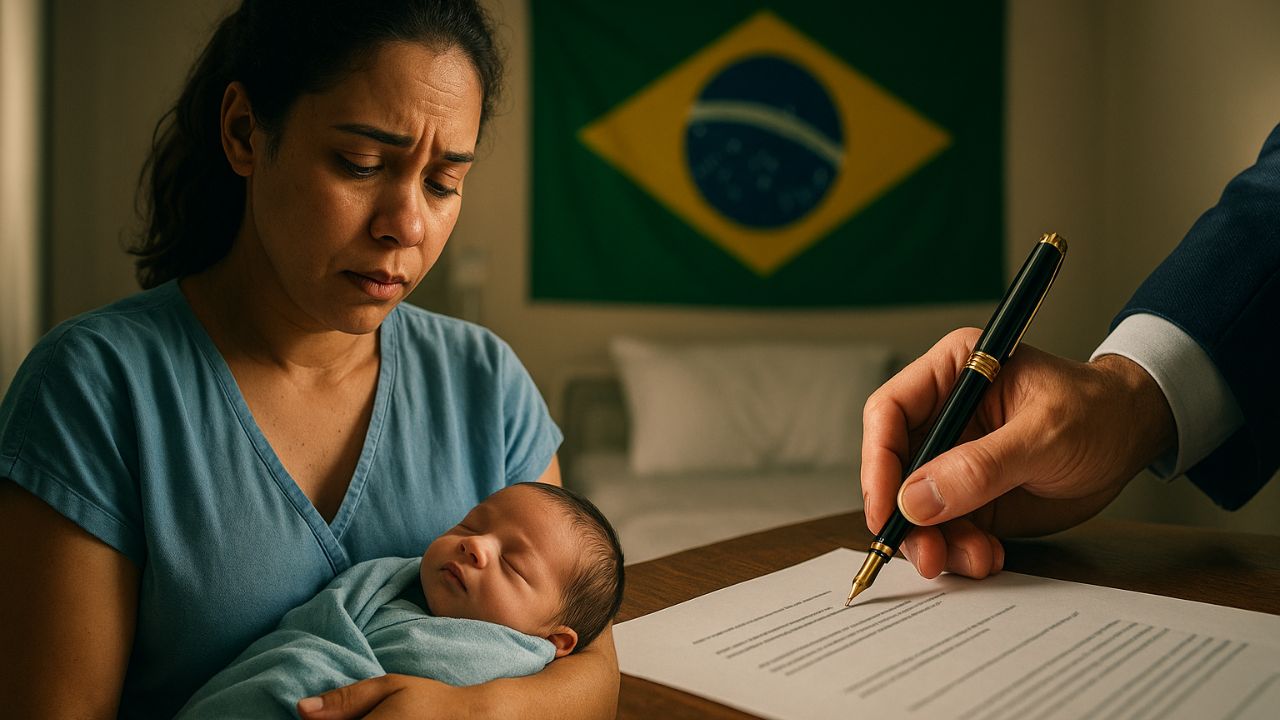


Understand How The New Legislation, Based On Supreme Court Ruling, Alters The Counting Of Maternity Leave And What Changes For Workers, Families And Companies.
A historic change in Brazilian legislation redefines the protection of motherhood and childhood. Enacted as Law No. 15,222/2025, the new rule ensures that the period of maternity leave only begins to be counted after the hospital discharge of newborns who require prolonged hospitalization. The measure corrects a flaw that, in practice, exhausted family time within hospitals, depriving mother and baby of the essential bond in the first months of life.
The legislation consolidates an understanding of the Supreme Federal Court (STF) and is the result of a long social mobilization, led by organizations such as the NGO Prematuridade.com. According to information from the organization’s portal, the fight for this right aimed to ensure that the benefit fulfilled its original purpose: to strengthen emotional ties in the domestic environment, something that was hindered by the previous rule in cases of births with severe complications.
What Changes In Practice With The New Law?
The central point of Law No. 15,222/2025 is the alteration of the starting point for counting the 120 days of leave. As detailed on the official portals of the Federal Government and the National Congress, the counting of maternity leave and maternity pay now starts from the discharge of the mother or the newborn, whichever occurs last. The rule applies to hospitalizations lasting more than two weeks that are directly related to complications from childbirth.
-
The noise law will no longer be in effect at 10 PM starting in June with a new rule valid during the 2026 World Cup.

-
The Chamber opens a debate on driver’s licenses at 16 years old as part of a reform that includes around 270 proposals to change the Brazilian Traffic Code and may redesign rules for licensing, enforcement, and circulation in the country.

-
The new Civil Code could revolutionize marriages in Brazil with “express divorce” and changes that could exclude spouses from inheritance.

-
Banco do Brasil sues famous influencer for million-dollar debt and intensifies debate on delinquency, risks of seizure, and direct impact on Gkay’s credibility.


In practice, this means that all hospitalization time is added to the leave period, without being deducted from the 120 days. For example, if a baby stays hospitalized for 50 days, the mother will be entitled to those 50 days and, only after discharge, will begin counting her full 120-day leave, totaling 170 days of paid leave. To this end, the law made direct changes to the Consolidation of Labor Laws (CLT) and the Social Security Benefits Law, ensuring both job stability and financial security for the mother throughout the period.
The Fight For Change And The Supreme Court Decision
The new law did not arise in isolation; it is the realization of a crucial decision by the Supreme Federal Court (STF). In 2022, when judging Direct Action of Unconstitutionality (ADI) 6327, the Court recognized that the old rule was flawed. According to the STF news portal, the ministers understood that forcing the start of leave on the date of childbirth represented a “constitutional omission”, as it violated the rights of protection for motherhood and childhood established in the Constitution, especially in more severe cases.
This victory in the Judiciary resulted from years of activism. The NGO Prematuridade.com, according to its portal, was one of the main voices in this journey, advocating for the cause since 2014 and providing technical support that underpinned the action in the STF. The trajectory shows how the pressure from civil society, in the face of the inertia of the Legislative, found in the Judiciary a way to guarantee a fundamental right, which now, with the new law, gains total legal security and standardization across the country.
Who Has The Right And How To Request The Extension?
The right to extend maternity leave applies to any mother whose baby requires hospitalization for more than two weeks due to complications from childbirth, regardless of whether it is a premature birth or not. The verification, according to Federal Government regulations, is done through a hospital medical certificate confirming the period of hospitalization and its cause.
The procedure for requesting the benefit varies:
- Workers With Registered Employment (CLT): Must inform the fact and present the medical documentation to the employer. The company is responsible for managing the leave and liaising with the INSS, handling the payment of wages and compensating values later.
- Other Insured Individuals (MEI, self-employed, optional): The request must be made directly to the INSS, by phone 135. An important detail is that, in very long hospitalizations, the request for extension must be renewed every 30 days.
Impact On Families And Companies
From a social perspective, the benefits are immense. The continuous presence of the mother after hospital discharge is essential for strengthening the emotional bond, a pillar for the healthy development of the child. Additionally, the measure is a strong incentive for breastfeeding and a protection for the mental health of the mother, who recovers from the stress of hospitalization without the pressure of an immediate return to work, according to analyses released by the NGO Prematuridade.com.
For companies, the law requires an adaptation in Human Resources management. Although the financial cost of the benefit is covered by Social Security, the unpredictability in the duration of the leave demands greater flexibility in team and project planning. Organizations need to update their internal policies and create clear processes to receive and validate medical documentation, ensuring compliance with the law and the correct compensation of values with the INSS.
An Essential Right Consolidated
Law No. 15,222/2025 represents a civilizational advance, aligning legislation with the reality of thousands of families facing the challenge of neonatal hospitalization. More than extending a deadline, the measure ensures that maternity leave fulfills its essential mission: to protect and strengthen the most important bonds at the beginning of life. The change offers legal security, promotes public health, and establishes a new level of social protection in Brazil.
Do you agree with this change? Do you think it impacts the market? Share your opinion in the comments; we want to hear from those who live this experience.









Deveria ser para todos os casos. Pois o que vai ter de gente burlando o sistema não vai ser fácil. As pessoas precisam observar que essa extensão da licença é somente para quem teve complicações pós parto.
A lei é boa aparentemente, porém a SBP defende a amamentação exclusiva até os 6 meses de vida do bebê, enquanto a licença maternidade é de 4 meses, a conta não fecha.
Eu na minha opinião como mãe acho muito bom isso as mães podem ficar mais tempo com seus filhos, assim aumentar os laços entre mãe e o BB.