





 Portuguese
  English
  Spanish
  4 min of reading
  31 comments


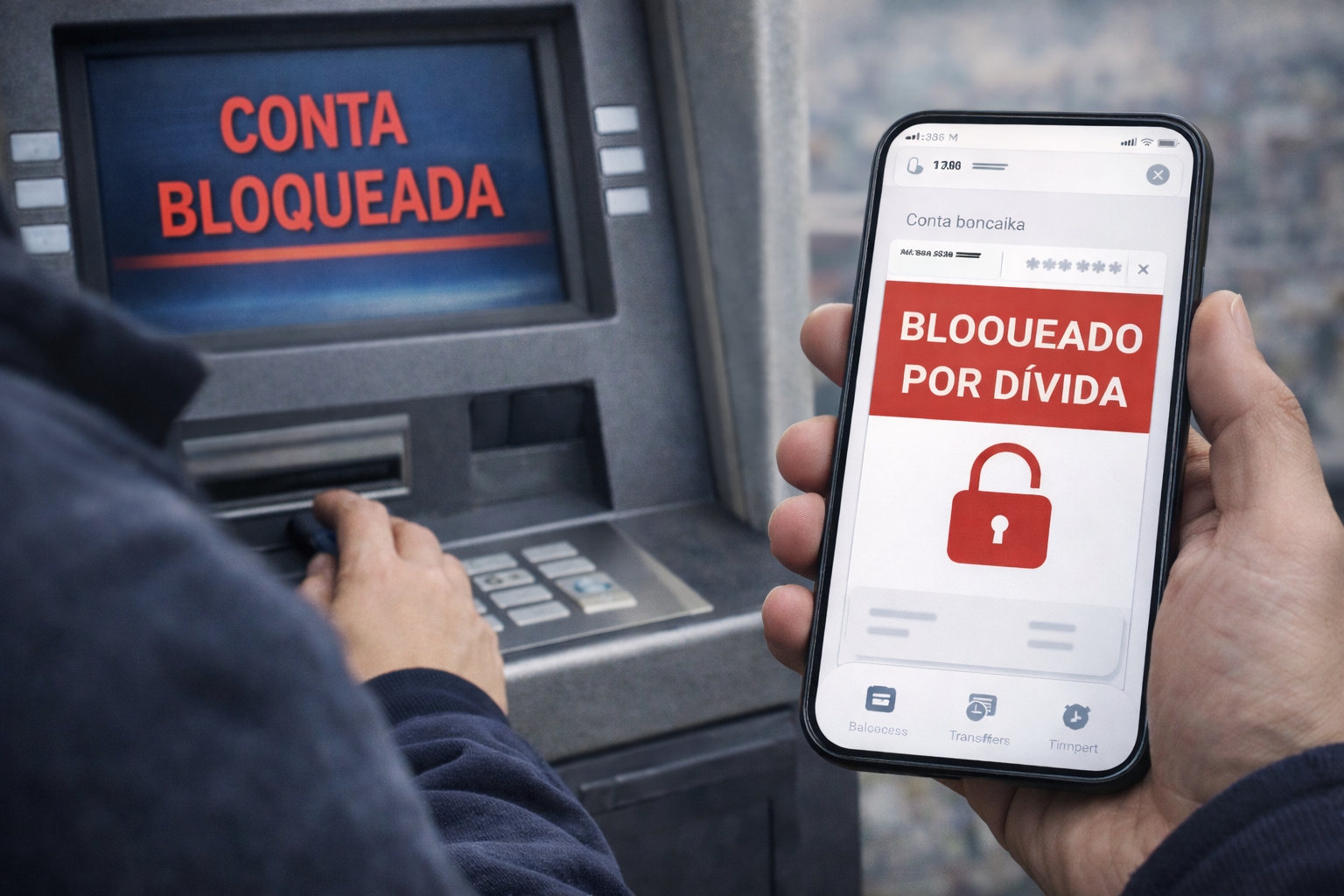


With Default Rates Rising, The Neighboring Country Strengthened “Coercive Collection” And May Freeze Bank Accounts And Restrict Cards Of Taxpayers With Pending Issues, Following Steps And Prior Notifications.
Imagine waking up, opening the bank app and realizing you can’t withdraw, transfer, or use your card. It’s not an internet rumor: in Colombia, the government decided to tighten the screws and take the blocking of financial services for those in default on tax obligations seriously.
The idea is simple (and controversial): if a person ignores warnings and agreements, the system moves to the tough phase and halts transactions until the situation is regularized.
What Is Happening In Colombia
While indebtedness in Brazil continues to draw attention, a neighboring country has shifted to a “lower tolerance” mode regarding financial issues related to taxes. In Colombia, the authority responsible for collection, the DIAN (National Directorate of Taxes and Customs), has implemented a stricter protocol against defaults.
-
The institute that trained the greatest aerospace engineers in Brazil has just opened its first campus outside São Paulo after 75 years: ITA Ceará will have R$ 445 million, new courses in energy and systems, and classes are expected to start in 2027.

-
Luciano Hang, owner of Havan, goes to Juiz de Fora after the tragedy in February, brings R$ 1 million, hands out R$ 2,000 cards, and donates up to R$ 15,000 to victims in the region.

-
The Brazilian passport allows legal residence in dozens of countries without the need for a prior visa, and most Brazilians are unaware that they can apply for residency directly upon arriving in nations in South America, Africa, and even Europe.
-
Petrobras sends a message to Brazilian truck drivers after fuel collapse and reveals plan to have 100% domestic diesel.
In practice, the Colombian government has determined that accounts and cards of taxpayers with pending issues may be blocked until the debt is settled. Many people reacted negatively, but the official justification is that this is part of a heavier oversight phase aimed at reducing tax evasion and increasing the effectiveness of collection.
Why Banks And Cooperatives Are Involved In This
For the blocking to work effectively, authorities have partnered with banks and cooperatives. The goal is to make the machinery run smoothly: when the financial institution receives the official notification, it must suspend services and prevent transactions.
This immediate lockdown has two clear goals: to prevent unauthorized transactions and make the process more efficient. And it’s worth emphasizing an important point: the blocking doesn’t happen out of the blue. Beforehand, the taxpayer is informed by DIAN about the debts and receives opportunities for agreement.
The problem is that many people ignore these proposals, and that was one of the reasons for the government to toughen its stance.
Freezing Bank Accounts: How The Protocol Advances
The determination does not happen “generally” for everyone at the same time. It follows steps and tends to prioritize older taxpayers on the delinquent list. In other words: the longer the pending issue remains unresolved, the greater the chance that the case will enter the restriction queue first.
Another detail is the speed of the procedure. When the blocking is activated, withdrawals and transfers stop immediately. Additionally, the delinquent loses access to the balance until the debts are settled, which prevents any financial movement.
And The Cards? Yes, They Also Enter The Block
It’s not just the bank account that can be frozen. Cards also make the restriction list, whether physical or digital, and become unusable while debts persist.
In real life, this changes everything: everyday purchases, online payments, rides through apps, and even basic expenses end up being compromised.
Government Wants To Tackle The Most Urgent Cases With A Longer History Of Default
The logic of the Colombian government is to tackle the most urgent cases with a longer history of default. DIAN structured the execution steps precisely to prioritize taxpayers who have been non-compliant the longest.
At the same time, deadlines and conditions for regularization continue to be discussed within this tightening. In other words: there is an agreement door, but if the person ignores it, the blocking door opens forcefully.
What Provides Legal And Operational Support For This Type Of Blocking
In Colombia, these measures commonly fall under the so-called coercive collection, which is the administrative procedure used to collect tax obligations when the taxpayer fails to pay on time.
Moreover, the use of precautionary measures such as freezing and embargoing funds appears in the tax framework and in regulations that address collection and preventive measures, reinforcing that blocking may occur preventively or simultaneously with the payment order, with limits defined in applicable legislation.
What This Means For Those With Debts And Who Are Targeted
If you look at it coldly, the message is direct: ignoring notifications and “putting it off” greatly increases the risk of losing control of your own money for a period.
The freezing of bank accounts and the suspension of cards serve as maximum pressure to force settlement or the formalization of an agreement.
And for those observing this type of movement, it’s worth noting that the regional trend is toward more digital oversight, greater cooperation between government and banks, and faster responses when defaults prolong.
Even if it’s unpopular, the government bets that blocking accounts and cards will reduce tax evasion and accelerate the regularization of old debts.
And if this trend catches on in Brazil? With the rise of defaults and the increasing use of technology in oversight, it’s not hard to imagine a similar scenario here, with freezing of bank accounts and restrictions on cards as a way to pressure those who accumulate debts.
Do you think the Brazilian government would have the courage to adopt such a measure? Would this help organize public accounts or penalize even more those who are already indebted? Share your opinion in the comments and share this content to engage more people in this debate.










Que absurdo! Com as taxas de juros enormes dos bancos, fazer algo desse tipo chega a ser desumano. Para a maioria da população a inadimplência se da devido a compras de ítens essenciais como medicações, alimentação, vestuário básico entre outras. Sendo assim, chega a ser um crime, autorizar algo desse nível. Se congelar o salário da pessoa, como ela irá se alimentar e manter necessidades básicas. Agora, mexer nas taxas de juros, que é o maior problema do aumento das dividas da maior parte da população, isso o tal governo não faz. Inimigo de quem o elegeu, isso sim. Bloquear as contas dos grandes devedores, duvido que esse colombiano também o faça. Que o povo colombiano aprenda a votar da próxima vez. Lei pervesa, desumana, arbitrária e ****. Indo no Google verificar a qual grupo ideológico pertence esse “governo”, certeza que é entreguista latino que flerta com os ****, gente ruim e do mal.
Boa tarde!
De acordo sim. As pessoas tem sim seus direitos, mas também existem obrigações.
Hoje é muito cômodo a pessoa deixar de pagar e ficar por isso mesmo. Não tem dinheiro faça bico. Afinal , tudo na vida tem um preço.
Não existe justificativa. Deveu tem que pagar!
Isso mesmo, comentário raso, não tem como pagar, faz bico, não tem como andar, faz bico, não tem mais saúde, faz bico, está velho e doente, faz bico… AFinal de contas, a dívida (na sua mente de pensamento um tanto quanto limitado), quem deve é por um comportamento irresponsável de quem gastou demais “nas baladas” da vida, não de quem se desesperou perante doenças, necessidade de alimentação, vestuário, contas da casa etc. Tem cidadão que vive em Nárnia, não é possível! Ou é dono de banco, servo fiel da desumana extrema direita ****…, enfim, coisa do tipo. Sugestão: viver por um ano com um salário mínimo cuidando e alimentando uma família de no mínimo quatro pessoas (ah, estou sendo boazinha, viu), vá viver onde a maioria do povo brasileiro, colombiano, latino americano vive.
Nao concordei com este tipo de governo.Monicam
Acho que ninguem deve passa fom3 .E obvio que com paciencia se paga divida.
O que aprendi e que dependendo do lugar onde se comra os juros e tao alto que voce compra pouco e paga muito.Isto nao e justo.Mas tem gente rica que topa. mas os pobres merecem respeito nao estao aqui pra enricar empresas mas pra progredir se desenvolver..