





 Portuguese
  English
  Spanish
  4 min of reading
  1 comment


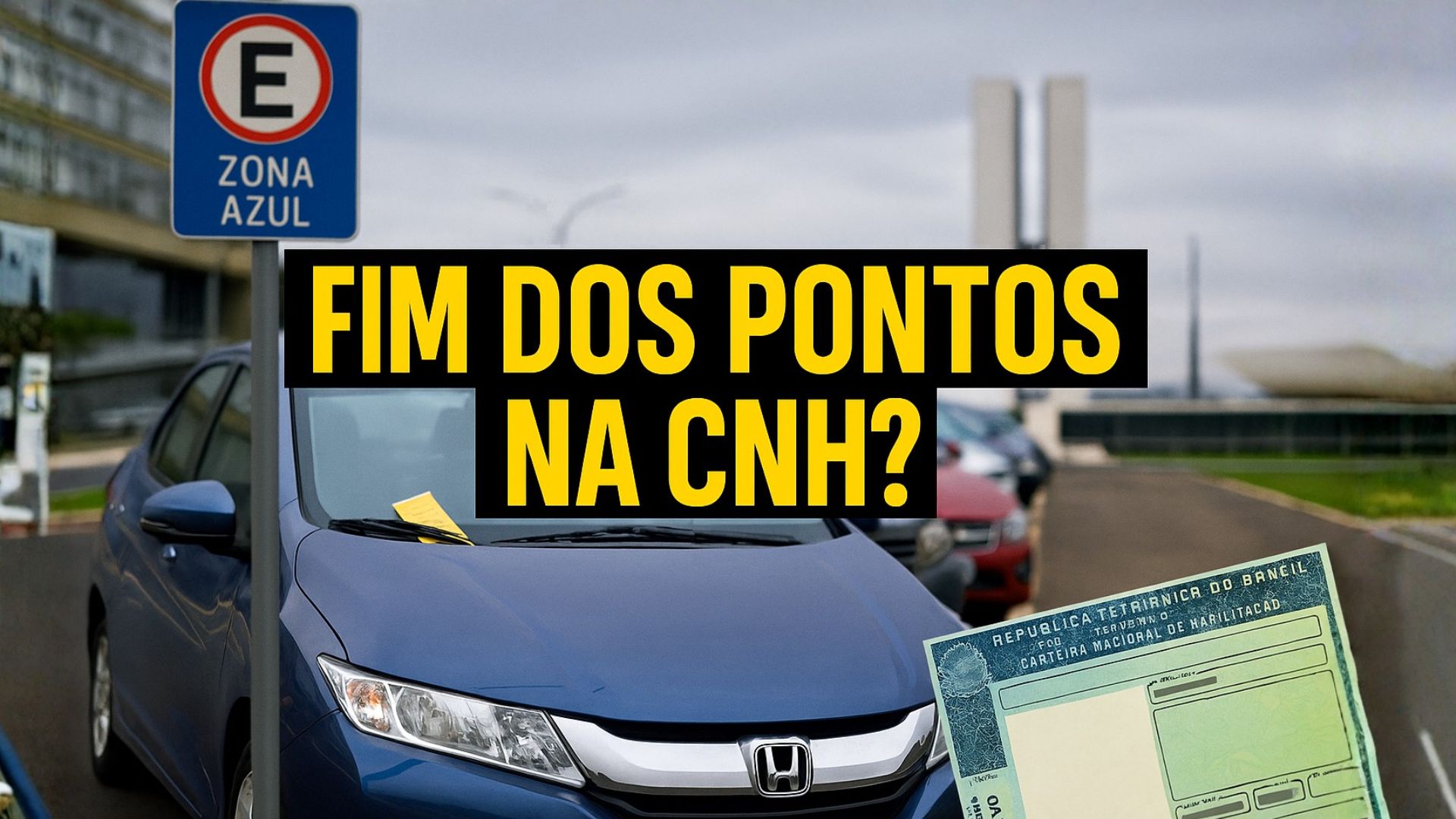


Approved Proposal In Chamber Commission Limits Point Application On Driver’s License For Non-Payment In Blue Zone And Provides That The Penalty Only Applies From The Third Offense In A 12-Month Period.
The Chamber of Deputies’ Transportation and Communications Committee approved the Bill 3950/23, which proposes changes to the Brazilian Traffic Code (CTB) to limit the application of points on the National Driver’s License (CNH) for non-payment in rotating parking.
According to the text, violations in areas like the Blue Zone would only generate points from the third occurrence within a 12-month interval, although the monetary fine remains valid from the first infraction.
The project is authored by Deputy Luciano Alves (PSD-PR) and received favorable feedback from the rapporteur Zé Trovão (PL-SC).
-
These living root bridges and ladders are over 700 years old and help indigenous people survive in one of the rainiest regions in the world.

-
From sertanejo star to international investor: Ana Castela invests millions in a mansion in the USA, creates a themed accommodation in Orlando, and shows that the “boiadeira” also wants to grow away from the stage.

-
The 10 most stunning motorhomes in the world: a $3 million trailer with a rooftop nightclub and garage for a Ferrari, “palaces on wheels” with Italian marble, private cinema, and five-star hotel luxury for billionaires.

-
Trump wanted to spend $400 million on the White House, but the courts prohibited the million-dollar construction.


According to the author, the intention is to prevent drivers from being penalized with points for isolated and unforeseen situations, such as medical or family emergencies.
The rapporteur defended that the proposal is in accordance with the principles of reasonableness and proportionality by differentiating occasional infractions from repeated behaviors.
“The proposal distinguishes isolated conduct from reiterated conduct, and only in the latter case applies the administrative penalty of points,” stated Zé Trovão in his report.
The approved text clarifies that the change does not eliminate the monetary fine.
The amount must continue to be charged, but the points on the CNH will only be applied when there is recidivism within twelve months, starting from the third infraction.
What Changes For Drivers
Currently, not paying the rotating parking fee can result in fines and points on the CNH.
If the PL 3950/23 is definitively approved, only from the third infraction for this reason, within 12 months, the driver will start to have points registered on their record.
According to the project’s justification, the measure seeks to distinguish isolated situations from recurring behaviors, maintaining the financial penalty for all cases.
The idea, according to the text, is to preserve the educational character of sanctions and adjust the severity of the penalty according to the frequency of the infraction.
Arguments Presented In The Proceedings
In the approved report, Zé Trovão emphasized that the proposal does not exempt the driver from paying the fee or the corresponding fines.
The lawmaker highlighted that points should only apply in cases of repeated behavior, which, according to him, preserves the balance between punishment and proportionality.
Deputy Luciano Alves, the author of the proposal, stated that the goal is to protect drivers facing unforeseen events and unable to make the parking payment on time.
The text does not change other operational rules for rotating areas nor interfere with municipal competencies to monitor and charge for the use of parking spaces.
Next Steps In Congress
The PL 3950/23 will now proceed, in conclusive character, for analysis by the Commission on Constitution and Justice and Citizenship (CCJ).
If approved and there is no appeal to the Plenary, the proposal may be sent directly to the Senate.
If the text is also approved in that House, it will be sent for presidential sanction before coming into effect.
Meanwhile, the current rules of the Brazilian Traffic Code remain valid.
The proposal can still be modified during the CCJ review, a stage where constitutional and legislative technical aspects are verified.
Relationship With The Brazilian Traffic Code
The project amends a section of Article 24 of the CTB, which addresses the competencies of municipalities in managing the road system, including the management of paid rotating parking.
The proposal creates a national criterion for applying points on the CNH in cases of non-payment in the Blue Zone, without altering the autonomy of municipalities to define fees, hours, and operational rules.
With the standardization, the intention is to unify the handling of this type of infraction throughout the country, avoiding divergent interpretations among transit authorities.
Possible Impacts And Questions
Traffic specialists consulted by sector agencies assess that points on the CNH have an educational and punitive function, as they directly reflect on the driver’s record and can result in the suspension of the right to drive.
According to these specialists, reserving points only for recidivism may concentrate the punitive effect on drivers who commit the same infraction frequently.
On the other hand, area technicians argue that the maintenance of the fine from the first occurrence remains an effective tool to discourage non-payment of parking spaces and ensure turnover, especially in areas with high parking demand.
There is still no definition on how recidivism will be monitored, which will require integration between municipal and state traffic systems to identify repeated infractions within the 12-month period.
The regulation of these procedures will depend on complementary rules to be issued by the competent bodies, should the project be enacted into law.
What Remains Unchanged
The proposal does not change other infractions related to parking, such as stopping in prohibited places, blocking public roads, or occupying reserved spaces without authorization, which remain subject to penalties already provided for in the Traffic Code.
There is also no provision for amnesty for previous fines.
The change, if approved, will only take effect for new infractions committed after the law comes into force.
The debate on the topic is expected to continue in the Chamber and the Senate, with possible adjustments during the proceedings.
If approved, the measure could change the way traffic authorities handle recidivism in minor infractions, such as non-payment in the Blue Zone.
With the discussion ongoing, specialists and lawmakers still diverge on the impact of the proposal on driver behavior.







A cobrança de tarifa de estacionamento Zona Azul nas ruas das cidades é abusiva. As ruas são públicas. Tem que acabar com essa extorsão sus cidadãos, vai chefsrbo fuaxwue irão cobrar para se tomar um banho de mar, e esse dia não está longe tengsm certeza. O socialismo está acabando com o Brasil. Ainda dá tempo para reagir