





 Portuguese
  English
  Spanish
  3 min of reading
  0 comments


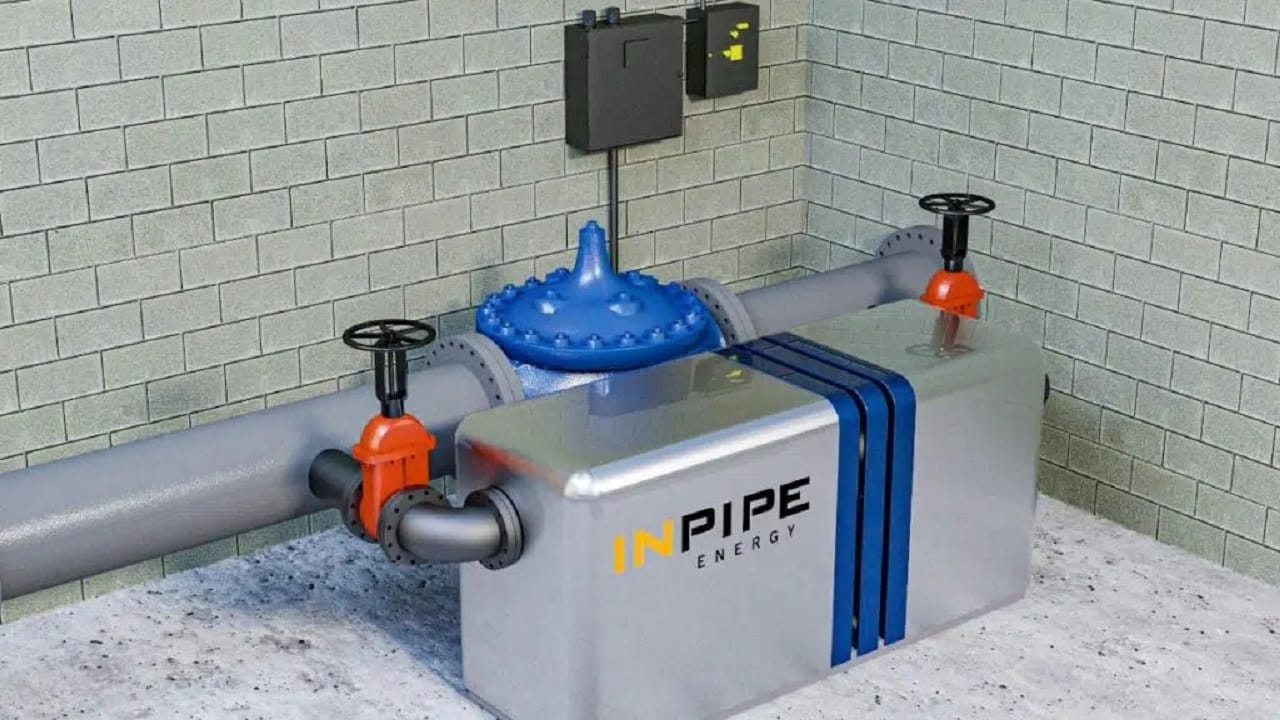
American Company Develops Innovative Mini Hydroelectric Turbine That Can Generate Up to 130 Thousand kWh of Clean Energy Annually, with Potential to Transform the Electric Market.
Mini hydroelectric turbines are emerging in the market as an innovative alternative for providing power to homes and communities, without the need for dams or intense water flows. These devices can operate in rivers and even in bodies of water with lower volume and slope. The novelty, however, is the InPipe HydroXS mini hydroelectric turbine, which goes a step further by utilizing water flow in pipelines to generate clean energy, representing a significant advancement in sustainable energy.
Understand How the New Mini Hydroelectric Turbine Works

It is important to highlight that the technology is meant to be used in large pipelines, not in household plumbing. The turbines are ideal for potable water distribution systems, treatment plants, industrial installations, and other facilities, with equipment available in various sizes.
The idea is simple: to transform the functionality of common control valves into a source of clean energy. This technology not only manages pressure and flow control accurately but also converts the pressure of the water circulating in the pipeline into electrical energy, a resource that was previously wasted.
-
After decades of failed attempts, Brazil is once again looking to space with an orbital rocket measuring 12 meters, weighing 12 tons, costing R$ 189 million, and scheduled for launch in 2026, in a new race to finally achieve autonomous access to orbit.

-
The Earth will plunge into a few minutes of darkness in broad daylight in August 2026, when a total solar eclipse transforms the sky into one of the most impressive astronomical phenomena in recent years.

-
How the terraforming of Mars can transform the planet: artificial aerosols can increase the temperature by up to 35°C in 15 years, creating conditions for liquid water.

-
Scientists drilled nearly 8,000 meters into the ocean floor above the fault that caused the 2011 tsunami in Japan and discovered that a layer of clay 130 million years old was responsible for making the wave much worse than any model had predicted.

This new mini hydroelectric turbine represents an important advancement, reducing operational costs, saving water, decreasing CO2 emissions, and extending the lifespan of infrastructure. The central concept of the InPipe HydroXS is to give new value to water pressure, transforming it into electricity. This results in a more accessible and reliable water supply for businesses and customers.
With the ability to implement a single unit for an entire system, the benefits are scaled in terms of energy savings, meeting sustainability goals, and water conservation.
New Mini Hydroelectric Turbine Can Generate Up to 130 Thousand kWh Per Year
The new technology from InPipe Energy, based in Oregon, was first implemented in California. The East Bay Municipal Utility District (EBMUD) installed the mini hydroelectric turbine to harness the flow of municipal water pipelines to generate clean energy, with a potential to produce around 130 thousand kWh per year.
Microturbine technology, the basis of this innovation, efficiently uses hydroelectric energy from streams, pipelines, and rivers, operating continuously and adapting to the flow and pressure of the water.
EBMUD, as one of the main suppliers of water and wastewater in California, has managed to reduce its CO2 emissions by 50% since 2000, due to clean energy and efficient equipment. This mini hydroelectric turbine project is part of its decarbonization strategy, focused on achieving carbon neutrality by 2030.
Advantages of the New Clean Energy Generation Technology
Among the main benefits of the equipment, the manufacturer highlights the generation of clean energy by utilizing unused pressure and the simple integration into existing pipelines without interrupting normal operations.
The system can be an effective tool for reducing pollutant emissions and reliance on carbon-based energy sources. To monitor water flow and energy generation, an InPipe control panel continuously provides hydraulic information, enabling effective monitoring of energy production and sustainability.
The city of Portland, in Oregon, has also tested a similar initiative. The method was developed in partnership with the company LucidEnergy and the system works with small turbines installed in the pipes, which spin due to water flow and send this energy to a generator, directed to the city’s power grid. The same company has already used this method to power streetlights and other points in California.








-

-

2 pessoas reagiram a isso.