





 Portuguese
  English
  Spanish
  3 min of reading
  0 comments


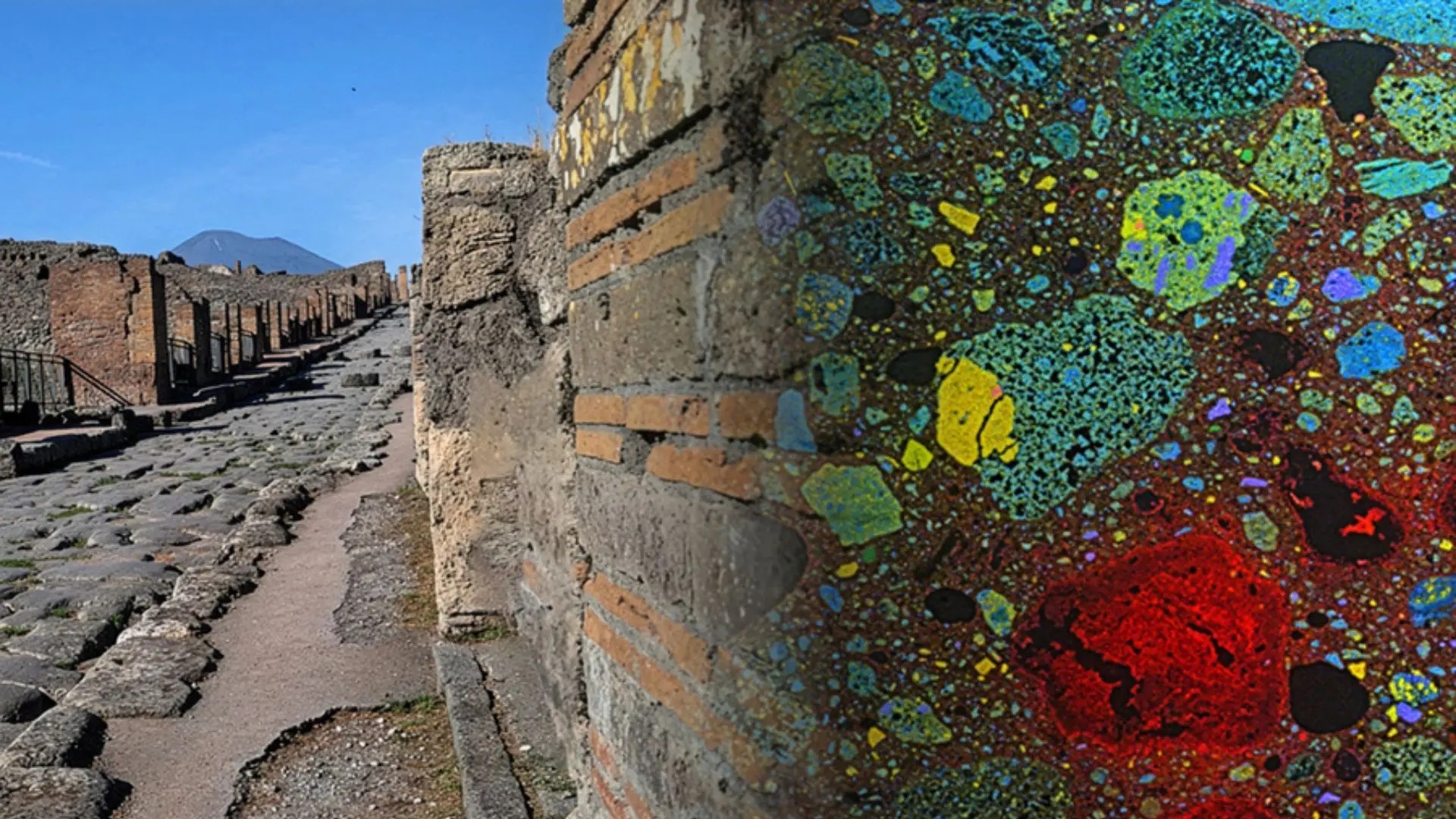
Research Details How The Hot Mix Of Quicklime, Volcanic Ash, And Water In 79 A.D. Generated Self-Healing Clasts That Kept Roman Concrete Functional For Two Thousand Years, Revealing An Active Mineral Regeneration Process
The study conducted in 79 A.D. at a preserved site in Pompeii shows how the hot mix of lime, volcanic ash, and water generated a concrete capable of lasting for millennia and self-repairing when cracks appeared.
Hot Mixing Technique And Formation Of Self-Healing Clasts
The team identified that the Romans mixed ground quicklime, volcanic ash, and other dry ingredients before adding water, creating intense heat. This process trapped highly reactive lime in tiny internal clasts which, over the centuries, dissolved and continuously filled cracks.
Associate Professor Admir Masic explained that the opening of the preserved area allowed us to observe piles of materials prepared to raise a wall and directly relate the technique to Roman use in 79 A.D., consolidating the chronology of the practice.
-
Researchers in the U.S. have created a flying robot that transforms into a land vehicle while still in the air. The technology, based on aerodynamic transition, converts landing into a scene worthy of Transformers and redefines mobility between sky and ground.

-
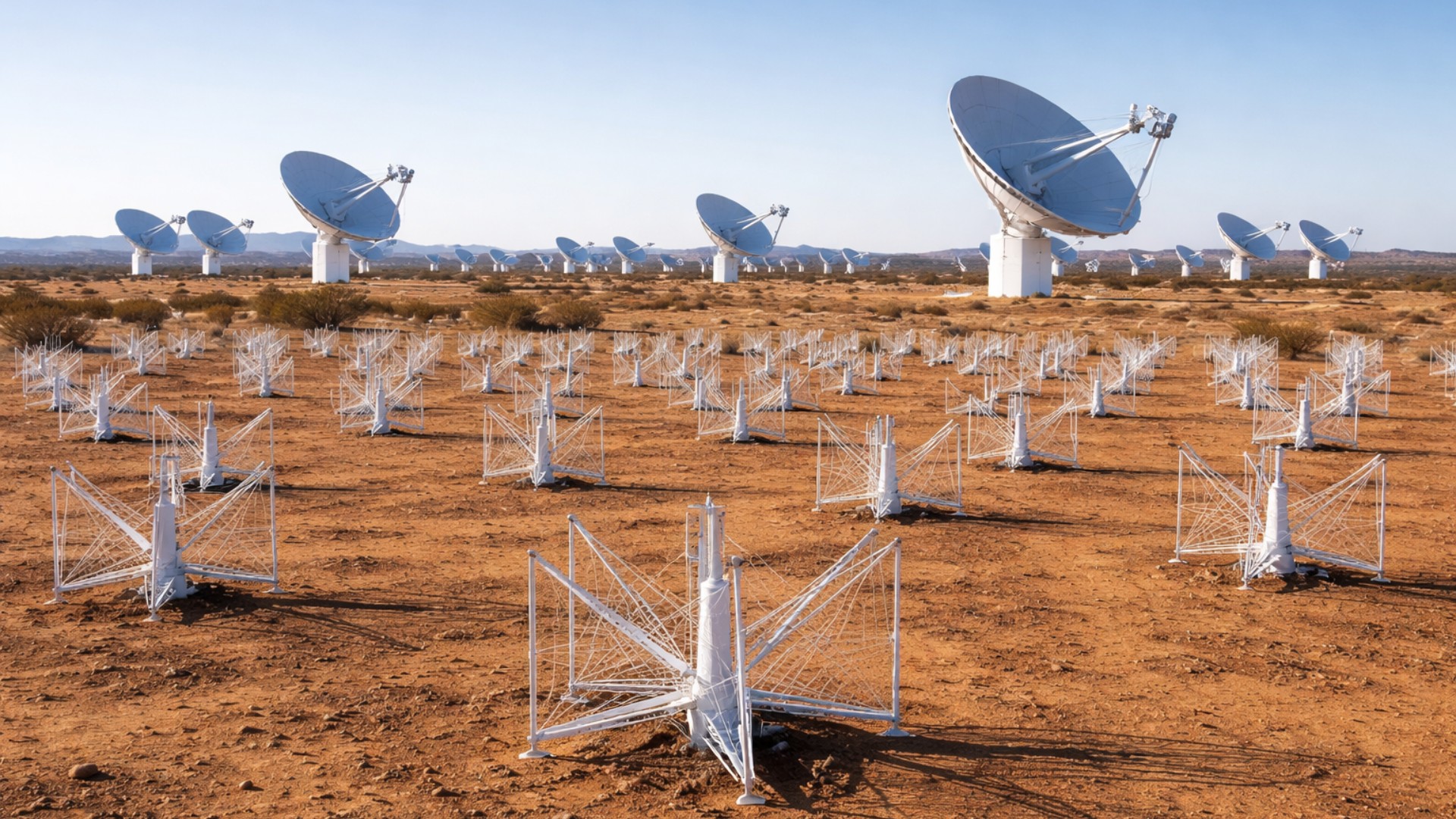
Spread across two continents, with 197 parabolic antennas in South Africa, 131,000 2-meter antennas in Australia, and a range of up to 150 km, the SKA begins to “listen” to the Universe on an unprecedented scale and accelerates the search for black holes, primitive galaxies, and nearly invisible radio signals.
-
Goodbye batteries: a new sensor created by Japanese scientists uses sweat as an energy source and points to a promising path for more sustainable devices, with greater autonomy and less need for frequent recharging.

-
The Brazilian Army inaugurated the assembly line for the Guaicurus armored vehicle with a contract for 420 units by 2033, and the same vehicle has already been tested in combat in Afghanistan and Lebanon by European armies.


The analyses showed that the heat generated was crucial for stabilizing lime fragments, which remained active within the concrete and responded to structural damage accumulated over time, prolonging the integrity of the works.
The observation of walls at different stages revealed that the self-repairing capacity accompanied the entire construction phase, indicating standardization of the Roman method and reinforcing its systematic application in monumental buildings of the Empire.
Archaeological Evidence In Pompeii Confirms The Process
The archaeological site preserved by the eruption of Mount Vesuvius presented samples of concrete containing the classic lime fragments responsible for the centuries-long durability of the structures and for the resistance to environmental variations.
Intact fragments of quicklime pre-mixed with dry ingredients were found in piles of raw material, confirming that the first stage of the process was carried out before the insertion of water at the construction site.
According to Masic, the Romans calcined limestone, ground the material to specific sizes, and mixed this dry quicklime with volcanic ash, creating a cementing matrix that only then received water and initiated the thermal reaction.
Pumice particles removed from the site showed the formation of new minerals that developed over time within the concrete, strengthening the structure and increasing its resistance to physical and environmental damage.
These secondary deposits significantly contributed to maintaining the stability of Roman concrete, reinforcing its ability to withstand earthquakes, volcanoes, and long periods of underwater exposure, as highlighted by Masic in his evaluation.
Dynamic Properties And Contemporary Applications
The research points out that the concrete continuously regenerated, remained reactive, and exhibited highly dynamic behavior, factors that explain its longevity and the persistence of Roman bridges, aqueducts, and buildings to this day.
The company DMAT, linked to Masic, works to apply this knowledge into modern solutions that seek greater durability, environmental resistance, and less impact on contemporary construction.
The researcher stated that filling pores in volcanic ingredients through recrystallization represents an ideal model for new formulations, as it allows modern materials to adopt similar regenerative mechanisms.
The quest for more sustainable compositions has gained relevance because self-repairing materials help reduce maintenance costs and prolong the lifespan of works, although there is still the challenge of adapting such properties to current industrial demands.
Review Of Historical Concepts And New Scientific Paths
The hot mixing method contradicts the architectural dogma attributed to Vitruvius, whose work influenced the foundation of Roman construction theory, and demonstrates that different practices coexisted in the works of the period.
The identification of this contrast inspires a new review of the diversity of techniques applied in the Empire and opens up space for broader interpretations of its structural dominance, although some points still seem confusing due to partial records.
The complete results were published in the journal Nature Communications on December 9, marking the discovery as a milestone in understanding ancient engineering and the internal functioning of Roman concrete.
The final information highlights that the findings expand the scientific repertoire on ancestral technologies and provide support for future research, although some samples show slight variations that require additional analyses to avoid premature conclusions.






-

-

3 pessoas reagiram a isso.