





 Portuguese
  English
  Spanish
  3 min of reading
  0 comments


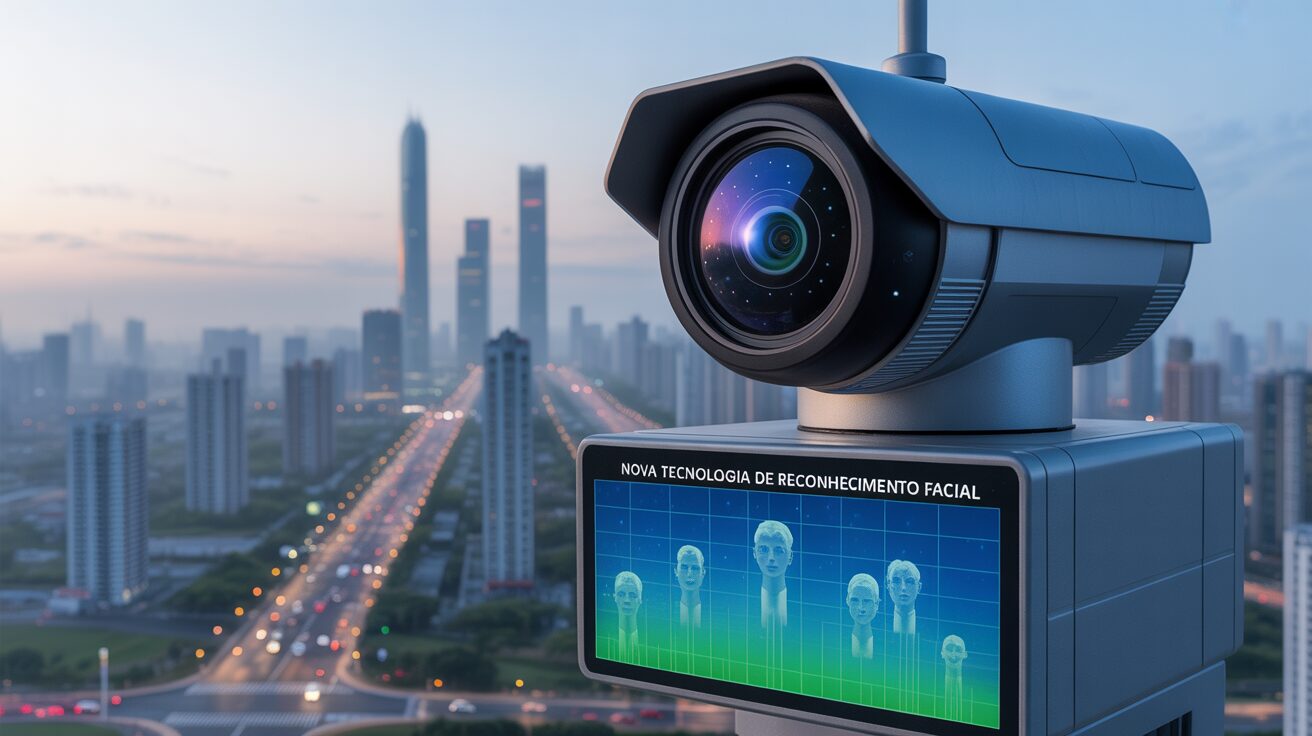
System Capable of Identifying Faces at 100 Km: Meet China’s New Facial Recognition Technology That Promises to Render Spy Cameras Obsolete.
China Tests Facial Recognition System Capable of Identifying Faces at 100 Km: Technological Advancement Raises Alarms About Espionage: China continues to rapidly advance in the development of cutting-edge technologies. Although a large part of these innovations is focused on the civilian sector — such as smart urban infrastructure, artificial intelligence, and 5G communication — a significant portion of investments has bolstered the country’s military power and surveillance systems. The latest demonstration of this strategy is an experimental facial recognition system from China capable of identifying faces from up to 100 km away, an impressive feat from a technical standpoint, but which raises serious concerns about privacy and espionage.
This new technology, still in the testing phase, represents an unprecedented leap in long-distance monitoring capabilities, and could redefine the boundaries between national security and population control. According to experts, the project reinforces China’s role as a global leader in surveillance technologies, while simultaneously raising an alarm for possible applications in international espionage and internal repression.
Technology Can Identify Details as Small as 1.7 Mm Wide
The information was obtained from the South China Morning Post, which details how a team from the Aerospace Information Research Institute of the Chinese Academy of Sciences was able to achieve successful observations with an innovative laser system. This system operates at optical wavelengths and aids in capturing images at enormous distances, provided certain conditions are met.
-
10 million robots per year in unprecedented industrial scale place China at the forefront of automated production and raise the question of how far machines can manufacture other machines.

-
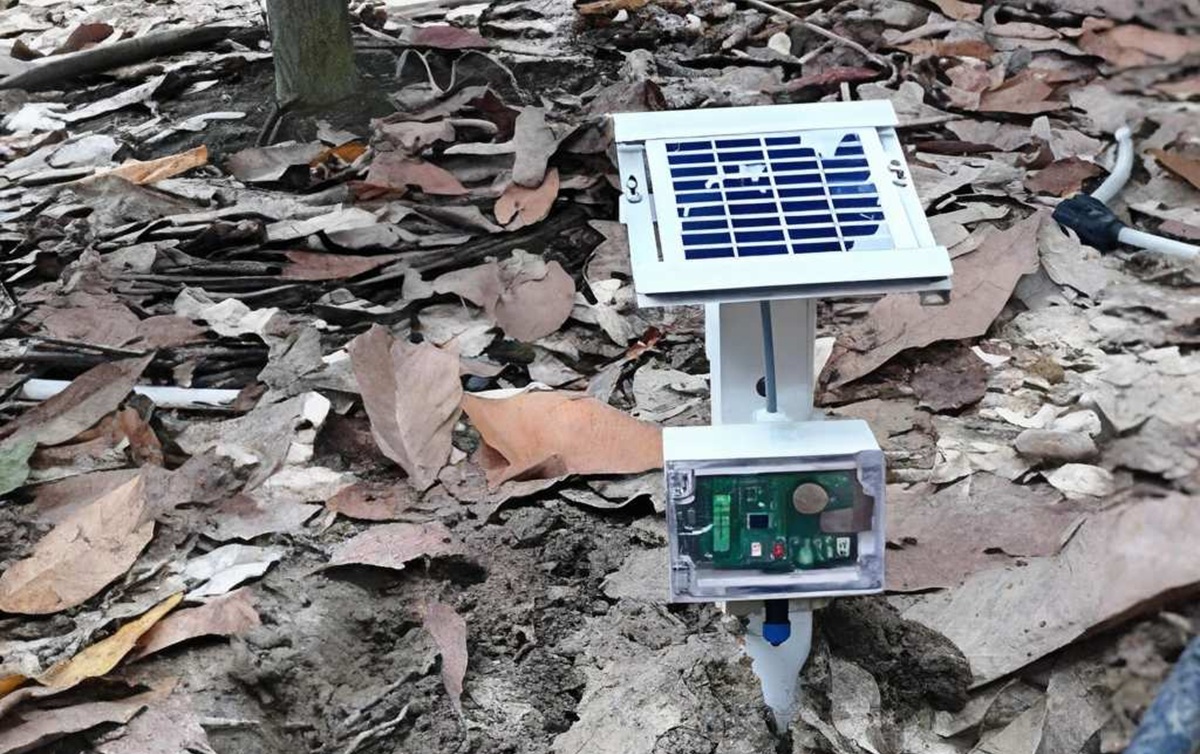
Researchers in Malaysia buried sensors at 15 and 30 cm and can now predict soil moisture with 95.49% accuracy, helping the field to irrigate only at the right time and reduce water waste.
-
Technology developed to protect military communications in the 1940s scrambled voices and today gives rise to the robotic sound that dominates current music.

-
If you look at the sky this Wednesday, you will see the Pink Moon shining at its peak at 10:11 PM, but before you get disappointed, know that the name has nothing to do with the color and instead refers to flowers that bloom at this time in the United States.


In this way, the system was installed by scientists on one bank of Qinghai Lake, a large alpine lake in the remote northwest of China. On the other side, exactly 101.8 km away, a set of reflectors was installed. The impressive part is that, although the distance between the two was enormous, the system was able to distinguish details as small as 1.7 mm wide.
It is important to mention that the laser makes all the difference. According to the researchers, it achieves a precision of 15.6 mm when measuring distances, which theoretically ridicules spy cameras and telescopes with lenses, surpassing them by 100 times.
However, observations must be made under ideal weather conditions, with low cloud cover, stable wind, and, for orbital observations, entirely clear skies are required.
Understand How Scientists Achieved This Feat
Although tests of China’s new facial recognition technology have been conducted on land, the Hong Kong newspaper states that this technology could easily be used for espionage from space. Its unprecedented ability to capture details allows for facial identification from orbit or, conversely, in analyzing satellites from adversarial countries with great precision from the Earth’s surface.
To achieve face identification at 100 km away, a combination of innovations was required. To begin, the scientists divided the laser beam into a matrix of micro-lenses, allowing the optical aperture of the system to be expanded from 7.2 mm (0.68 inches) to 68.8 mm (2.71 inches). With this approach, it was possible to overcome the usual limitation between aperture size and field of view.
Additionally, they incorporated a specialized laser module capable of emitting signals at frequencies exceeding 10 gigahertz. As a result, China’s new facial recognition technology achieved a highly fine resolution, enabling distance measurements with high precision.
At the same time, a narrow color spectrum was maintained to enhance azimuth resolution, thereby optimizing detail detection.
Understand the Combined Functioning of the New Technologies That Identify Faces
Facial recognition is a technique for identifying people based on the details of their faces. It uses, therefore, facial biometrics to accurately identify an individual’s face, without confusion between similar-looking people or even twins.
The operation of a facial recognition system is based on software and algorithms that map patterns on individuals’ faces. In other words, the facial reader identifies unique characteristics of a person’s face.
Initially, the face is captured and detected, the image is analyzed, and then converted into data. Finally, the facial print is compared to find a match in the database, which can be a public agency or a private company.








Seja o primeiro a reagir!