





 Portuguese
  English
  Spanish
  4 min of reading
  0 comments


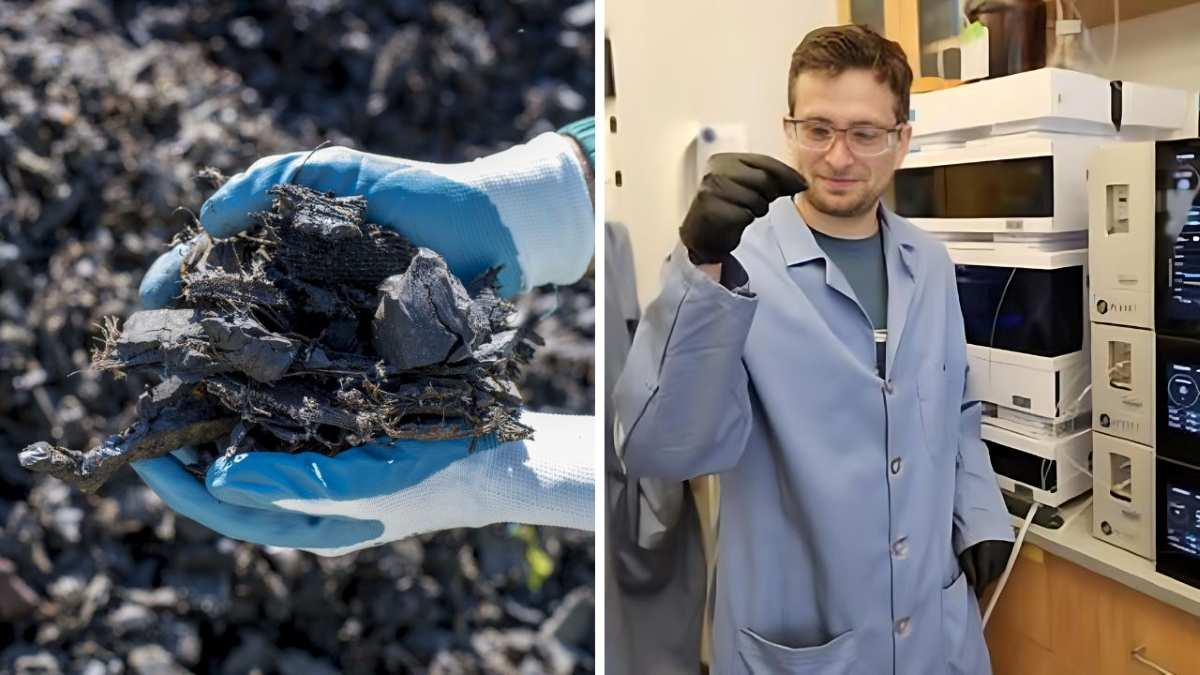
Discarded Tires Are An Environmental Problem On A Global Scale, But A Recent Innovation Could Change That Scenario. US Scientists Have Developed A Technology That “Resurrects” Unused Tires, Transforming Them Into Valuable Industrial Material In Just Six Hours.
Every year, millions of tires are discarded worldwide, accumulating in landfills and causing serious environmental risks. In the United States alone, 274 million tires were thrown away in 2021. Because of this, many researchers are working on more efficient tire recycling.
About 20% of this total ended up in dumps. The problem is significant. These waste materials take up space, pollute the soil, and can even catch fire on their own, releasing harmful gases.
The challenge is to find a safe, cheap, and efficient way to give new use to such a durable and difficult-to-recycle material. Now, a team of researchers in the United States has developed a cleaner and more promising alternative.
-
With a cost per shot close to zero, the DragonFire laser could change naval warfare in 2027 and provide British ships with nearly unlimited defense against drones.

-
A British startup creates tires that generate electricity in electric vehicles when passing over potholes, speed bumps, and cracks.

-
Scientists have created robots made with living cells that have their own nervous system, swim on their own, explore the environment, and self-organize without any genetic engineering, and now they want to do the same with human cells.

-
Students create a solar-powered ambulance that operates without a plug, without fuel, and still keeps medical equipment running in remote areas.


A New Idea For An Old Problem
The traditional process of tire recycling, such as pyrolysis, involves high temperatures. This consumes a lot of energy and releases toxic substances like benzene and dioxins, harmful to human health and the environment.
To change this scenario, scientists from North Carolina State University, with support from the U.S. Department of Energy, created a different solution. Led by Dr. Aleksandr Zhukhovitskiy, the group developed a chemical method that works in a more selective and efficient way.
This new technique can break the rubber chains—the material that makes up tire rubber—at much lower temperatures. And the best part: without producing hazardous waste.
How The New Tire Recycling Process Works
The secret lies in the so-called “C–H Bond Amination,” followed by a rearrangement of the polymer. In simple terms, scientists use a substance called disulfide to modify specific points of the polymer chain.
This modification allows breaking the rubber structure, transforming it into soluble compounds that contain amines. These compounds, in turn, can be used to manufacture epoxy resins.
Tests with a model polymer showed that the molecular weight was drastically reduced: from 58,100 g/mol to just 400 g/mol. In real tires, the degradation time was only six hours.
In the end, the obtained product had a quality comparable to commercial epoxy resins.
More Sustainable, Less Polluting
Unlike older processes, this new technique does not rely on high temperatures or expensive catalysts. Everything happens between 35 and 50 °C, in an aqueous medium.
This means lower energy consumption, less pollutant emissions, and a reduced risk of generating toxic waste. In other words: it’s more economical, safer, and more eco-friendly.
Another positive point is that the materials produced with this method have real value for industry. Epoxy resins are used in adhesives, paints, coatings, and even in parts for cars and airplanes.
Today, these resins mainly come from petroleum. But with this new technique, it is possible to replace part of the fossil raw material with recycled rubber.
Reusing tires to produce high-value industrial inputs is an important advancement. This reduces dependence on petroleum derivatives and turns waste into resources.
This is the foundation of the circular economy concept: making the most of waste and minimizing environmental impact. And that is exactly what the new process proposes.
Environmental Impact Assessment
The researchers also assessed the impact of the technique using a metric called the E-factor, which measures the amount of waste generated per unit of product.
Although the total value is still high due to the use of solvents, the simple E-factor—excluding solvents—is already much lower. This shows that, with some adjustments, the process can become even more sustainable.
Promising Future For Tire Recycling
If it is possible to scale this method industrially, it could completely change the fate of discarded tires.
Instead of taking up space in landfills and releasing pollution, this waste could turn into useful and safe products.
Additionally, the process:
- Reduces the use of petroleum derivatives.
- Saves energy.
- Avoids the release of toxic substances.
- Promotes the reuse of waste.
With all these benefits, the innovation has the potential to become a key element in a new recycling model: cleaner, more efficient, and more responsible to the planet.








Seja o primeiro a reagir!