





 Português
  Inglês
  Espanhol
  4 min de leitura
  1 comentário


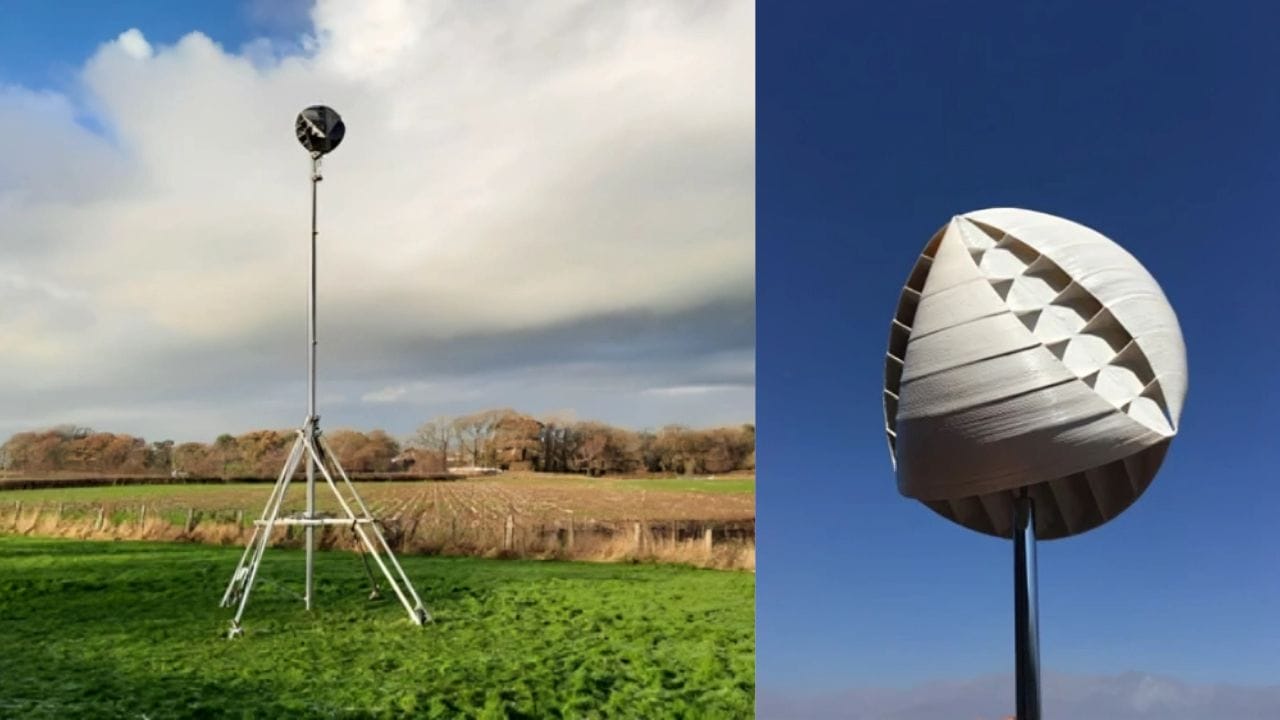

Amid The Rise Of An Innovative Wind Turbine Developed By NASA And Engineers From The United Kingdom, The Renewable Energy Market Faces A Potential Game Changer.
In the dynamic landscape of renewable energy, an innovation emerges that promises to change the game: the O-Wind turbine. Developed by NASA and engineers from the United Kingdom, this small yet powerful wind turbine is designed for installation in urban areas, including residential rooftops.
Its ability to capture wind from any direction represents a significant leap in terms of accessibility and energy efficiency. However, in light of this new era, the question arises: will solar panels maintain their place in the renewable energy market?
How The O-Wind Wind Turbine Works


The O-Wind wind turbine stands out for its omnidirectionality, capable of harnessing wind coming from all directions. With an innovative spherical design and strategically positioned openings, the turbine spins around a fixed axis connected to a generator, producing electricity. Ideal for urban environments, where wind patterns are unpredictable, the O-Wind does not require a minimum wind speed, specific height, or orientation to operate, and is also silent and visually unobtrusive.
-
Renewable energy advances over protected areas in Brazil, and a survey by the Energy Transition Observatory reveals silent impacts that challenge environmental conservation and pressure sensitive traditional territories.

-
Rio Grande do Sul accelerates energy transition: State invests in renewable technologies and consolidates decarbonization strategies and pathways to attract billions in new industrial investments.

-
With 160,000 m² of collectors, an area larger than 20 football fields, Silkeborg, in Denmark, hosts a solar thermal plant that heats 19,500 homes and could become the largest solar heating plant in the world.

-
A study reveals the expansion of renewable energy procurement in Brazil and shows how companies are taking advantage of opportunities to reduce expenses, ensure energy efficiency, and strengthen strategic environmental commitments.


Comparison With Solar Panels
While the O-Wind wind turbine offers a new pathway for renewable energy generation in urban and residential areas, solar panels remain a consolidated solution, with higher energy output per square meter. Solar panels have the advantage of generating energy more consistently in sunny regions, without relying on wind fluctuations. However, the effectiveness of solar panels is influenced by orientation, tilt, and local weather conditions.
With an estimated price of approximately 200 dollars per unit, the O-Wind wind turbine presents itself as an economically attractive option, although additional installation and maintenance costs should be considered. In comparison, installing solar panels involves a higher initial investment, but technological advancements and mass production have contributed to reducing these costs over time.
The Future: Hybrid Energy Systems
The debate between wind turbines and solar panels can be redirected to a more integrative perspective. Future trends point towards combining these technologies in hybrid systems, where wind and solar energy are complementary, optimizing energy production and ensuring a more stable and efficient supply. This synergistic approach allows for exploring the best of both sources, adapting to the specific conditions of each location.
The innovation brought by the O-Wind wind turbine does not signify the end of solar panels but rather expands the range of options available for renewable energy generation. In a world where the demand for sustainable and efficient solutions is growing exponentially, the coexistence and integration of different technologies emerge as the most promising path. As we move toward a greener future, diversifying renewable energy sources and developing hybrid systems will be crucial to meet global energy needs sustainably.
What Are The Types Of Residential Wind Turbines
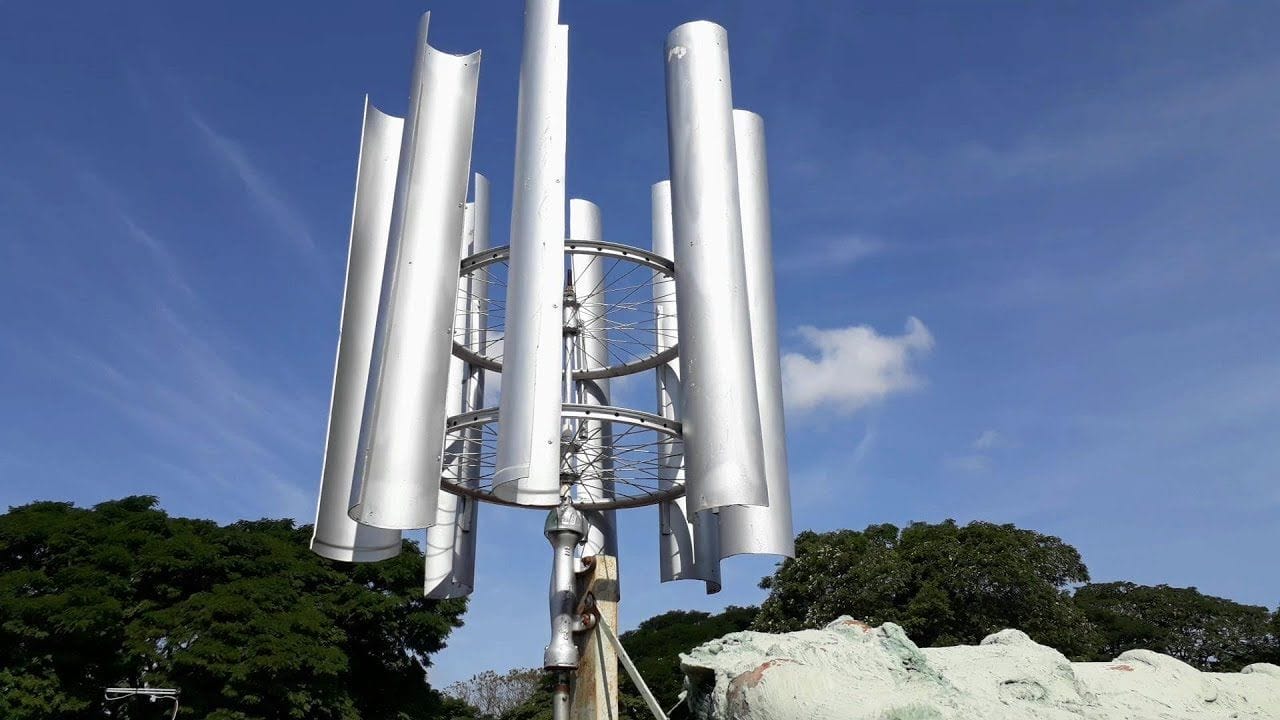
As the world moves towards greener and more sustainable solutions, residential wind turbines emerge as a promising alternative for generating clean energy right from the comfort of home. There are various types of these turbines, each designed to meet different needs and adapt to various environments. Let’s explore the main categories and their distinct characteristics, helping in choosing the best option for each home.
Horizontal Axis Wind Turbines (HAWT)
Dominating the landscape due to their efficiency and popularity, HAWTs are characterized by a rotation axis parallel to the ground. This configuration allows for optimized wind capture, making them an efficient choice for areas with consistent winds. However, their installation may require considerable space, and often a raised location to capture stronger winds.
Vertical Axis Wind Turbines (VAWT)
With a design that allows the rotation axis to be perpendicular to the ground, VAWTs stand out for their capacity to capture winds from any direction, being ideal for residential environments with variable wind patterns. Among the variants, Savonius turbines are recognized for their ease of construction and maintenance, while Darrieus turbines are notable for their high efficiency due to their aerodynamic design.
Medium And High Power Turbines
Although more common in commercial or large-scale installations, medium (up to 150kW) and high power (over 150kW) turbines can also be considered for large-scale residences or properties with high energy demands. These offer significant energy generation potential but require a greater initial investment and specific installation considerations.
When considering the adoption of residential wind turbines, it is crucial to evaluate not only the technical aspects but also the initial costs, potential energy savings, environmental impact, and maintenance requirements. It is important to be aware of local regulations and the possibilities of selling excess energy back to the grid, a practice known as net metering.









Quero trabalhar com vcs