





 Portuguese
  English
  Spanish
  3 min of reading


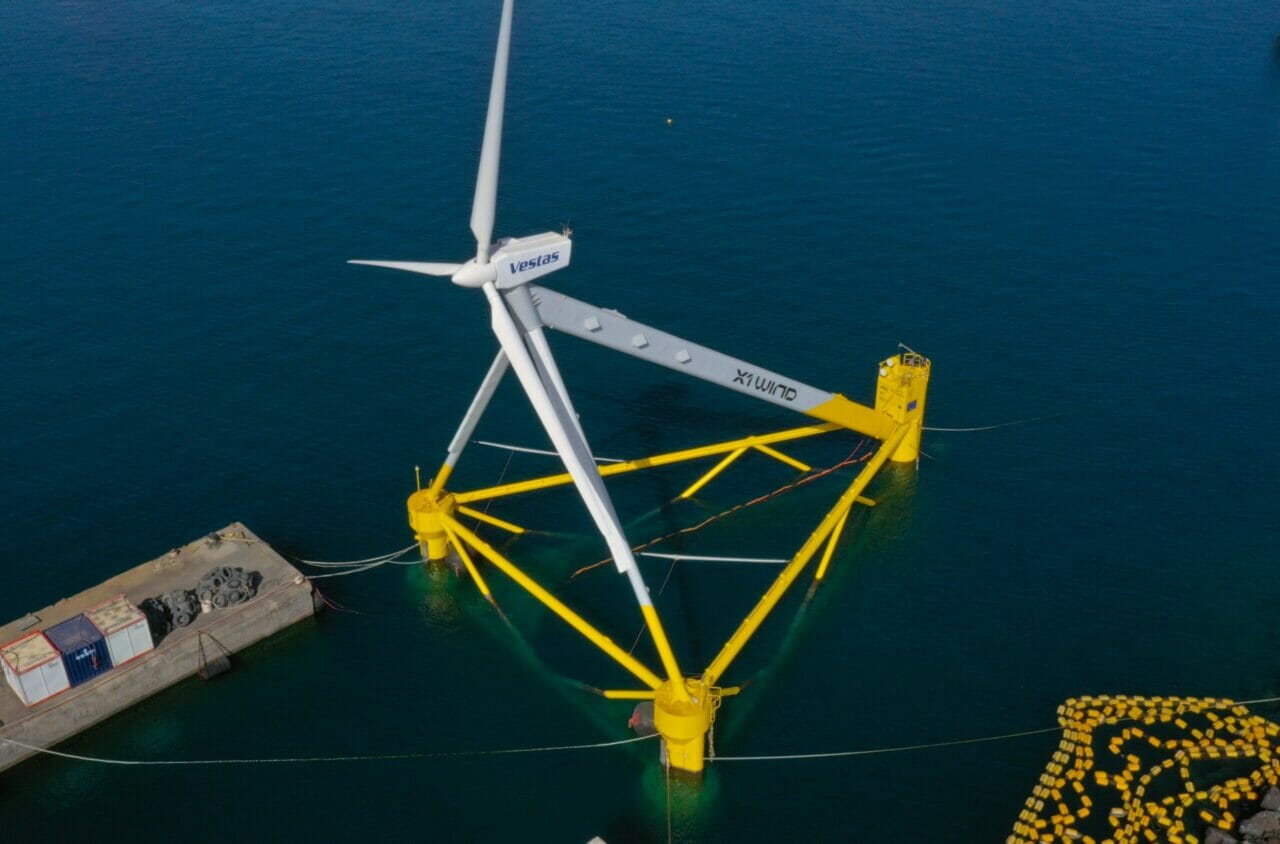
With Technological Advancements, the Offshore Wind Energy Industry Sees a Promising Future. With More Efficient and Economically Viable Systems, Contributing to the Diversification of the Energy Matrix and the Reduction of Greenhouse Gas Emissions.
Offshore wind energy has stood out as one of the main sources of renewable energy, with a global potential estimated at 71 TW, according to data from the World Bank. In this context, Spain has made progress in developing innovative technologies to optimize energy production offshore, aiming to reduce installation costs and increase the efficiency of wind farms. Recently, a surprising solution has gained attention: a wind turbine capable of moving toward the wind to generate electricity.
Meet the PivotBuoy

Promising Technology Drives the Potential of Offshore Wind Energy
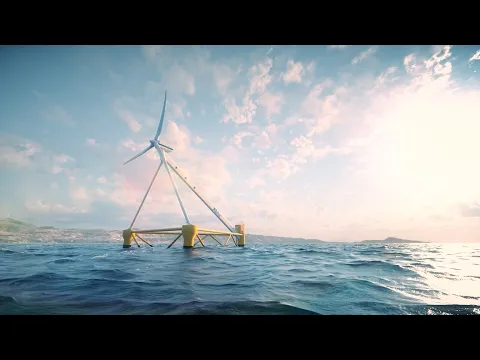
Called PivotBuoy, the system was designed with a pyramid structure and configured to align with the wind to generate energy almost continuously.
One of the main differentiators of this turbine is its ease of installation, allowing it to be connected to the anchorage while still on solid ground and later transported to the final destination.
-
How green infrastructure and renewable energy at the World Cup transform the logistics of the largest sporting event on the planet in North America.

-
The Cagece and UFC project advances in sustainable innovation with biogas by converting waste into renewable energy, reducing environmental impacts, and increasing sanitation efficiency with concrete and measurable results.

-
Paranaense students develop a system that transforms farm waste into clean energy and revolutionizes sustainable agribusiness.

-
The Ministry of Defense installs a giant photovoltaic plant and ensures a stable supply of clean energy in Maturacá, in the Amazon.
This simplified process can be carried out by smaller local vessels, avoiding the use of large and costly ships.
X1 Wind, the company responsible for developing the system, named the turbine X30 and introduced important design features that make its installation faster and more cost-effective.
In addition, its structure is modular, allowing clients to adjust the size of the turbine according to their specific needs.
One of the major advantages of the PivotBuoy is its vertical anchoring system, which allows the turbine to reach deeper waters, ranging from 60 to over 500 meters, with minimal impact on the seabed.
This feature significantly expands the possibilities for deploying wind turbines, making it feasible to use in areas previously considered inaccessible for wind energy generation.
X1 Wind Aims for Expansion in the International Offshore Wind Energy Market After Success of Prototype
X1 Wind has already successfully installed a prototype of the system in the Canary Islands, Spain, becoming the first platform of its kind in the country to export electricity via a submarine cable.
This achievement marks an important milestone for the Spanish wind energy industry and paves the way for future commercial expansions in other regions of Europe, Asia, and America.
Alex Raventos, CEO and co-founder of X1 Wind, emphasized the importance of innovation in low-cost technologies to enable large-scale floating wind projects.
Currently, the company is seeking certification for its first commercially scaled product through a project funded by the European Union.
The next ambitious step is the deployment of the pre-commercial floating wind platform of 6MW, called X90, in the French Mediterranean by 2025.
With significant advancements in the offshore wind energy sector, Spain stands out as a pioneering country in adopting innovative technologies to maximize clean energy production offshore.
The success of the PivotBuoy opens new possibilities for the global energy transition, driving the use of renewable sources and strengthening the fight against climate change.








Seja o primeiro a reagir!