





 Portuguese
  English
  Spanish
  3 min of reading
  0 comments


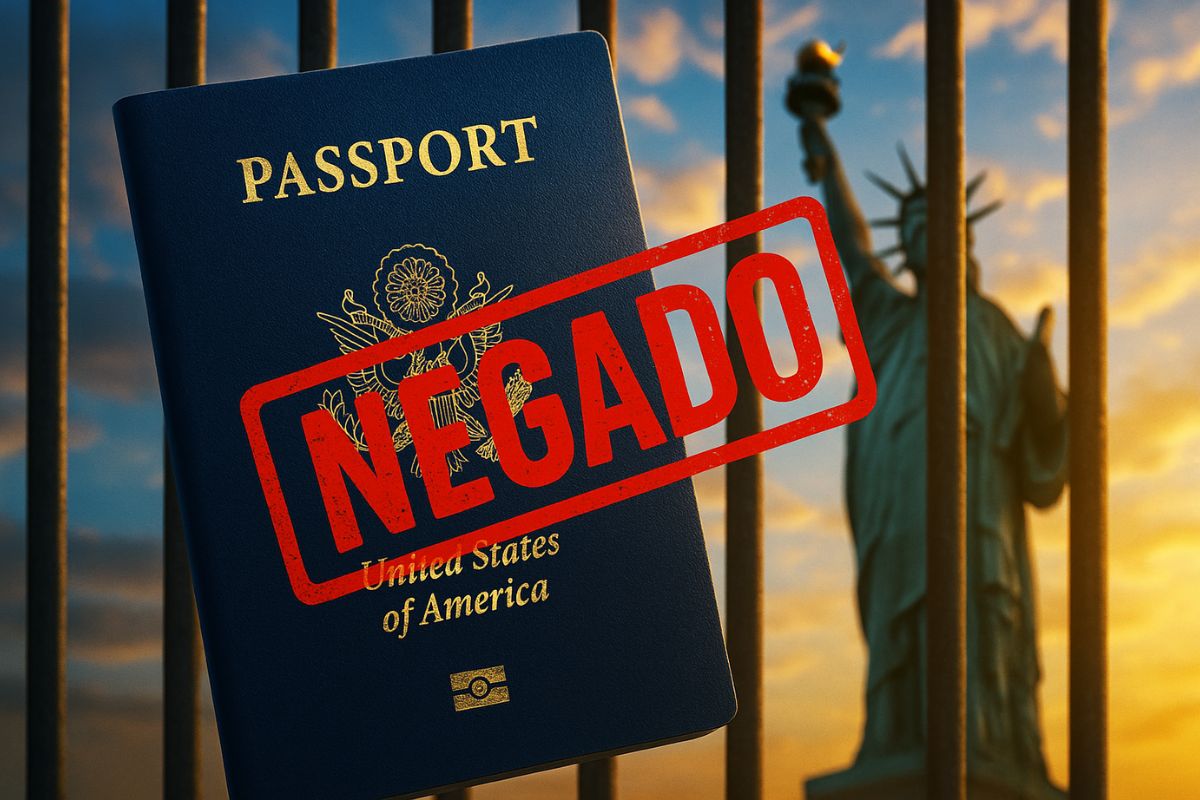
Trump Wants to Restrict Visa Duration for Students and Journalists. The Trump Administration Proposed Changes that Limit the Length of Stay in the U.S. for Those Holding Visas for Students and Journalists, Creating New Barriers for Foreigners.
The proposal announced on Wednesday (27) by the U.S. government sets fixed time frames for F visas (international students), J visas (cultural exchange), and I visas (media professionals). Currently, these visas are valid according to the duration of the course, program, or work contract. If the new rule is approved, visas for students and journalists would have much shorter time limits, requiring frequent extension requests to remain.
According to Valor Econômico, the measure reflects the hardening of immigration policy promoted by Donald Trump and is already provoking reactions among international organizations.
What Changes in Visas for Students and Journalists?
Currently, holders of visas for students and journalists can stay in the U.S. for the entire duration of the academic program or work contract, without needing to request frequent renewals. The Trump administration’s proposal alters this rule.
-
Larger than entire cities in Brazil: BYD is building a 4.6 km² complex in Bahia with a capacity for 600,000 vehicles per year, but the discovery of 163 workers in conditions analogous to slavery has shaken the entire project.

-
With an investment of R$ 612 million, a capacity to process 1.2 million liters of milk per day, Piracanjuba inaugurates a mega cheese factory that increases national production, reduces dependence on imports, and repositions Brazil on the global dairy map.

-
Brazilian city gains industrial hub for 85 companies that is equivalent to 55 football fields.

-
Peugeot and Citroën factory in Argentina cuts production by half and opens a layoff program for more than 2,000 employees after Brazil drastically reduced purchases of Argentine vehicles.

For students and exchange visitors, the maximum period would be four years. For journalists, the stay would be reduced to 240 days. In the case of Chinese citizens, the limit would fall even further: only 90 days. After this period, a formal extension request would be necessary to remain in the country.
How Many Foreigners Would Be Affected?
Numbers help to gauge the reach of the measure. About 1.6 million international students currently live in the U.S. on an F visa. Additionally, the government granted 355,000 exchange visas and 13,000 visas for foreign journalists in 2024.
With fixed deadlines, all these groups would be subject to more bureaucracy and uncertainty. The government justifies the measure as a way to “better monitor and oversee” holders of these visas.
Why Does the Measure Spark Controversy?
According to experts consulted by Valor Econômico, the proposal increases barriers for foreigners and could reduce the attractiveness of the U.S. as an academic and professional destination. Universities, research centers, and international media outlets have already expressed concern.
Organizations like NAFSA, which brings together educators from over 4,300 institutions, remind us that a similar measure was proposed at the end of Trump’s first term in 2020 but was ultimately discarded by the Biden administration in 2021.
Furthermore, critics point out that the proposal is part of a broader movement of hardening against legal immigration, which has already included the cancellation of green cards and increased ideological scrutiny in granting visas.
What Is the Next Step?
The proposal is still in the public consultation phase. The public will have 30 days to submit comments before the regulation can be confirmed or adjusted. In the meantime, foreign students and journalists continue under the current rules, with validity tied to the course or work contract.
The debate on visas for students and journalists in the U.S. shows how changes in immigration policies directly affect thousands of people seeking to study, work, or engage in professional activities in the country. The proposal could limit opportunities and increase bureaucracy, but it still depends on public evaluation before coming into effect.
What do you think? Do you believe these restrictions could deter students and journalists from the U.S., or do they actually strengthen immigration control? Leave your opinion in the comments.






Seja o primeiro a reagir!