





 Portuguese
  English
  Spanish
  3 min of reading
  0 comments


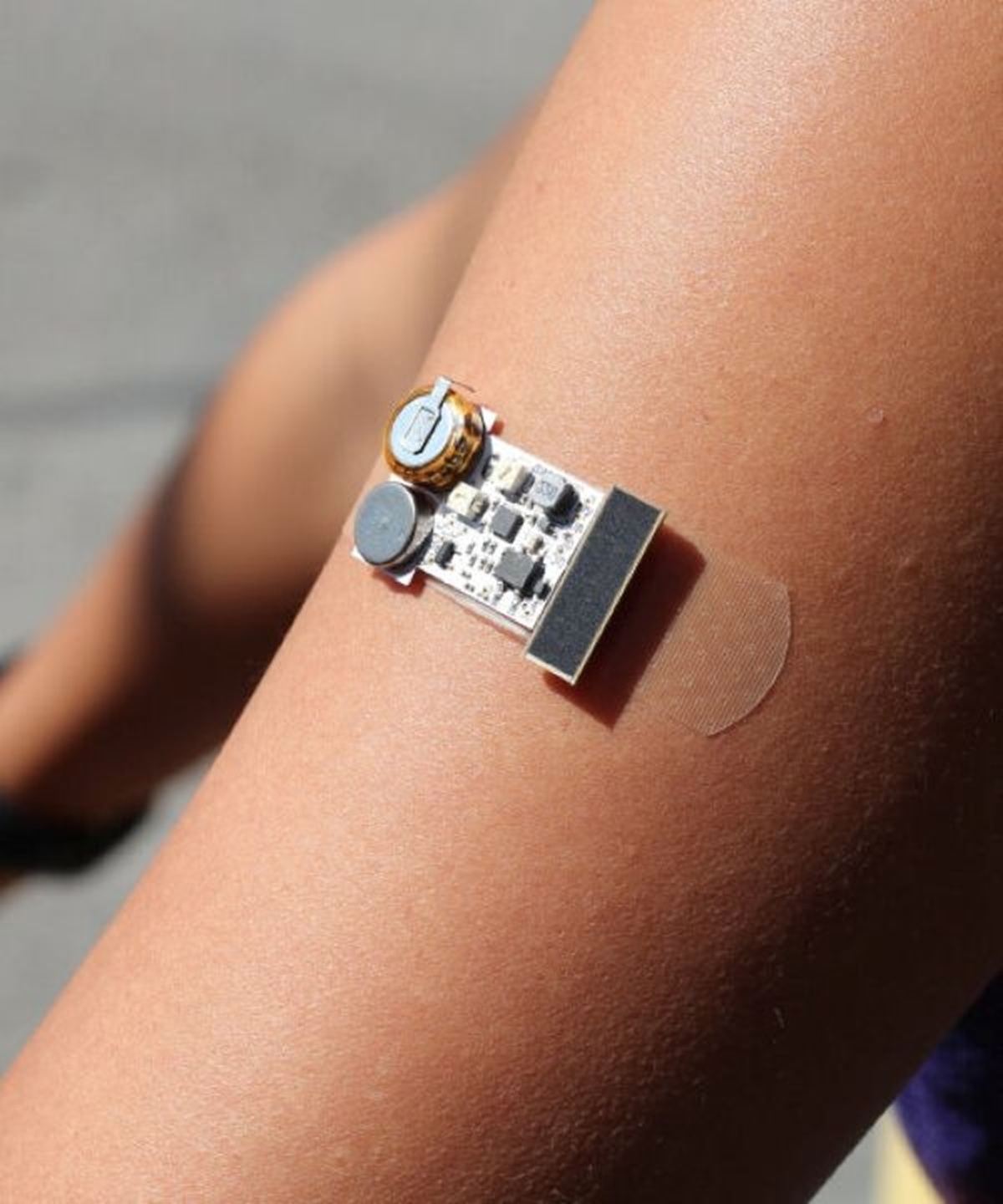
Wearable Device Created by US Universities Works Without Batteries, Screens or Connection and Uses Solar Energy or Motion to Alert the User with Vibrations When the Safe Sun Time Is Exceeded, Helping to Prevent Skin Diseases.
Researchers in the United States have developed a revolutionary wearable device that promises to change the way we monitor our health under the sun.
Called Hapt-Aids, the adhesive works without batteries, wires or wireless connection and alerts the user with a vibration when they exceed the safe solar exposure time or reach physical activity goals.
A New Approach to Wearable Technology
The creation is the result of a partnership between Carnegie Mellon University and the University of California, and represents a sustainable and accessible alternative to traditional smartwatches.
-
Engineered Madeira transforms light into heat and generates electricity even in the dark by redesigning the balsa internally with protected phosphorene and stearic acid, storing 175 kJ/kg, achieving 91% solar conversion and up to 0.65 V still.
-
Europe teams up with China on the SMILE mission to study Earth’s “shield” against the Sun and predict solar storms, while NASA gives little attention to the European contribution that helped take the Artemis II crew towards the Moon.

-
NASA’s satellite now shows where air pollution truly begins, locating roads, factories, and ports in almost real-time, and also adjusts NO₂ measurements with a margin of error between 10% and 20%.

-
Explorers found a colossal underwater mountain hidden in the Pacific, taller than Mount Olympus and nearly four times the Burj Khalifa, and what emerged around it seemed straight out of science fiction, with rare squids, ghost octopuses, and the so-called “flying spaghetti monsters.”

While these devices rely on rechargeable batteries, complex software, and constant updates, Hapt-Aids bets on analog and self-sufficient technology focused on user experience.
The adhesive operates with energy captured directly from the environment or the human body — whether through sunlight or motion. This energy is stored in an internal capacitor and released as vibration when a certain limit is reached.
How the Smart Solar Patch Works
Hapt-Aids adheres to the skin like a band-aid and is ready for immediate use. Its minimalist design consists of three main elements:
- An energy collector, which can be a solar cell or a piezoelectric film.
- An capacitor, responsible for storing this energy.
- A tactile actuator, which emits perceptible vibrations.
When the accumulated energy reaches the required value, the device vibrates to indicate that the user has exceeded the safe time in the sun or completed a movement goal. This limit can be manually adjusted via a button, without the need for apps or screens.
The absence of batteries and low energy demand make the adhesive ideal for continuous and maintenance-free use.
Impact on Health and the Environment
Hapt-Aids offers benefits in two main fronts. From a personal perspective, it helps raise awareness about the dangers of overexposure to the sun, which can cause skin diseases, including melanoma.
The World Health Organization emphasizes that controlled sun exposure is essential for vitamin D production, but too much can cause cumulative damage.
From an environmental aspect, the elimination of batteries, wires, and electronic components significantly reduces the ecological footprint of wearable devices. The adhesive generates no electronic waste, dispenses with the use of lithium, and can be produced at low cost — factors that enhance its viability on a large scale.
Versions and Practical Applications
In tests conducted by researchers, four versions of Hapt-Aids were created, each aimed at a specific type of activity:
- Long hikes.
- Control of solar exposure time.
- Monitoring repetitive contact with surfaces.
- Measuring specific muscle movements.
The results showed that the device stores enough energy to generate perceptible and effective vibrations as reminders.
Additionally, its compact design allows it to be worn under clothing without causing discomfort, making it suitable for sports, outdoor activities, and work environments with high sun exposure.
Prospects for the Future
Although there is currently no date for the commercialization of Hapt-Aids, the potential of the adhesive is promising.
It could be incorporated into skin cancer prevention campaigns, physical rehabilitation routines, and even in monitoring workers in sectors such as construction and agriculture.
By combining simplicity, sustainability, and effectiveness, Hapt-Aids proposes a new paradigm in wearable technology: a device that not only monitors health but also respects the environment and functions autonomously.
If the progress made so far is any indication, the future of wearables could be increasingly quiet, sustainable, and efficient — vibrating only when truly necessary.










-

-

-

-

6 pessoas reagiram a isso.