





 Portuguese
  English
  Spanish
  5 min of reading
  0 comments


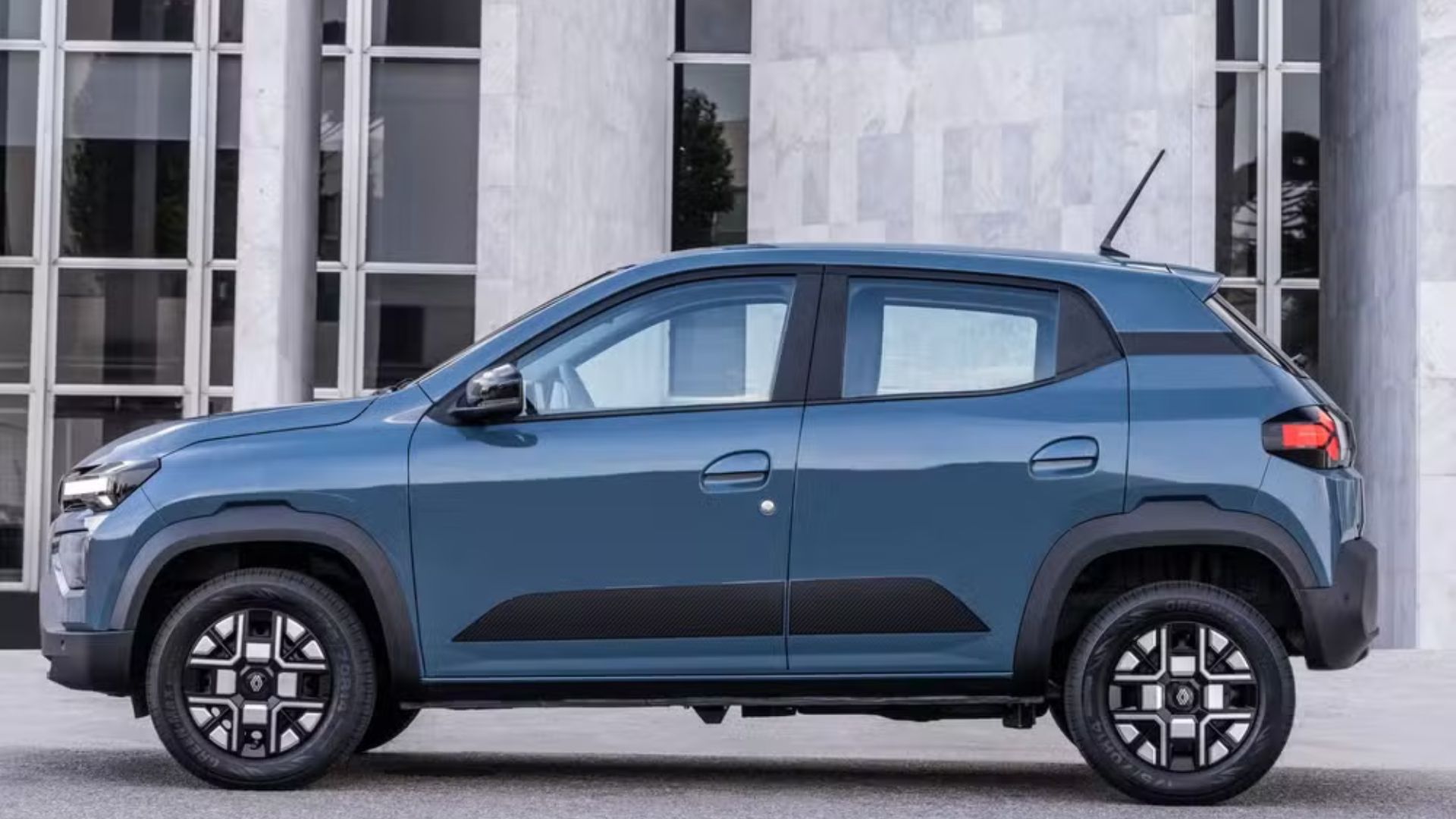
Renault Kwid E-Tech 2026 Debuts in Brazil with Updated Design, More Technology, and Price Below R$ 100,000, Taking the Position of the Cheapest New Electric Car in the Country in Its Category.
Officially presented this Wednesday (8), the Renault Kwid E-Tech 2026 debuts in the country with a price of R$ 99,990 and takes the title of the cheapest new electric car in the Brazilian market.
The novelty directly targets the current sales leader among compact electric vehicles, the BYD Dolphin Mini, offered at R$ 119,990, and repositions Renault at the base of the category.
Price and Market Position
With the launch price maintained at R$ 99,990, the 2026 line reinforces the brand’s strategy to broaden access to electric vehicles.
-
OMODA & JAECOO grows in Europe in 2026 with an integrated strategy of sales, innovation, local production, and technological advancement in the United Kingdom, Italy, and Spain.
-
OMODA & JAECOO expands after-sales service in Brazil with competitive maintenance, a 7-year warranty, and high availability of parts for technological SUVs.
-
OMODA & JAECOO appoints Alessandra Souza as executive marketing director in Brazil and accelerates brand expansion with a focus on innovation, networking, and hybrid portfolio.

-
Jaecoo 7 with super hybrid SHS system exceeds 1,200 km of combined range with a 1.5 turbo engine, high-density battery, and intelligent energy management.

The R$ 20,000 difference compared to the public price of the BYD Dolphin Mini aims to attract those who compare acquisition costs at the entry level of the segment.
At the same time, Renault seeks to regain prominence in a niche that has gained traction with Chinese offerings, putting pressure on traditional brands — among them Toyota — in the discussion on accessible electrification.
Updated Design and Project Aligned with Europe
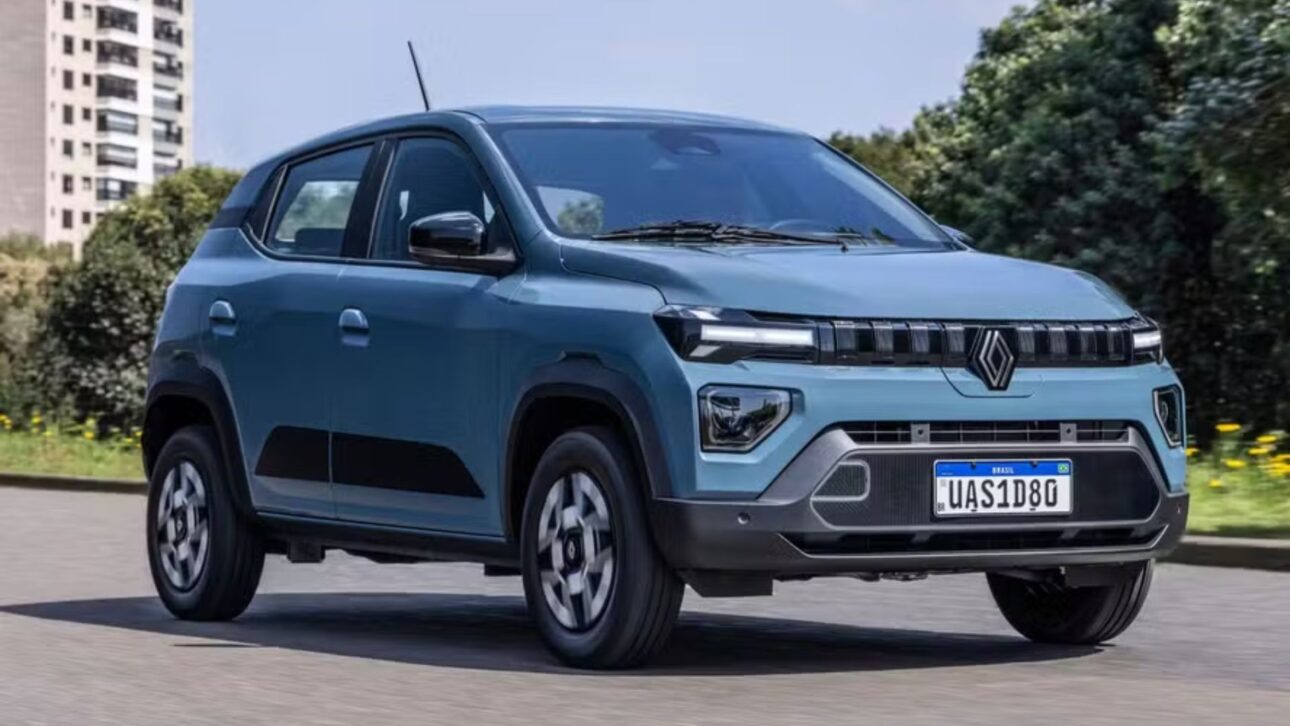
The restyling has distanced the electric Kwid from its internal combustion “brother.”
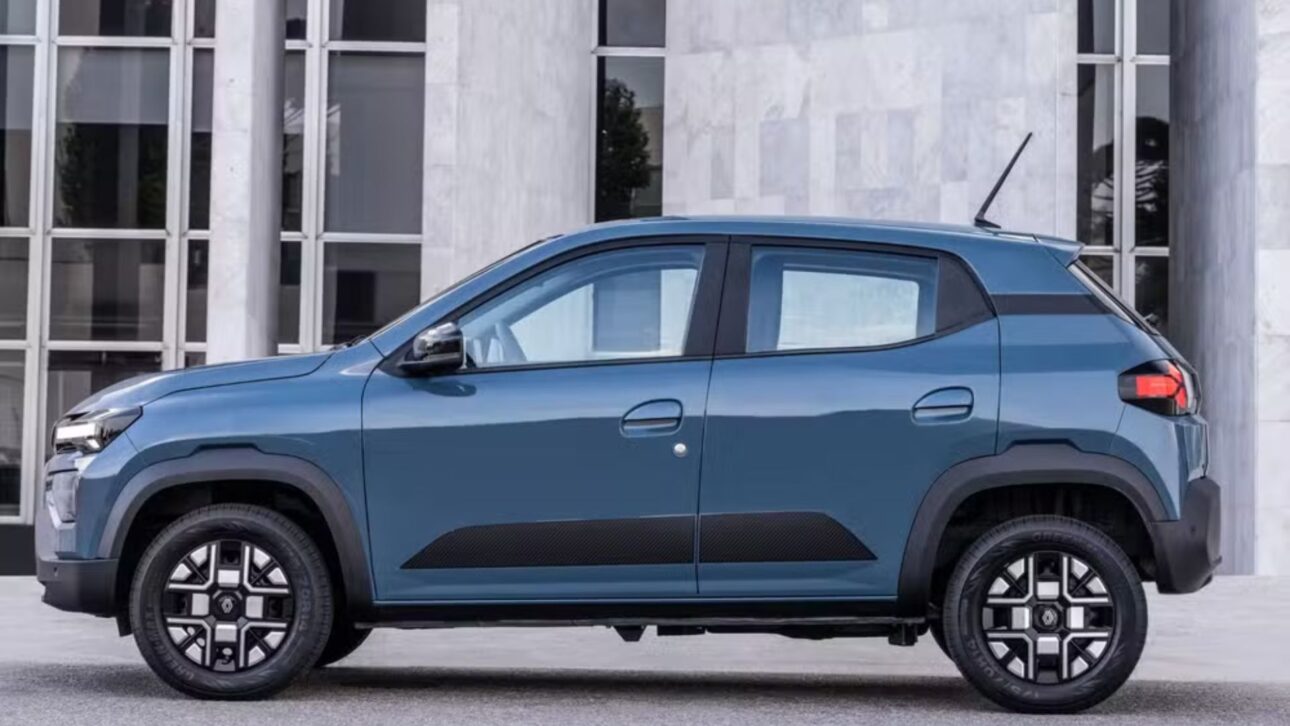
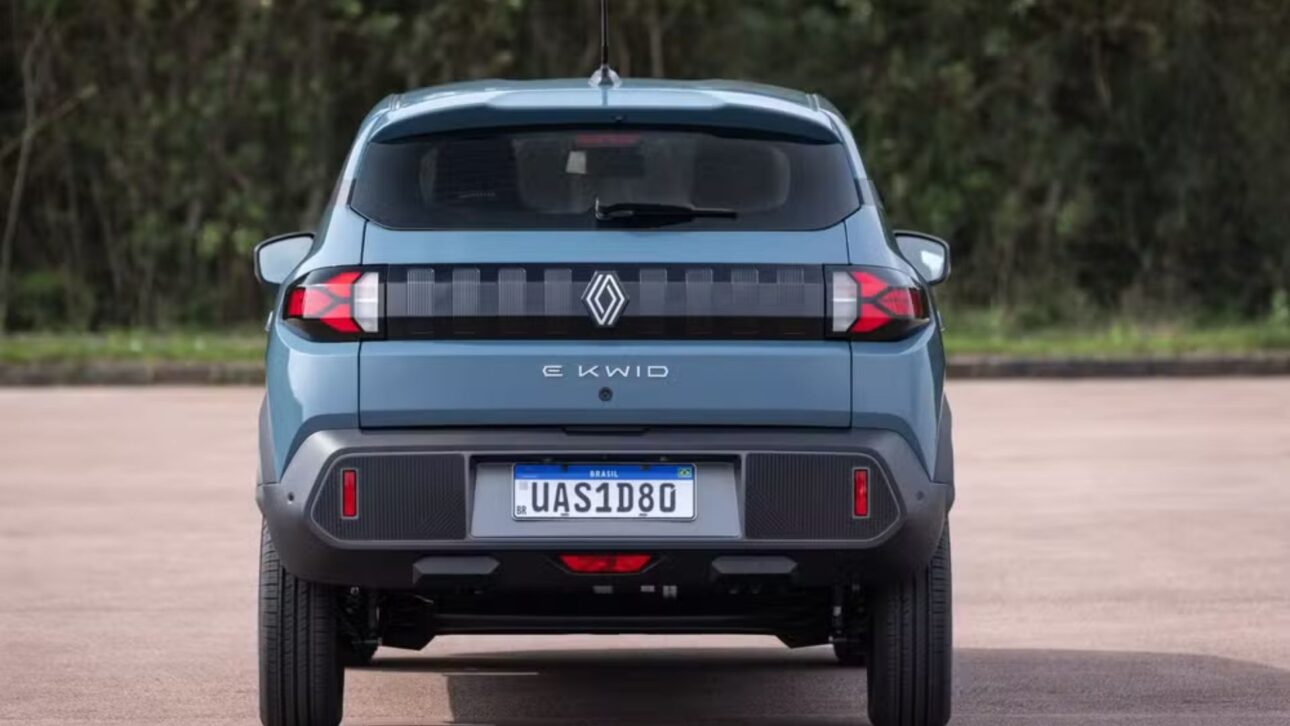
The hatch adopts a design language inspired by the updated Dacia Spring in Europe, its equivalent project, with a redesigned front end, “Y” shaped light signature, and elements that align the model with Renault’s global standards.
In practice, it is the same concept of an already known urban electric car, but with finishing, grille, lighting system, and body details that deliver a more modern perception.
Interior with More Screens and Revised Controls
Inside, the changes are noticeable.
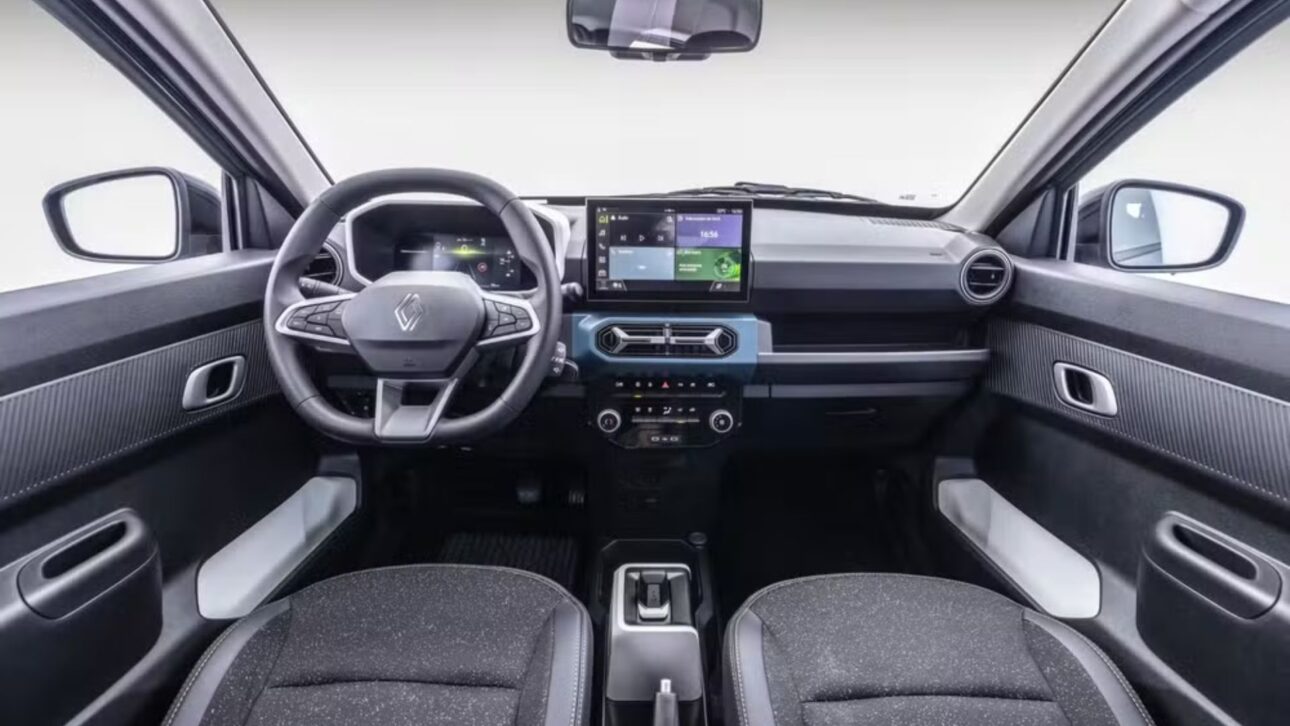
The dashboard has been redesigned to accommodate a 10-inch floating multimedia screen, while the instrument panel is now 7 inches digital.
The air conditioning controls gain digital operation, and the old rotary gear selector is replaced by a joystick-type lever, a solution already used in recent models from the brand.
The aim is to offer a more functional and up-to-date environment without altering the compact’s urban usage focus.
Safety and Driver Assistance
In addition to the mandatory package, the Kwid E-Tech 2026 debuts an expanded set of assistance features.
Among the items, Renault highlights autonomous emergency braking, lane keeping assist and alert, traffic sign recognition, and fatigue detector.
The model features six airbags and also includes a rear camera, front and rear parking sensors, cruise control, and speed limiter.
For an entry-level electric, this list places the hatch in another level of active safety and convenience.
Motor, Battery, and Urban Range
In the mechanical assembly, the proposition remains the same.
The electric motor delivers 65 hp and 11.5 kgfm of torque, sufficient for quick responses in traffic and initial acceleration suitable for city use.
The 26.8 kWh battery is retained, with a range of up to 185 km according to PBEV/Inmetro standards, a number designed for daily trips and scheduled recharges at home or work.
With a 30 kW DC fast charger, the brand reports an approximate time of 45 minutes to go from 20% to 80% charge.
Using a residential wallbox, partial replenishment takes about 3 hours, while the portable home charger completes the same interval in 9 hours.
Equipment and Connectivity
The update includes improvements in ergonomics and connectivity.
The new center, compatible with smartphone mirroring, comes with an updated multimedia system and smoother integration.
Energy inputs and outputs for devices, along with software adjustments, aim to reduce the need for external accessories in daily use.
There are currently no announced structural changes to the chassis or suspension; the strategy focused on design, embedded technology, and safety.
Strategy Against BYD, Toyota, and Other Competitors
Renault’s immediate focus is to neutralize the commercial advantage of the BYD Dolphin Mini, which accounts for a significant portion of sales by combining competitive pricing, an expanding network, and a consolidated image.
By repositioning the Kwid E-Tech as the cheapest new electric car in the country, the French brand aims to re-engage with price-sensitive consumers regarding entry costs and total cost of ownership.
This offensive also puts pressure on rivals from traditional brands that, like Toyota, focus their strategy on hybrids — inadvertently increasing the relevance of a pure electric vehicle priced below R$ 100,000.
Immediate Launch and Differences Compared to the Combustion Kwid
Launched one day after being seen in tests on Brazilian streets, the Kwid E-Tech 2026 begins to be showcased in the network with its own positioning and communication increasingly disconnected from the flex Kwid.
The specific design, technology features, and wider safety list reinforce this separation.
While the combustion compact caters to those prioritizing refueling options and typical maintenance costs of popular cars, the electric one advances as a low-operational-cost urban alternative, with the convenience of home recharges and local incentives that can reduce usage expenses.
What Changes for the Consumer
In practical terms, the novelty simplifies the choice for those seeking a basic electric car with good safety and connectivity features without exceeding budget.
The combination of two-digit price, ADAS package, and sufficient range for short trips places the Kwid E-Tech in a prominent position in the showcase.
The price difference compared to the main competitor keeps Renault with a clear argument at the counter, while the aesthetic update diminishes the feeling of an outdated project against more recent launches.
With the arrival of the Kwid E-Tech 2026, the base of the electric market is once more stirred.
What criterion will weigh more in your choice: purchase cost, safety list, range, or service network?







-

-

-

-

-

24 pessoas reagiram a isso.