





 Portuguese
  English
  Spanish
  3 min of reading
  0 comments


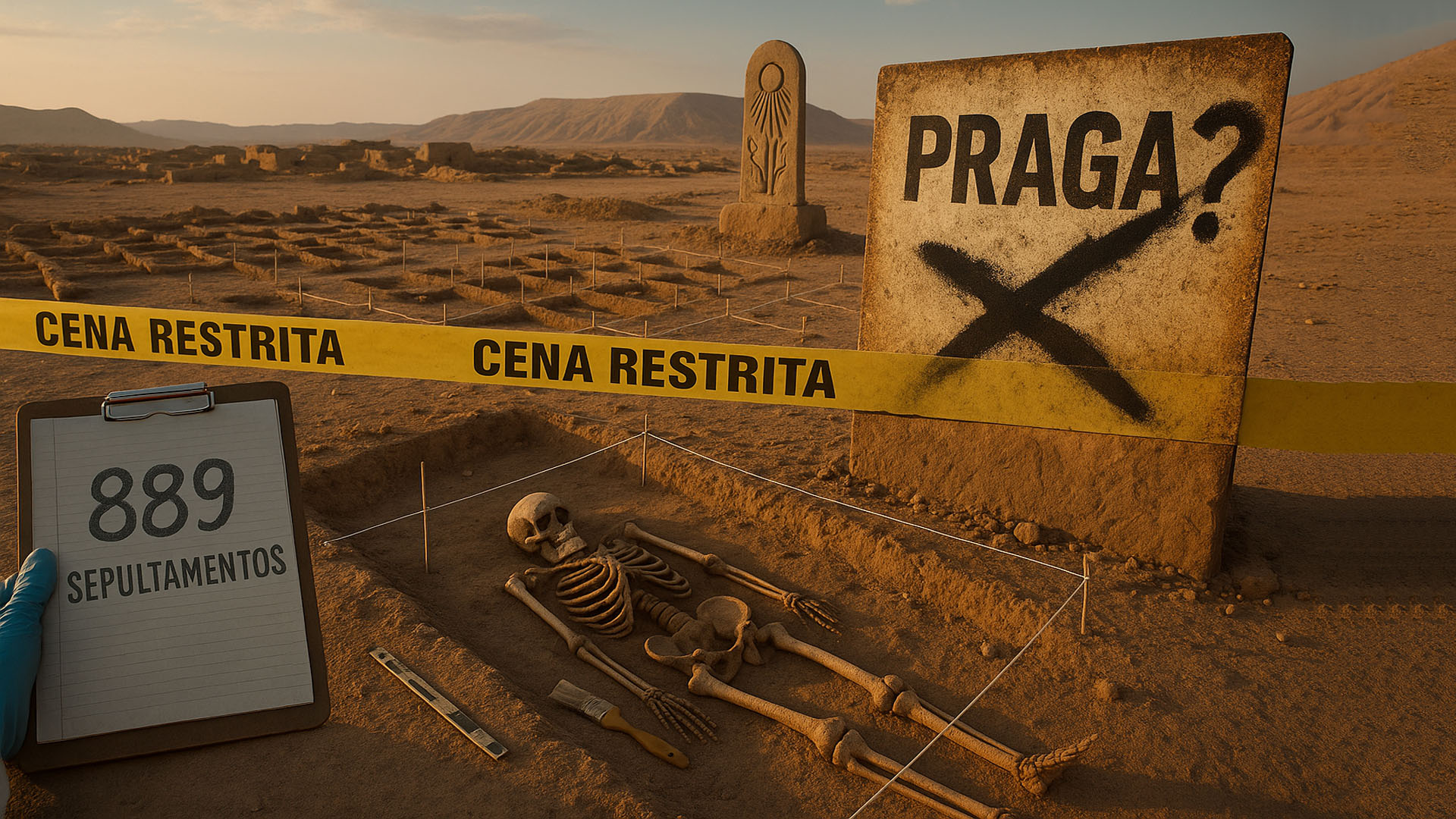
Analysis Of 889 Burials In Amarna Indicates Absence Of Signs Of Epidemic. 2025 Study Revises The Thesis Of The Plague That Devastated The Region And Realigns Historical Explanations.
A new study of archaeology and bioarchaeology reviewed 889 burials in Amarna and concluded that the famous “plague of Akhetaton” probably did not exist. The epidemic hypothesis loses strength in light of the evidence.
The research, authored by Gretchen Dabbs and Anna Stevens and published in October 2025 in the American Journal of Archaeology, reevaluates the timeline of the abandonment of Akhenaton’s capital and its demographic signals.
The authors did not identify patterns of sudden mortality, mass burials, or drastic changes in funerary rituals that indicate an epidemic event in the planned city of the heretical pharaoh.
-
These living root bridges and ladders are over 700 years old and help indigenous people survive in one of the rainiest regions in the world.

-
From sertanejo star to international investor: Ana Castela invests millions in a mansion in the USA, creates a themed accommodation in Orlando, and shows that the “boiadeira” also wants to grow away from the stage.

-
The 10 most stunning motorhomes in the world: a $3 million trailer with a rooftop nightclub and garage for a Ferrari, “palaces on wheels” with Italian marble, private cinema, and five-star hotel luxury for billionaires.

-
Trump wanted to spend $400 million on the White House, but the courts prohibited the million-dollar construction.


The work confronts texts from the period, such as Hittite prayers and Letters of Amarna, which report outbreaks in other cities of the Levant. For Amarna, there are no direct records and there is a lack of remains in the soil.
How The Study Tested The Plague Theory In Amarna
Dabbs and Stevens examined non-elitist cemeteries of Amarna, combining osteology, stratigraphic context, and demographic statistics. The sample includes adults and children buried regularly at the end of the 14th century BC.
If an epidemic had swept through Akhetaton, we would expect makeshift graves, overlapping tombs, and sudden spikes in deaths by age group. The analyzed set did not show these classic markers.
The 889 burials exhibit continuity in funerary practices, body positions, and modest offerings. Urban logistics and labor do not appear to have suddenly collapsed either.
The data were compared to descriptions of crises in other regions of the late Mediterranean, suggesting that Egypt felt external impacts, but Amarna does not present the material signature of a local plague.
The team also reviewed time series of mortality, looking for anomalous spikes by season or year. The curve is serrated but stable, consistent with chronic risks of labor and nutrition.
What The Ancient Texts Say And Why They Are Not Enough
Ancient sources mention diseases in the period: Hittite prayers report plagues, and the Letters of Amarna cite outbreaks in Megiddo, Byblos, and Sumur. Nothing there, however, confirms an epidemic in Akhetaton.
The study gives weight to physical evidence. Without common graves, without acceleration of burials, and without ritual rupture, the isolated texts do not explain the abandonment of the city built by Akhenaton.
The distinction is crucial for Egyptian historiography: textual tradition and modern narrative have fueled a myth. Recent archaeology calls for caution and a regional reading of the disease scenario.
The authors remind us that diplomatic records can hyperbolize events. The crisis rhetoric in letters and prayers does not replace the excavation of cemeteries and the statistical reading of the set.
If It Was Not Plague, Why Was Amarna Abandoned?
The religious capital of Akhenaton lasted little time. Sources indicate the court’s return to Thebes a few years after his death, with Tutankhamun and successors reversing the reforms of the Aton cult.
Political changes, restoration of traditional temples, and economic strain help explain the loss of centrality of Akhetaton. The process appears gradual, not a health collapse.
Datable jars and administrative records suggest progressive abandonment and residual occupation. The scenario favors religious and administrative motives more than an epidemiological emergency.
Britannica and the Amarna Project describe the resumption of cults and the administrative change of the State after Akhenaton. The return to traditional structures reduced the viability of the new capital.









Seja o primeiro a reagir!