





 Portuguese
  English
  Spanish
 3 min of reading
  0 comments


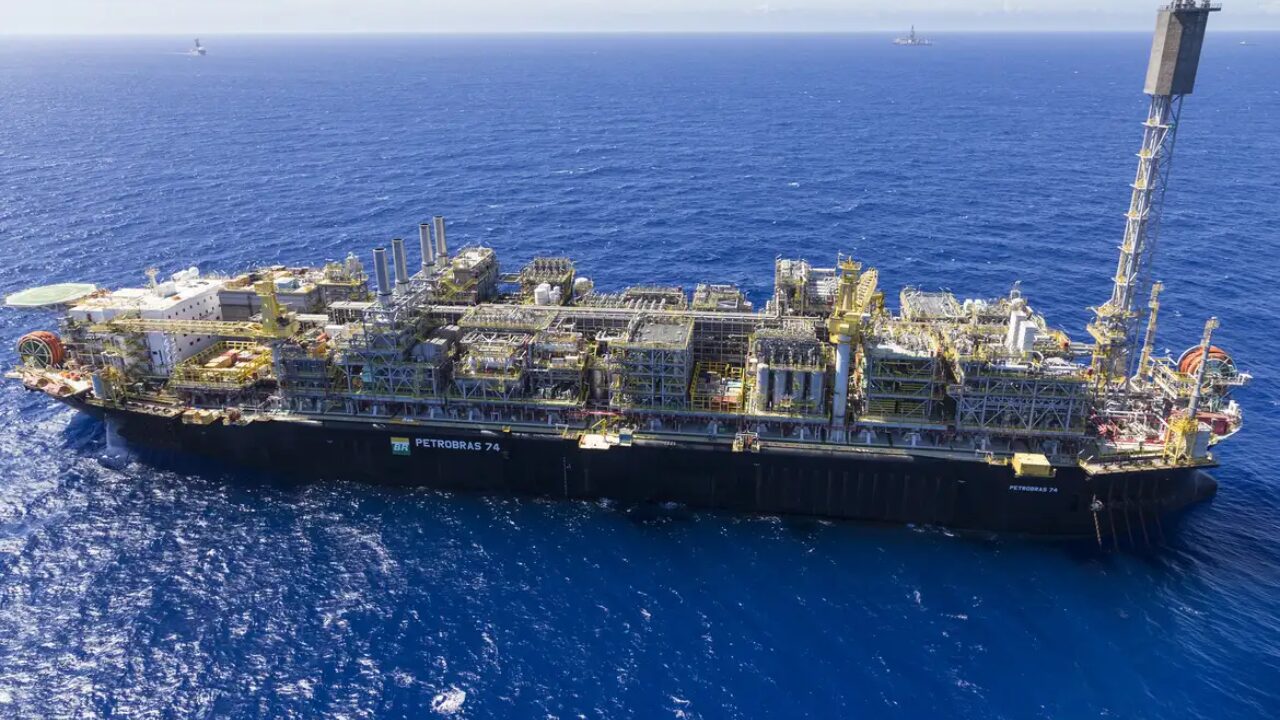
Petrobras Will Reduce Oil Production Capacity of New FPSO to Be Installed at Búzios Field.
Petrobras announced an important change in its strategy for the Búzios field in the pre-salt layer of the Santos Basin: the 12th FPSO (Floating Production, Storage, and Offloading unit) to be commissioned will have reduced capacity compared to the previous platforms.
This decision is part of the company’s cost-cutting plan in light of fluctuations in oil prices in the international market.
The new platform will have a production capacity of 180,000 barrels of oil per day (bpd), unlike the previous ones that operate with 225,000 bpd.
-
A major turn in the Justice system suspends tax increases and directly impacts oil and gas companies in Brazil by affecting costs, contracts, and financial planning, leaving uncertain what could happen to the sector if these costs had increased.

-
Brava Energia begins drilling in Papa-Terra and Atlanta and could change the game by reducing costs in oil while increasing production and strengthening competitiveness in the offshore market.

-
Petrobras surprises the world again by announcing a new discovery in the pre-salt with excellent quality oil.

-
Offshore industrial demand in Macaé skyrockets with the recovery of oil and gas and could grow by up to 396% by 2026 in the Campos Basin.

Petrobras Strategy to Maintain Efficiency with Lower Investment
The change was confirmed by Petrobras’ Exploration Director, Sylvia Anjos, during the 3rd edition of the Brazil Global FPSO Epicenter event in Rio de Janeiro. According to the executive, the new unit’s project will be leaner while maintaining operational efficiency.
“Búzios 12 will be 180,000 [bpd] and we will still streamline it to optimize and produce the same way,” said Anjos.
She also highlighted that the company’s motto remains “doing better with less,” reinforcing its commitment to efficiency.
Another highlight presented was the strategy adopted for the P-78 platform, which will operate in the Búzios 6 project.
The Director of Engineering, Technology, and Innovation at Petrobras, Renata Baruzzi, indicated that the unit will be brought from China already manned, allowing for immediate operation in the field.
This practice, common among other large international oil companies, will be adopted by the state-owned firm to expedite the start of production.
“We are adopting the best practices from abroad, with the manned platform for the site,” emphasized Anjos.
Búzios Field Approaches Becoming the Largest in Brazil
The Búzios field, one of Petrobras’ greatest promises in the pre-salt, plays a central role in the company’s expansion plans.
Currently, it already has an FPSO in operation with a capacity of 225,000 bpd and will receive three more platforms of the same size by 2027.
Búzios also stands as the main asset of the state-owned company in the race to increase its oil production, alongside the Brazilian Equatorial Margin, whose exploration has been repeatedly delayed.
According to data from the National Agency of Petroleum, Natural Gas, and Biofuels (ANP), the Búzios field produced 715,000 bpd in March, compared to 780,000 bpd from the Tupi field, which currently leads national production.
However, considering natural gas production, Búzios reached 912,000 barrels of oil equivalent per day (boed), nearing Tupi’s total, which closed the month at 1 million boed.
Adjustments Are Part of Petrobras’ New Business Plan 2026-2030
The reduction in the capacity of the new FPSO will be included in Petrobras’ upcoming Business Plan, which covers the period from 2026 to 2030.
The measure reinforces the company’s concern about maintaining the financial sustainability of its projects, even in a scenario of unstable oil prices.
The decision also reaffirms the importance of the Búzios field in Petrobras’ growth strategy, keeping it as a key player in the company’s future investments.









Seja o primeiro a reagir!